A look at browser access, native apps and PWAs, plus how accounts, virtual credits, wagering terms and payments shape mobile casino play.
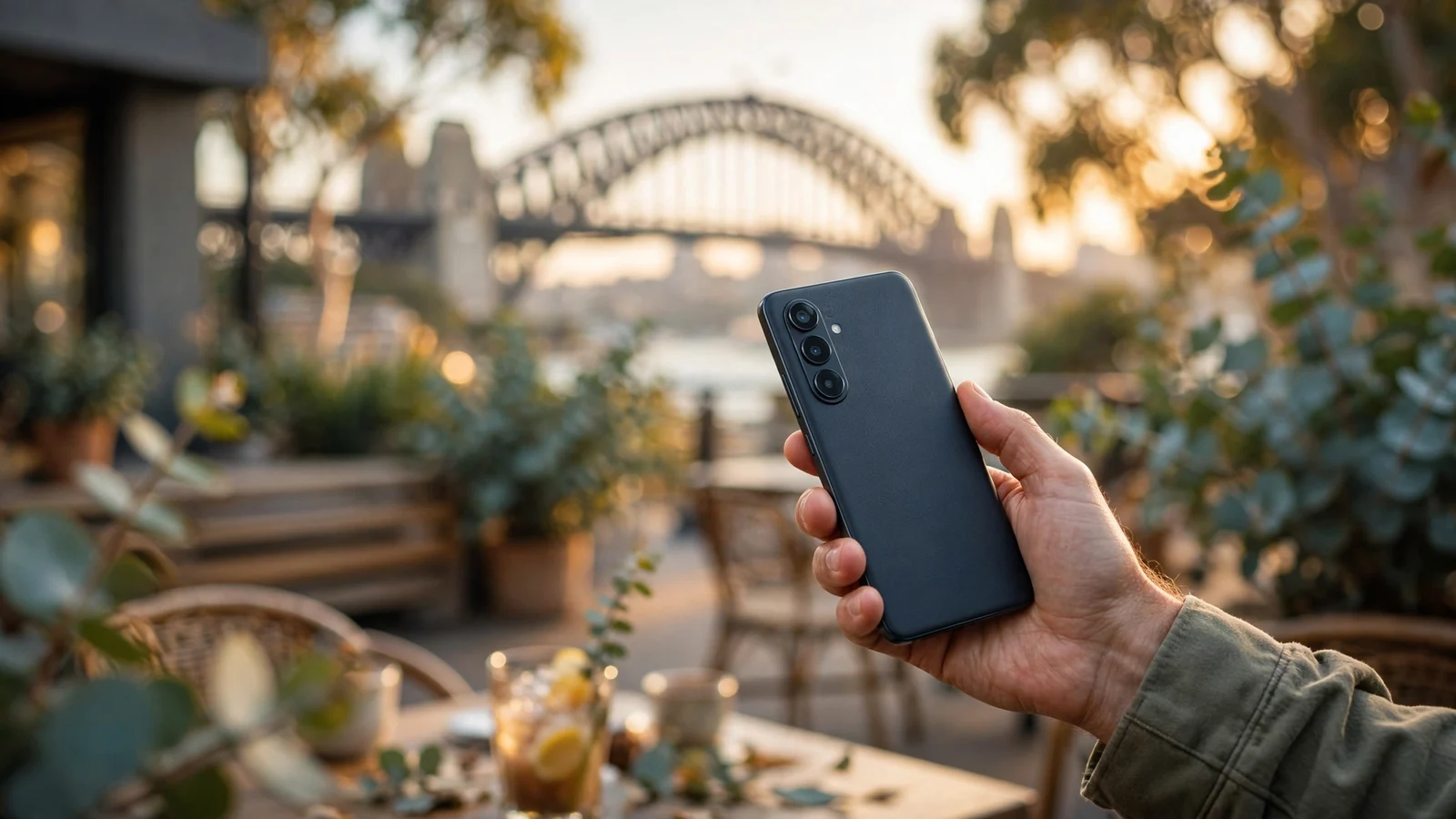
For Australians using Android, access to a casino site most often begins in the mobile browser. The site is opened as a web page, and the account used there is generally the same one available on a desktop computer. The phone changes the screen and the setting; it does not necessarily create a separate account or a separate version of the punter’s relationship with the operator.
That continuity matters more than it first appears. A person moving between a computer at home and a phone elsewhere is not, in the ordinary pattern, starting over. The account remains the organising point: the site recognises the existing customer, while the browser provides the route into it. “Mobile casino” can therefore describe a way of reaching a website rather than a distinct service living on the device.
The browser is an unremarkable piece of infrastructure, which is precisely why it can disappear from view. Search, saved links and ordinary web navigation have made websites feel less like destinations than rooms passed through in daily life. On Android, a casino website enters that same routine. It is opened in the browser, used through the page, and left behind when the tab or browser is closed. The experience is not made more or less real by the absence of a separate icon.
Choosing a casino app for Android in Australia calls for checking the practical details available before deciding where to play. These verdicts highlight the stated licensing, deposit minimums and payout information for each operator.
Playfina Casino
Playfina Casino is listed with a Curacao eGaming license held by Hollycorn N.V. since 2017. Its minimum deposit is A$20–30, depending on the offer.
Kingmaker
Kingmaker lists crypto payouts at around 90 minutes and fiat payouts at 1–5 days. Its minimum deposit is A$30.
Ricky Casino
Ricky Casino lists crypto payouts under an hour and PayID payouts in 1–3 business days. The minimum deposit is A$20, or A$30 to qualify for the bonus.
LevelUp Casino
LevelUp Casino is listed with Curacao eGaming license OGL/2023/174/0082, held by Dama N.V. Its minimum deposit is A$15.
WinSpirit Casino
WinSpirit Casino is listed with Curacao eGaming license OGL/2024/923/0383, held by Antillephone N.V. Its minimum deposit is A$30.
JustCasino
JustCasino is listed with a Curacao Gaming Control Board license.
MrPacho
MrPacho lists crypto payouts at 30–120 minutes and fiat payouts at 24–72 hours. Its minimum deposit is A$30.
Bizzo Casino
Bizzo Casino is listed with a Curacao Gaming Control Board license, with TechSolutions Group N.V. identified as the operator.
7Bit Casino
7Bit Casino is listed as operating under a Curacao license, with Dama N.V. identified as its operator.
Roby Casino
Roby Casino is listed with a Curacao eGaming license, with Roby Games Ltd identified as the license holder.
There is a social history in that plainness. The desktop once supplied the default image of online activity: a person seated at a computer, deliberately entering a website. A phone has made the same act portable and less ceremonious. Yet the underlying arrangement remains familiar. The device is a window; the account is the continuing identity on the other side of it. Convenience, in this sense, is not a new form of gambling but the removal of the journey to a desk.
That distinction helps explain why people use several different expressions for the same practical activity. An online casino for Android may simply mean a casino website viewed on an Android phone. “Mobile” identifies the device and the circumstances of use, not necessarily a special product. The wording can suggest a dedicated application, but the common route is still through a browser and an account that also works on desktop.
The word “app” carries more cultural weight than the mechanics warrant. It suggests a contained object, chosen from a store and kept among other tools on the phone. A website feels less fixed: it belongs to an address, a browser, and the habits of returning to it. For people accustomed to apps as the standard shape of phone services, browser access may seem like a compromise. In practice, it is the ordinary means by which Australian mobile casino sites are reached.
The same account across devices also creates a sense of continuity. A session begun on a computer is not, by that fact alone, a different membership from activity on a phone. The account connects the two settings. This is useful to understand without mistaking continuity for endorsement: the ease of moving between screens says something about design and access, not about the character or standing of the service.
A phone also changes the atmosphere around an online activity. The desktop tends to mark a place and a period of attention; the mobile browser can be opened amid the small intervals of a day. That shift is not a technical feature so much as a change in social setting. A web page once associated with a chair and a keyboard can now accompany a commute, a waiting room or a quiet corner of the home. The browser makes the transition look effortless. The consequences of what is done there are not necessarily so.
For that reason, the most accurate starting point is modest. Android access usually means opening the site in a mobile browser and signing in with the account already used on desktop. It does not require assuming that every site has a dedicated Android product, nor that a phone creates a distinct kind of account. The device is different; the route is familiar.
A small change in screen. A larger change in setting.
On Android, “app” can describe more than one thing. It may mean a native program installed from an app store, a website opened in a browser, or a website saved to the home screen so that it looks and behaves more like an app. The distinction is practical: the icon on the phone does not, by itself, tell how the service is built or where it comes from.
Native apps are software packages made for a device’s operating system. They are installed as applications and appear alongside other apps. But casino apps are rarely listed on Google Play in Australia; browser access is the more common format. The gap between the everyday meaning of “app” and what is actually available on a phone is therefore wider than the label suggests.
A website opened in Chrome or another mobile browser needs no separate installation. Its pages are delivered through the browser, and the address bar remains part of the experience. For a service that offers mobile browser access, that can be the whole arrangement: no store listing, no app package and no new icon required. It is software encountered as a webpage, an old form wearing a pocket-sized screen.
A Progressive Web App, or PWA, sits between that browser page and a native app. It is a shortcut to a website that behaves in app-like ways on a mobile device. It does not become a different casino product merely because it has an icon on the home screen. The underlying destination remains a website; the PWA gives that destination a more app-shaped entrance.
Installation starts on the casino website, not in Google Play. If the site presents an install or add-to-home-screen prompt, the person using the phone can tap it and confirm the installation. The resulting icon offers a direct route back to the site. The precise appearance of the prompt can depend on the browser and device, so its absence does not mean that a native app is waiting elsewhere in the store.
This distinction matters when an Android user sees a claim about a “casino app.” The phrase may refer to a native download, a browser-based service, or a PWA shortcut. Those formats are not interchangeable in how they are installed, even when the screen they open looks similar. A home-screen icon establishes convenience of access, not the software’s origin.
Sideloading is another possible route in general Android use: an application file can be installed from outside Google Play. That is not the same as installing a PWA from a website. A sideloaded casino app carries security risks, and its safety depends on the operator; the fact that a file installs does not establish that it is trustworthy. Treating the absence of a store listing as a reason to download an unknown file would replace one uncertainty with another.
The sparse store presence is the useful fact, rather than a mystery that needs a speculative explanation. Casino apps are rarely listed on Google Play or Apple’s App Store in Australia, while browser play is the default. Casinos that accept Australian players typically use browser access or PWAs instead of native mobile apps. That pattern describes the available formats; it does not make a website shortcut equivalent to an independently reviewed store app.
So the Android “app” may be no more than a saved doorway. The browser remains the room behind it.
Software packages made for a device's operating system, rarely listed on Google Play in Australia.
Websites accessed via Chrome or other mobile browsers, requiring no separate installation.
Website shortcuts saved to the home screen that behave like apps but remain tied to a website.
A casino-style app on an Android phone can describe two different kinds of activity. In one, a person stakes money; in the other, the app supplies virtual credits for free play. The familiar reels and casino imagery may make the formats look alike, but the credits mark a meaningful boundary: they belong to the app’s play system, not to a cash balance.
Social and free-play casino apps that use virtual credits are legal to use in Australia and can be downloaded from Google Play or the Apple App Store. Their presence in mainstream stores does not make them real-money gambling products. It reflects a separate category of app, built around simulated play and in-app credit balances.
That distinction can be easy to miss when an app uses the vocabulary and visual language of a casino. Reels spin, symbols line up, and the screen may display a changing balance. Those conventions borrow from gambling, but the balance shown in a free-play app is made up of virtual credits. It should not be read as money won or money available to withdraw.
The distinction matters particularly on Android, where the word “app” can cover quite different things. A free-play app downloaded from a store is not the same product as an offshore casino website opened in a browser, even if both are presented on a phone and use similar imagery. One uses virtual credits; the other may involve real-money gambling. The interface alone does not settle the question. The terms governing what the credits represent do.
This is not a ladder from free play to cash gambling. Virtual credits are not a deposit, a bonus balance, or a preliminary step that turns into real money later. Treating them as a rehearsal for cash play confuses two systems with different stakes. Free play can offer a way to encounter casino-style mechanics without wagering money, but that does not make it a guide to the financial risks or conditions of real-money gambling.
Store availability can create a misleading impression of endorsement. A listing on Google Play or the Apple App Store tells users that an app is available through that distribution channel; it does not mean that every casino-branded service operates under the same rules, or that a store listing converts a real-money product into free play. The relevant question is what the app actually uses: virtual credits for simulated activity, or money staked on gambling.
The social element can also shape the experience. A credit counter, daily prompts or competition among users may give a free-play app the rhythm of a game that keeps returning to the screen. That is still different from an account holding withdrawable winnings. The category is defined by the role of its credits, not by how convincing its casino scenery appears.
For anyone comparing free casino apps for Android, the useful distinction is therefore simple but not superficial: free-play apps use virtual credits, and they are available through the major app stores in Australia. They do not provide a route from virtual balances to cash gambling. Similar pictures; different arrangements.
Social and free-play casino apps using virtual credits are legal in Australia and available in mainstream app stores, but they do not provide a route to real-money gambling.
A bonus is not simply extra money in an account. Its value depends on what must be wagered before any associated winnings can be withdrawn, which games count, how much must be deposited and when the offer expires. A label such as “no deposit” describes one condition, not the full bargain. The smaller print does the accounting.
Specialist reviews describe welcome-bonus wagering requirements in the range of 30x to 50x the bonus amount, while treating requirements above 40x as steep. These are assessments reported by a type of source, not fixed rules across every offer. The multiplier also needs context: terms may calculate wagering against the bonus alone or against the bonus plus the deposit. Those are materially different sums, even when the headline amount looks identical.
That is why the arithmetic should be read before any claim is made. A requirement may turn a modest-looking credit into a large amount of qualifying wagers. Until the conditions are met, the bonus is not freely withdrawable cash; failing to complete them may mean losing the bonus or forfeiting winnings linked to it. The headline is the least informative part.
Minimum deposits matter for the same reason. An offer may require a deposit to activate, or set a minimum above the amount someone intended to spend. That changes the cost of access, particularly where the bonus itself cannot be withdrawn. The relevant comparison is not between two advertised amounts, but between the deposit required, the wagering attached and the practical likelihood of meeting the conditions without spending more than planned.
Game restrictions can make the calculation harder. Terms may exclude some games or count different games at different rates towards wagering. A punter looking for an Android pokies offer may therefore find that the games they expected to play contribute little or nothing. The word “eligible” is doing quiet work. It should be checked against the actual game list and contribution rules, not inferred from the promotion’s headline.
Time limits add another pressure. Specialist reviews report that some bonuses must be cleared within 7–10 days; missing the stated deadline can mean losing the bonus. The specific offer’s terms govern, so the expiry date and the point from which the clock starts both matter. A short window can turn a nominal benefit into an instruction to keep wagering when stopping would otherwise be sensible.
Cashout caps deserve the same attention as wagering. A cap can limit the amount withdrawable from bonus-related winnings, even after the stated requirements have been met. The terms should also be checked for maximum bet conditions, excluded games and any rules about withdrawing before completion; a withdrawal may cancel an active bonus.
Before claiming any bonus, the full terms should be reviewed for wagering requirements, minimum deposits, game restrictions, expiry dates and cashout caps. This applies whether an offer is described as a welcome bonus, a no-deposit promotion or a new Android casino bonus. The description does not establish that the offer is suitable, available to someone in Australia or lawful for an operator to provide there. A promotional label is not a permission slip.
The law draws a line between the business of providing online casino-style games and the conduct of an individual who plays them. Under the Interactive Gambling Act 2001, operators may not offer real-money casino games to people physically in Australia. The prohibition covers online forms of casino gambling, including games commonly described as pokies, as well as poker and table games. The device does not change the legal character of the service: an Android phone is still a route to an online service.
That distinction can be easy to miss in a market where a site may appear to welcome Australian visitors. The Act places the relevant prohibition on the operator offering the service, not on an individual Australian punter for playing at an offshore mobile casino. Playing there is not, by itself, illegal for the individual under this Act. That is a statement about the player’s position under this particular law, not a declaration that offshore services are locally authorised or that their terms are enforceable in Australia.
The asymmetry is striking. A service can be prohibited from operating for people in Australia while an individual’s act of using it is not prohibited by the same rule. Law often separates the party selling access from the person on the other side of the screen; here, that separation leaves a wide gap between what is available online and what is permitted to be provided locally.
Nor does a foreign licence erase that divide. An offshore crypto-friendly casino remains offshore, and a licence issued elsewhere does not turn its real-money games into services authorised to be offered in Australia. The Australian Communications and Media Authority actively blocks access to illegal gambling sites. A site’s appearance on a phone, or its continued visibility through some route, should not be mistaken for domestic approval.
There is also a practical distinction between the legal status of the service and the risks of dealing with it. Before any deposit, the site must confirm that it accepts people in the player’s location; apparent access is not confirmation. Using a VPN to reach a blocked casino may breach the operator’s terms, void winnings or lead to account closure. If an offshore casino refuses to pay, there is no Australian government body to which a player can complain for help recovering those winnings. The gap in protection is not a technicality.
Age remains a clear threshold: anyone registering and gambling in Australia must be at least eighteen. That requirement does not make an offshore service locally lawful, any more than an overseas licence changes the operator’s obligations under Australian law.
For Android users, “real-money casino” describes the nature of the activity, not a special legal category created by the handset. Whether a service is reached in a browser or presented in an app-like form, the central question is whether an operator is offering prohibited casino-style gambling to someone in Australia. The law is directed at that offer. The phone is incidental.
A mobile casino page can appear to have stopped responding when the underlying cause is somewhere else: in the connection, the phone’s available memory, the browser or competing apps. A specialist review of mobile casino access identifies poor connectivity, low memory, outdated browsers and too many background apps as common sources of trouble. The screen may look like the culprit. Often, it is only where the trouble becomes visible.
Attention A page that stops responding may be caused by poor connectivity, low device memory, or an outdated browser rather than a site failure.
Connection quality is the first distinction worth making. If a page loads slowly, pauses or loses its place, the network may be unstable rather than the site itself being unavailable. A weak or interrupted connection can leave part of a page waiting for data while other elements remain on screen. That mismatch can make a mobile session feel frozen. Refreshing repeatedly may add little; the same connection still has to carry the page.
The phone’s memory is another quiet constraint. When available memory is low, a browser may struggle to keep a busy page responsive, especially if other apps are open. The result can be slow transitions or a page that closes and has to be loaded again. Closing unused apps may reduce competition for resources, though it cannot remedy an outdated browser or a poor signal. Small machines have small margins.
Browser updates matter for a different reason. A browser that has fallen behind may not handle a modern page as expected. If problems persist across otherwise stable connections, checking whether the browser is current is a more useful diagnostic step than assuming the casino page is at fault. An update is not a promise of perfect performance, but an old browser adds one more possible point of failure.
Background activity can blur these causes. Several apps left open may consume memory or compete for the phone’s attention; a notification or an app switching into the foreground can also interrupt what is happening on screen. A single pause does not establish which factor caused it. Repeated problems under similar conditions offer a clearer clue: trouble limited to one location points towards connectivity, while sluggish behaviour across unrelated pages suggests a broader device or browser issue.
A measured check is more informative than a string of hurried reloads. Note whether the page is slow to appear, freezes after loading or disappears altogether. Then consider the connection, close apps that are not needed and check for a browser update. If the issue continues, the casino’s own support channel may be able to distinguish a service problem from a device problem; sharing basic details about the browser and the behaviour is more useful than a general report that it “doesn’t work.”
Mobile performance is not a contest in which a newer phone always wins. A stable connection, available memory and a maintained browser all shape what appears on the display. When one of them falters, the experience can break down without any single dramatic failure. The phone is a small system, not merely a window.
An Android casino app associated with Australia may lead to an offshore crypto-friendly casino: a service operated outside the country, rather than an Australian-licensed online casino. That distinction matters more than the app-like appearance. Under the Interactive Gambling Act 2001, operators must not provide real-money online casino games to people physically located in Australia. The prohibition applies to services such as pokies, poker and table games; a foreign licence does not create an Australian authorisation.
The jurisdictions named in this market often include Curaçao, Malta, through the Malta Gaming Authority, and Gibraltar. Those places may regulate operators under their own rules, but their licences do not displace Australian law or guarantee that a service is lawful to provide here. Nor does an operator’s willingness to accept an Australian registration settle whether it accepts a particular person’s location. That must be confirmed with the operator before any deposit is made. A location accepted by a website is not the same thing as local approval.
Legal Risks
Under the Interactive Gambling Act 2001, operators are prohibited from offering real-money online casino games to people in Australia.
Access is also subject to enforcement. The Australian Communications and Media Authority actively blocks access to illegal gambling sites, making the offshore landscape less like a cleanly mapped marketplace than a shifting border. A site that loads today may be blocked later; technical workarounds do not change the legal position of the operator.
A VPN is not a harmless fix for that barrier. If an offshore operator treats VPN use as a breach of its terms, it may void winnings or close the account. The apparent solution can become another dispute, and the operator’s own rules govern its response.
If an offshore casino refuses to pay, there is no Australian government body that can hear a complaint and compel it to release winnings. The operator is outside the ordinary domestic framework, and the foreign jurisdiction named on its site is not an Australian complaints service. A polished Android interface cannot supply that missing recourse.
Australian punters must be at least 18 to register and gamble. The age threshold is clear; the protections are not.
The word “app” can describe more than one thing on an Android phone. It may mean a program downloaded and installed like any other mobile application, but it can also mean a website saved to the home screen. The icon looks familiar; the underlying object is different.
A Progressive Web App, or PWA, is a shortcut to a casino website designed to behave much like a native app on a mobile device. It opens from an icon rather than a browser bookmark, giving the site a more app-like presence without making it a conventional app-store download. A PWA can be added from the casino website through an install or add-to-home-screen prompt, followed by confirmation on the device.
That distinction matters because the label “Android casino app” does not establish where the software came from, what it can access on a phone, or who is responsible for maintaining it. A shortcut remains tied to the website behind it. A downloaded installation file, by contrast, may be sideloaded from outside Google Play. That carries security risks: its safety depends on the operator and the file’s integrity, not on the familiar appearance of its icon.
In Australia, casino apps are rarely listed in Google Play or Apple’s App Store, making browser-based access the ordinary arrangement. The absence of a store listing does not, by itself, turn a website shortcut into a native application. Nor does an app-like interface alter the legal status of the service behind it. The Interactive Gambling Act 2001 prohibits operators from offering real-money online casino-style games to people in Australia; individual players are not made liable under that Act simply for playing offshore.
Any offshore crypto-friendly casino service remains subject to practical limits. A site’s acceptance of Australian users must be confirmed before depositing. Using a VPN to reach a blocked casino may result in winnings being voided or an account being closed. If an offshore casino refuses payment, there is no Australian government body to which a punter can complain for recovery.
An icon is not a licence, a safety check or a promise of payment. It is a doorway, and sometimes only a shortcut.
On a phone, the payment screen can make a deposit look like a single tap. The harder part is often what happens after it: payment methods do not all move at the same pace, and a successful deposit says little about how a withdrawal will be handled.
A specialist review describes PayID, BPAY and cryptocurrency among the methods that may appear on mobile casino payment pages, with processing times varying by method. It also lists cards, but that is not an endorsement of credit-card gambling: credit cards should not be used for online gambling. Payment options can differ between operators, and a method displayed for deposits may not be available for withdrawals.
POLi is a historical entry on such lists, not a working local option. Its Australian service ended in September 2023, so it no longer handles transactions within the country. Payment pages can lag behind the market; an old logo is not a functioning rail.
The first withdrawal brings another layer of friction: identity checks. A casino may ask for a government-issued ID or selfie and proof of address before processing payment. Verification can hold up access to funds, particularly when details do not match across documents or account records. It is separate from the payment provider’s own processing time.
The offshore crypto-friendly casinos discussed in this market are not Australian services. A site’s willingness to accept Australian customers must be confirmed before any deposit; using a VPN to reach a blocked casino may void winnings and result in account closure. There is no Australian government body to complain to if an offshore casino refuses payment.
Bonuses add their own conditions to the cashout path. Before claiming one, the terms need to be checked for wagering requirements, game restrictions, expiry dates and cashout caps. A displayed balance is not necessarily money available to withdraw. The distinction is easily missed on a small screen, where a button is larger than the conditions beneath it.
On an Android screen, casino games can make spending feel like part of the interface: a balance sits beside the play area, and another round appears only a tap away. That design does not make the money less real. In Australia, operators are prohibited from offering real-money online casino games to people in the country; describing the controls does not make such services lawful or endorse them.
A specialist review of gambling safeguards describes several tools that may be available on casino platforms. Deposit limits put a ceiling on money added to an account. Loss limits focus on how much can be lost, while wager limits constrain the amount staked. Session-time limits address duration rather than dollars. These controls measure different things, so one cannot stand in for all the others.
Their value depends on when and how they are set. A limit chosen before play begins can create a boundary; a control that is difficult to find, or easily raised in the moment, may do less to interrupt a habit. Terms also matter: a daily deposit cap, for instance, is not the same as a cap on losses or total wagers. The labels deserve more than a glance.
Self-exclusion is a more decisive measure: it is intended to prevent access for a chosen period or longer, rather than merely narrow the pace of play. Its scope and operation depend on the service, so the details should be understood before relying on it.
The phrase “best Android casino games” makes the screen sound like a matter of taste. But the consequential difference is often not the game’s appearance; it is whether spending controls are clear, usable and taken seriously. No control removes the risk of losing money. A stopping point is still a human decision.
Yes. Most Australian mobile casinos are accessed through a browser using an existing account; a separate app is not required.
A native app is installed software made for the device, while a browser casino is a website opened in a mobile browser. A PWA is a website shortcut that can behave more like an app, but it still leads to the website.
Mobile casino payment methods include PayID, cards, BPAY, e-wallets and cryptocurrency, though some methods are deposit-only or withdrawals must use the deposit method. First withdrawals usually require KYC checks, such as ID or a selfie and proof of address.
Yes. Mobile browser play generally uses the same account as desktop, so switching devices does not normally mean starting a separate membership.
They can be, but check the wagering requirement, minimum deposit and deadline first. Requirements commonly range from 30x to 50x, and many bonuses must be cleared within 7–10 days.