The guide distinguishes a casino’s general identity from confirmed poker play, schedules and event conditions.
Poker has a useful way of making a room sound more definite than it is. The phrase can mean a dedicated table area, occasional tournament play, a regular cash game, or simply a game people hope to find at a casino. Those are different arrangements, and one does not prove the presence of another. A venue’s general casino identity is not, by itself, a poker schedule.
That distinction matters when considering poker at Hobart Casino. A meaningful description of a poker room would say what kind of play is offered and when; a meaningful tournament notice would identify the event and its conditions. Without those particulars, the label alone cannot tell a visitor whether a game is running, whether it is open to public entry, or whether an advertised event is current. Poker is a game. A room and a tournament are operational commitments.
A tournament is not just a date attached to a venue. Its practical details include the format, registration arrangements, start time, entry conditions and whether places remain available. A cash game has its own questions: the format, limits, table availability and rules for joining. These are not ornamental details. They determine whether the offering is suitable for a newcomer, an experienced player, or anyone with only a short window to play.
Choosing an online casino while looking for options in Hobart calls for checking the details that matter to you before signing up. Use this list as a starting point and verify that any operator suits your circumstances.
Playfina Casino
Playfina Casino lists a Curacao eGaming license held by Hollycorn N.V. since 2017. Its minimum deposit is A$20–30, depending on the offer.
Kingmaker
Kingmaker lists crypto payouts at around 90 minutes and fiat payouts at 1–5 days. The minimum deposit is A$30.
Ricky Casino
Ricky Casino lists crypto payouts in under an hour and PayID payouts in 1–3 business days. Its minimum deposit is A$20, or A$30 to qualify for the bonus.
LevelUp Casino
LevelUp Casino lists a Curacao eGaming license, OGL/2023/174/0082, held by Dama N.V. Its minimum deposit is A$15.
WinSpirit Casino
WinSpirit Casino lists a Curacao eGaming license, OGL/2024/923/0383, held by Antillephone N.V. Its minimum deposit is A$30.
JustCasino
JustCasino lists a Curacao Gaming Control Board license.
MrPacho
MrPacho lists crypto payouts at 30–120 minutes and fiat payouts at 24–72 hours. Its minimum deposit is A$30.
Bizzo Casino
Bizzo Casino lists a Curacao Gaming Control Board license, with TechSolutions Group N.V. identified.
7Bit Casino
7Bit Casino lists a Curacao license and is operated by Dama N.V.
Roby Casino
Roby Casino lists a Curacao eGaming license held by Roby Games Ltd.
A vague reference to “poker” cannot answer those questions. Nor can a listing from an old event be treated as a standing programme. Tournament schedules can change, and a past result or announcement says little about what is happening now. A current, venue-specific notice is the relevant evidence for an event; a general directory entry is not a substitute.
This is less a technicality than a small lesson in how entertainment is sold. The word “casino” gathers many different activities under one roof in the public imagination. Poker, however, needs people, tables, rules and a time at which all of them coincide. The romance of the game is portable. Its schedule is not.
A dedicated poker room, if one is advertised, should be distinguishable from a general gaming floor. The distinction tells people what sort of setting to expect, but it still does not establish the games on offer or their availability on a particular day. Likewise, a tournament announcement should not be read as proof that regular cash games are available. Each claim stands on its own.
For anyone comparing venues, the most useful details are concrete rather than promotional: whether play is currently scheduled, how registration works, what rules apply, and whom to contact about changes. If those details are absent from a listing, it is better treated as an invitation to verify than as a promise. A polished photograph of cards and felt can convey atmosphere. It cannot announce a seat.
Poker also has a legal distinction that is easy to blur. In Australia, the Interactive Gambling Act 2001 prohibits operators from providing real-money online poker to people physically in the country. That concerns online services; it should not be confused with a claim about poker at a physical venue. The two settings have different arrangements and should not be folded into one broad statement about “Australian poker.”
Nor does a reference to a tournament establish its legal or operational conditions. Those belong to the specific event and venue, not to the name of the game. The careful approach is to separate what is actually being offered from what a casino association might lead someone to assume.
The same care applies to timing. “Open” is not a synonym for “poker running”: a venue may be open while a particular game is not scheduled, and a tournament may require advance registration. Poker plans depend on the game itself, not merely on whether the building is operating. No glamour there. Just logistics.
For Hobart, the sensible standard is therefore a current, specific poker notice, with the event or game details stated plainly. A room, a tournament and a general casino listing are not interchangeable descriptions. Until a particular offering is clearly advertised, the word “poker” should be understood as a subject of interest—not a confirmed seat at a table.
Finding somewhere to stay near a casino is less a matter of choosing a label than working out what “near” needs to mean. For one visitor, it may mean a short walk; for another, a straightforward journey back after an evening out. Without confirming the venue’s location and the details of individual properties, neither distance nor convenience can be assumed from an accommodation listing.
A sensible comparison begins with the casino’s confirmed address, then checks each property’s location against it. Map estimates are useful for narrowing options, but they do not settle practical questions such as the route, transport available at the relevant time or how easy it is to return after a late visit. Those details belong to the accommodation provider or transport operator, not to the phrase “near the casino” in a listing.
The same care applies to claims of a casino stay. A property may be in the surrounding area without being owned by, partnered with or officially connected to the venue. “Casino accommodation” can describe a traveller’s reason for booking rather than a formal package. The distinction matters: it affects what is included, who handles a booking problem and whether a promotion is actually attached to the stay.
Deals deserve their own small print. A discounted rate may depend on travel dates, room availability, cancellation conditions or other booking terms. A casino promotion and an accommodation offer are not automatically the same thing, even when they appear together in a headline. Before treating a price as a saving, the total cost and conditions need to be clear. A striking banner is not a booking confirmation.
For a Hobart visit, accommodation can be compared by the needs that remain after the venue’s location is established: preferred travel time, access to transport, cancellation flexibility and the facilities required during the stay. Those are useful filters, not claims about any particular hotel, guesthouse or apartment. Property descriptions should be checked directly, especially where a booking platform summarises features in compressed language.
It also helps to separate the search for somewhere nearby from the search for a casino hotel. The first is about location and the wider choice of places to stay; the second implies a specific relationship between the venue and a property. A nearby booking does not, by itself, establish that a casino operates a hotel or that a room package is available. The distinction is easily lost in promotional shorthand.
Travellers comparing rates should verify the provider, the booking conditions and whether any advertised offer applies to the selected dates. If the casino itself publicises a stay or discount, the terms should identify what is included and which business is responsible for each part. If no such detail is stated, it is safer to treat the accommodation and casino visit as separate arrangements.
That approach may sound unromantic, but it keeps the practical decision in view. A location claim should be checked against the actual address; a deal should be checked against its conditions; and a supposed partnership should be confirmed by the businesses involved. Nearby is a useful starting point, not a guarantee of convenience.
“Casino hotel” can describe two different arrangements: a hotel operated as part of a casino complex, or an independent property chosen because it is near a casino. The distinction matters. A room listing that mentions a casino as a nearby attraction does not establish that the hotel belongs to the venue, shares its facilities or has a direct indoor connection to it.
For anyone considering a Hobart casino hotel, the useful first step is to identify the property behind the label. A booking page should name the accommodation provider and give its own room descriptions, conditions and contact details. The casino’s name appearing in a search result or travel listing is not, by itself, evidence of a casino hotel. Search language is economical; ownership and access arrangements are less so.
Room descriptions deserve the same separation. “Casino hotel rooms” might mean rooms inside a casino-operated hotel, or simply rooms at a hotel selected for its location. Those are not interchangeable claims. Before treating a room as part of a casino stay, the property’s own information should make clear which business operates it and what the booking includes. A casino visit and a hotel reservation may be two separate arrangements, even when a listing places them side by side.
The word “near” also does not settle the practical question. It says nothing precise about the route, the entrance used, or whether the journey is suitable at the time of travel. Those details belong to the accommodation provider’s current listing and the venue’s own visitor information. They should be checked there rather than inferred from a name or a map label. A neat phrase is not a floor plan.
A hotel booking should be assessed as a hotel booking: room type, cancellation conditions, included services and the identity of the party responsible for the reservation. If a listing promises a casino connection, that claim should be explicit and attributable to the operator, not left to implication. The same care applies to photographs and room labels, which can describe a property without establishing its relationship to the casino.
There is a further distinction between staying at a hotel associated with a casino and having a confirmed reason to visit the gaming venue. A room reservation does not establish that the casino is open at a particular time, nor does it confirm an entertainment programme. Those are separate matters, and hotel marketing should not be read as a substitute for current venue information.
For a “hotel near Hobart Casino,” the sensible comparison is therefore between named properties and their own published terms, not between broad labels. For a “Hobart casino hotel,” the key question is narrower: does a specific operator describe the hotel as part of the casino, and what does that relationship actually include? Until those points are clear, the phrase identifies an intention, not a confirmed type of stay.
Parking is one of those ordinary details that can decide whether a night out feels straightforward or needlessly complicated. Searches about parking at a Hobart casino may mean several different things: whether there is a car park, whether it is free, whether valet parking is offered, or what alternatives are nearby. Those are separate arrangements, and none can be inferred from the venue’s name or from the fact that it is a casino. A plan built on an assumed free space is still an assumption.
The distinction matters because “casino in Hobart” can refer to a physical destination, while “online casino in Hobart” points towards a different kind of service with a different legal status. A local venue visit and a website offering casino games are not interchangeable versions of the same outing. One belongs to the city’s physical geography; the other falls under Australia’s rules for interactive gambling.
Legal Prohibition
Under the Interactive Gambling Act 2001, operators based in Australia are prohibited from providing real-money online casino games to people physically within the country.
Under the Interactive Gambling Act 2001, an operator based in Australia cannot provide real-money online casino games to people in Australia. That prohibition covers casino-style online play, rather than turning a website into a lawful local casino merely because it can be reached on a screen. The law places responsibility on providers, not on a Hobart address typed into a browser.
Offshore platforms occupy a less tidy position. Australian players are not, simply by using one, committing an offence under the framework described here; however, those platforms are not regulated under Australian law. That difference is not a technical footnote. Regulation is the machinery for oversight and recourse, and an offshore operator does not acquire Australian protections by accepting visitors from Australia. The legal landscape is not a local endorsement.
The phrase “best casino in Hobart” also needs a measure before it can carry much meaning. A person chiefly concerned with a physical visit may care about access and practical arrangements; someone seeking online games is asking about a service that Australian-run operators cannot lawfully offer to people in the country. A single ranking would blur those distinct questions. “Best” is not a property that can be read from a name.
Bingo and dining searches sit on yet another track. They concern activities or facilities at a physical venue, not the law governing online casino games. Their appearance alongside parking questions does not establish that a particular service is available, just as a venue’s presence in Hobart does not settle whether its car park is complimentary or whether valet service exists. Search language compresses a set of expectations into a few words. The real-world arrangements remain particular.
For an evening out, the useful distinction is between what is being sought and what can be established before setting out: a physical visit, a specific facility, or an online gambling service. Parking terms should be confirmed through an appropriate current venue source before they shape travel plans. Online casino offers require a different caution altogether: Australian-run operators cannot provide them locally, while offshore sites remain outside Australian regulation. A screen is not a local licence.
A telephone number, a bar listing and a concert notice are small pieces of information with unusually short lives. Numbers change, schedules move and venue pages can remain visible after their details have gone stale. For someone checking practical arrangements at Hobart’s casino, the useful question is not merely whether a result exists, but whether it belongs to the venue and is current.
Contact details are best treated as a route to confirmation, not as an invitation to rely on a number copied across directories. A listing may omit service hours or connect to a general enquiries team rather than the department needed. The casino’s own current channels are the appropriate place to check how to make contact and whether a particular enquiry should go elsewhere. No telephone number or email address should be assumed from a search result alone.
The same caution applies to the bar. A name in a directory does not establish that a bar is operating, what it serves, when it opens or whether access is tied to another event. Those details matter because a bar visit is often planned around a larger evening: a meeting, a meal or a performance. A stale listing can turn a modest plan into needless wandering.
Concert information needs even more care. A venue may host events at one time and not another; an old event page is evidence of an old listing, not a promise of a forthcoming programme. Dates, ticket arrangements, entry conditions and the location of a performance should be checked against a current announcement before plans are made. Nothing useful is gained by treating an archived poster as a calendar.
Queries about baccarat and craps raise a different issue: they ask about particular table games, not simply about whether a casino building exists. Their presence in a directory or discussion does not confirm that either game is currently offered at the Hobart venue, nor does it establish how or when a table might be available. Specific game information requires confirmation from the venue itself. The distinction is unglamorous, but useful.
A car park and a map belong to the practical side of the same problem. A map result may mark a building without explaining entrances, access arrangements or whether parking is available to visitors. A separate parking listing may refer to nearby space rather than a facility operated by the casino. Those are not interchangeable details. Checking the map and parking information through a current venue channel can prevent an address pin from being mistaken for a complete arrival plan.
There is a quiet social history in these small uncertainties. Public venues rely on directories, event calendars and maps to make themselves legible, while those tools often preserve yesterday’s version of a place. The building may be familiar; its services are not therefore fixed. For Hobart casino contact details, bar information, concerts, table games and arrival planning, current confirmation is more valuable than a confident-looking listing.
A listing is not confirmation.
Breakfast and buffet searches carry a small but important distinction: they describe a meal, not a general dining offer. A breakfast buffet, if one is advertised, has its own service period, menu and conditions; the word “buffet” alone does not establish that breakfast is included, available every day or served at a particular time. Those details matter more than the label. A meal can be part of a stay, a separate purchase or an occasional offering, and those arrangements should not be treated as interchangeable.
The phrase “casino resort” adds another layer of expectation. It can suggest that gaming, meals and other services belong to one integrated destination, but the term by itself says little about which facilities are actually present or how they operate. In Hobart, the label should not be taken as proof of a breakfast service, buffet or resort package. Naming an aspiration is not the same as describing a facility.
The same care applies to casino rewards. The phrase may refer to a loyalty scheme, a promotional offer or a benefit attached to a particular service. Each has different rules, and the word “rewards” does not establish that a programme exists, what it covers or whether any benefit applies to food. A reliable description would make the connection explicit rather than leaving it to inference. The distinction is unglamorous, but useful.
Employment searches belong to a different world from meal planning, even when both concern the same venue. A job listing is a dated offer with a role, employment conditions and an application route. A general reference to casino jobs cannot establish that a position is currently available. Nor does the existence of a venue, by itself, confirm its hiring process or the departments recruiting.
The hospitality industry joins work that is visible to guests with work that is not: food preparation, service, cleaning, administration and venue operations are familiar examples of the kinds of functions such businesses may require. They are not evidence of current Hobart vacancies. A specific listing needs to identify the employer and position, describe the terms, and state how an application is handled. Without those particulars, a broad careers label is only a starting point.
That distinction reflects a wider habit of modern service culture. A single destination is made to carry several identities at once: place to eat, place to stay, employer, entertainment venue, and holder of a loyalty scheme. Search language compresses those possibilities into a few words. The compression is convenient; the resulting certainty is often imaginary.
For anyone comparing breakfast or buffet options, the practical question is whether a current venue notice specifies the meal, its availability and any conditions. For employment, it is whether an actual vacancy gives enough detail to assess the role. These are separate checks, not two aspects of one casino package.
Breakfast needs a schedule. A job needs a listing. Neither is supplied by a label alone.
“Open” can mean several different things: that a venue still exists, that its gaming floor is operating, or that a particular part of the property is accessible on a given day. Those are not interchangeable claims. A dated directory entry may answer the first question while saying little about the second or third. For a visit planned around a specific date, current operating information matters more than an old listing or an undated review.
The same distinction applies to reopening. A search for news of a Hobart casino reopening may reflect a temporary closure, a change in operating arrangements, or simply uncertainty about current status. Without a dated announcement from the venue or an official public notice, the word “reopened” carries more certainty than the evidence can bear. Status is a moving fact; a page that once described conditions accurately can become a small museum of yesterday.
Development claims deserve similar care. A proposal, a planning application, an approved project and completed construction are different stages, though summaries often compress them into the single word “development.” Public planning records and formal announcements are more useful than speculation when the question concerns what may change at a site. They also make it possible to separate a confirmed project from a possibility that has merely acquired a headline.
Employment searches have their own time problem. A past vacancy does not establish that a role remains available, and a general careers page does not guarantee that recruitment is under way. A current listing should identify the position and its status; otherwise, employment information can be as stale as an old opening notice. Work at a venue is part of its wider local economy, but no broad impression about that economy can substitute for a live vacancy.
Entertainment is another term that can blur distinct things: a regular programme, a one-off performance, a private function or a general claim that a venue offers leisure. A schedule needs dates and a clear source before it can guide plans. The same caution applies to event notices: a past listing may remain visible long after the event has passed. This is not a question of whether a programme sounds plausible. It is a question of whether it is current.
A menu belongs to a different kind of evidence. It may change with the season, the outlet or the day, so a photograph or copied listing cannot reliably establish what is available now. Nor does a favourable review settle whether the venue is open, undergoing work or presenting entertainment on a particular date. Reviews describe an experience at a moment in time; they are not operating notices.
For a useful assessment of Hobart’s casino, the strongest account keeps these questions separate: present status, confirmed development, active recruitment and dated entertainment information. Anything less risks turning possibility into fact.
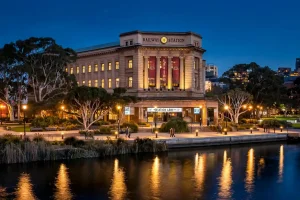
An address is the least poetic part of a night out and often the most consequential. A listing can place a casino under a familiar name while leaving uncertainty about which entrance, building or service it refers to. Before setting out, the venue’s own current visitor information is a better reference than a copied map pin or an old directory entry. The distinction matters particularly where a larger property contains several public areas: an address may identify the site without explaining where a particular facility is found.
The same caution applies to dress expectations. Searches for a casino dress code tend to invite a neat answer—formal, smart casual, or anything goes—but a general label can conceal differences between gaming areas, bars and special events. No single standard should be assumed for every part of a venue. Where clothing could affect entry, the useful detail is the current policy for the specific area or occasion, not an old recollection repeated as if it were permanent.
Spa searches carry another small ambiguity. A request for a casino spa or day spa may mean a treatment facility inside the casino, a service elsewhere on a broader property, or simply a nearby business associated with the same destination. Those are not interchangeable arrangements. A listing should make clear what is actually offered, where it is located and whether the service operates independently of the casino. Without that distinction, the word “spa” does more work than it should.
These are practical questions, not evidence of facilities. A search result or a familiar phrase cannot establish that a spa exists, that a particular dress policy applies, or that an address belongs to the intended venue. The sensible sequence is to confirm the venue identity, check its current visitor information, and then verify any facility or entry condition directly before making plans. If those details are not published clearly, that uncertainty is itself relevant.
Bars, games and employment searches may appear beside address and spa listings because the same venue name gathers many kinds of interest. They answer different questions. A bar’s hours, a games offering and a careers page each require their own current information; none can be inferred from a location pin or a general description of the property. The physical place is only the beginning of the enquiry. The particulars matter.
A restaurant associated with a casino can mean several different things: a dining room inside the gaming venue, a separately operated business on the same site, or a restaurant elsewhere in the surrounding area. Those distinctions matter more than a polished name on a map. They determine whether a meal belongs to the casino visit at all, whether entry arrangements apply, and whether the venue is operating as a restaurant rather than simply serving drinks or snacks.
For anyone considering a Hobart casino restaurant, the useful details are practical ones. Is the restaurant currently open? Does it publish a menu, and does that menu suit the occasion? Are reservations accepted, or is service based on walk-ins? Is the dining room accessible to people who are not visiting the gaming floor? These are ordinary questions, but they separate a dependable plan from an assumption built on an old listing.
The word “casino” can also blur the boundary between a venue and its neighbourhood. A restaurant near the casino is not necessarily part of it, even when a map places the two close together. Likewise, a rooftop bar is not a restaurant merely because food may be mentioned in a description. A separate venue name, entrance or booking page can signal a different operator and different conditions. Small distinctions; inconvenient when ignored.
A sensible comparison starts with the meal itself. Current menus reveal whether a venue is suited to a full dinner, a short stop or a particular dietary need. Published service times matter because restaurant hours can differ from those of a larger entertainment venue. Booking terms, cancellation rules and any access conditions are worth checking before plans are made, especially when dining is the main purpose of the visit rather than an addition to it.
The broader phrase “restaurants in Hobart” opens a different choice from restaurants at a casino in Hobart, Australia. One concerns the city’s dining options; the other asks whether a particular venue has an on-site restaurant and what it offers. Keeping those questions separate makes comparisons clearer and avoids treating a nearby business as part of the casino.
A casino’s restaurants, if operating under their own names or arrangements, should be judged as dining venues first: by their current menu, service information and booking details. The setting may be distinctive. The meal still has to stand on its own.
Food and a swimming pool are different kinds of practical question, even when they appear together in plans for a casino visit. A meal may be part of an evening out; a pool would point to a leisure facility with its own access arrangements. Neither should be assumed from the other.
The phrase “food at the Hobart casino” can mean anything from a place to grab something quickly to a broader choice of meals. A food court, in particular, suggests several casual options gathered in one area. That is a more specific claim than the presence of dining somewhere on the premises, and it should not be treated as established without current venue information identifying such a space.
The same care applies to a pool. A casino’s association with hospitality does not, by itself, show that the venue has a swimming facility, that it is open to casino visitors, or that access is included with any other visit. Those details can matter as much as the amenity itself: a pool may belong to a separate hotel or club, carry access conditions, or not be part of the venue at all.
This distinction is useful because broad descriptions can blur facilities that are separate in practice. A reference to food does not establish a food court; a reference to a casino resort does not establish a pool. Current venue material is the appropriate place to confirm whether either facility exists and, if so, what access and service arrangements apply.
Until those details are clear, plans should not depend on a particular food-court setup or a swim at the casino. It is a modest standard of certainty, but a useful one.
Region blocking uses your IP address to estimate your location and restrict access to games in locations excluded by a casino or software provider. A blocked game may not appear in the lobby or may fail to load.
An online pokie uses a Random Number Generator (RNG), and each spin is independent of previous spins. Its RTP describes the theoretical share of wagers returned over a very large number of spins.
A VPN can make your digital location appear to be in another country, but that does not guarantee access: a casino or software provider may still restrict the game.