A cautious guide to what a familiar machine name, free-play listing and offshore offer can and cannot establish.
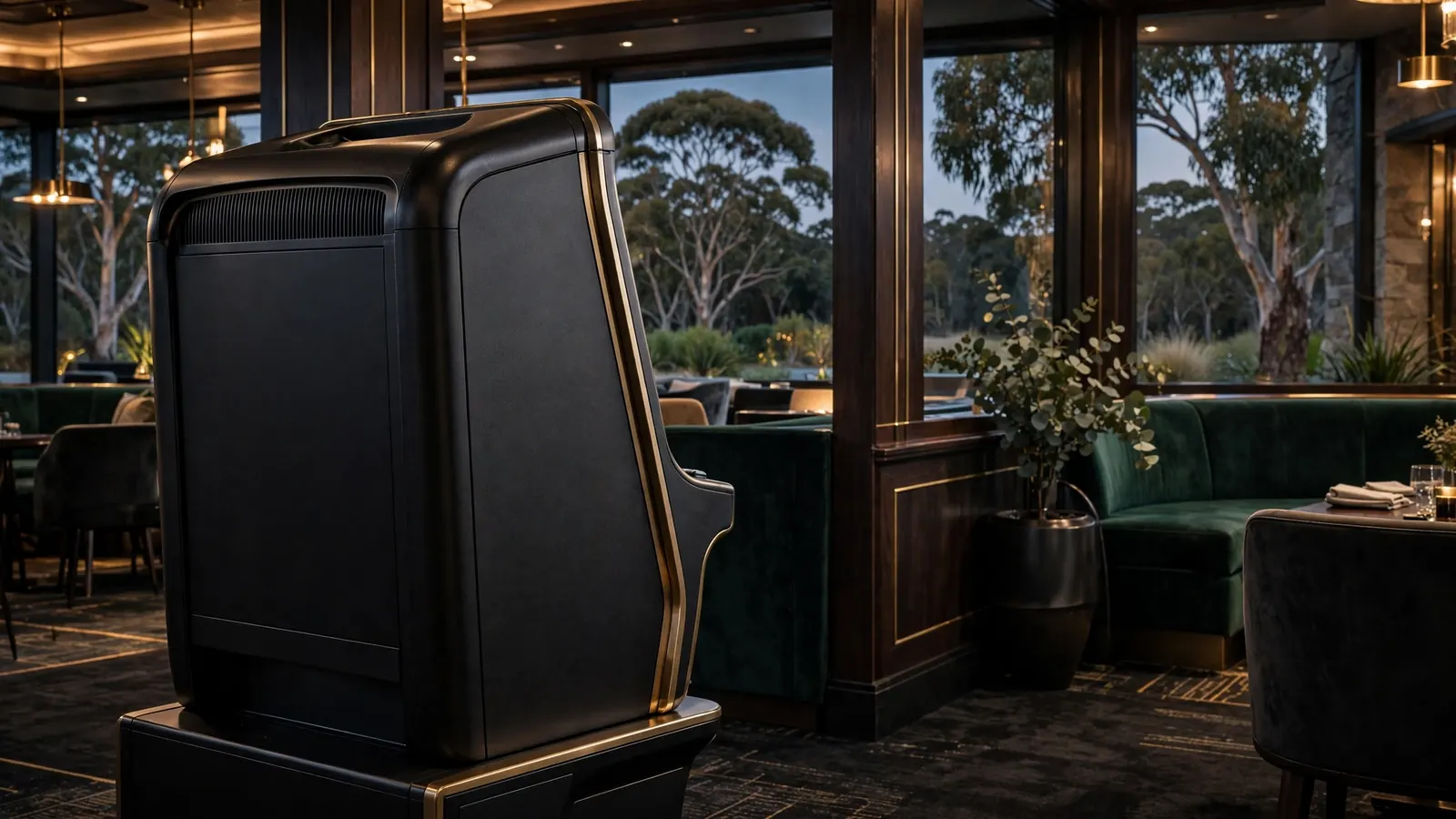
A familiar name can sound like a complete description. “Dragon Link” suggests a particular machine, perhaps one with recognisable artwork or a known style of play. But a name, by itself, does not establish what a game does, how it is configured, or whether a particular version exists in a particular setting. Those details belong to the machine’s specification, not to the phrase used to identify it.
That distinction matters when the subject is a pokie associated with a physical casino machine. A name may travel between machines, online listings and conversations without carrying the same technical information with it. Even when two products share a title, the title alone cannot show that their rules, presentation or operating conditions match. Familiarity is not a specification.
The same caution applies to descriptions of Dragon Link as an online game. The name does not, on its own, establish the layout of the game, its symbols, its bonus rules or the way a round unfolds. Nor does it confirm whether an online version reproduces a physical machine or simply uses a related name. Describing those details as settled would turn an assumption into a product claim.
Choosing a Dragon Link online pokies site in Australia means weighing the operator details that are available before deciding where to play. Use these notes as a quick reference alongside your own checks of the game and site terms.
Playfina Casino
Playfina Casino is listed with a Curacao eGaming license held by Hollycorn N.V. since 2017. Its minimum deposit is A$20–30, depending on the offer.
Kingmaker
Kingmaker lists crypto payouts at about 90 minutes and fiat payouts at 1–5 days. Its minimum deposit is A$30.
Ricky Casino
Ricky Casino lists crypto payouts in under an hour and PayID payouts in 1–3 business days. The minimum deposit is A$20, or A$30 to qualify for the bonus.
LevelUp Casino
LevelUp Casino is listed with a Curacao eGaming license, OGL/2023/174/0082, held by Dama N.V. Its minimum deposit is A$15.
WinSpirit Casino
WinSpirit Casino is listed with a Curacao eGaming license, OGL/2024/923/0383, held by Antillephone N.V. Its minimum deposit is A$30.
JustCasino
JustCasino is listed with a Curacao Gaming Control Board license. No deposit or payout details are provided here.
MrPacho
MrPacho lists crypto payouts at 30–120 minutes and fiat payouts at 24–72 hours. Its minimum deposit is A$30.
Bizzo Casino
Bizzo Casino is listed with a Curacao Gaming Control Board license, with TechSolutions Group N.V. named as the operator. No deposit or payout details are provided here.
7Bit Casino
7Bit Casino is listed as Curacao-licensed and operated by Dama N.V. No deposit or payout details are provided here.
Roby Casino
Roby Casino is listed with a Curacao eGaming license held by Roby Games Ltd. No deposit or payout details are provided here.
This is not a peculiar problem of pokies. Product names are useful labels, but labels do not contain every feature of the thing they name. A car model, a theatre production and a machine can all have versions that differ by place or release. The more a title becomes familiar, the easier it is to mistake recognition for knowledge. The name feels like evidence because it is easy to remember.
For a machine called Dragon Link, the practical question is therefore not just what the title evokes. It is what can be tied to an identifiable game and a specific version. A complete description would need to distinguish the game itself from a cabinet or display, and a physical installation from an online presentation. Without those distinctions, a list of supposed features can appear precise while referring to no clearly defined product.
Search results can deepen that confusion. A page may use “machine” to mean a physical cabinet, a digital game, or a general category of online play. Another may use “pokie” as shorthand for a named title without explaining whether it means the same version. Those words are often treated as interchangeable in casual discussion, but they do not answer the technical question of what is actually being described.
The Australian setting adds another possible ambiguity: a reference to a machine in Australia may sound like confirmation of an Australian version. It is not. A location attached to a product name does not identify its software, rules, supplier or configuration. Nor does an Australian-facing description establish that a machine found elsewhere has an equivalent local counterpart. Geography in a label can be no more than geography in a label.
There is a modest general definition that does help keep categories clear. Bitcoin pokies are digital slot machines that accept Bitcoin as a payment method. That describes a broad kind of digital product and its payment feature; it does not identify Dragon Link as one of those games, or establish that Bitcoin is connected with any particular version of it. A category description should not quietly become a claim about an individual title.
The distinction is especially important because people often infer a machine’s mechanics from its name. A title may suggest a theme, but a theme cannot confirm how play works. It does not establish whether there are special rounds, how symbols behave, what determines outcomes or whether a particular feature is present. Such details need a specification tied to the relevant game version. Otherwise, confident description is simply confident guesswork.
There is also a difference between recognising a title and knowing its provenance. A machine’s name does not reveal who produced a particular version, when it was released, or whether an online presentation has an authorised relationship to a physical product. Those are separate questions. A matching title, image or general theme cannot answer them by itself.
The careful way to speak about Dragon Link, then, is to keep the claim proportional to the evidence attached to it. The name can identify what people mean to discuss; it cannot do the work of a technical record. No particular mechanics or Australian machine version should be read into it merely because the title is familiar or appears in a listing.
That is less dramatic than a feature-by-feature account. It is also more useful than inventing one. A machine name opens the subject; it does not settle it.
Free play and real-money play are different modes available for online pokies in general. That distinction is simple; what it proves about a particular game is not. A title appearing in a request for a free version does not establish that such a version exists, that it is supplied by the game’s maker, or that it represents the same experience as any real-money version.
For Dragon Link, the name alone cannot settle those questions. Nor does a page describing a free option establish that the option belongs to an official release. The distinction matters because a familiar title can be used in search results, promotional copy or an imitation without confirming who made the software or what is actually being offered. Recognition is not verification.
Free play, when available, means that play takes place without wagering real money. Real-money play involves money being staked. Those modes should not be treated as interchangeable merely because their labels appear beside the same game name. One describes play without a cash stake; the other describes a money-based activity. The label does not, by itself, authenticate the game or explain its mechanics.
That is the narrow point free play can make. It may indicate that an online pokie is being presented in a no-money mode. It does not, on its own, confirm that the named title is genuine, that the version is complete, or that its features match another version. It also cannot establish what a real-money experience would be like. Those are separate claims, and a mode label cannot carry all of them.
The words “free” and “real money” can make a difference sound like a matter of price alone. In practice, the distinction is also about what a player is being asked to risk. In free play there is no real-money stake; in real-money play, money is involved. That difference is enough to make comparisons cautious. An impression formed in one mode should not be treated as evidence about the other.
The same caution applies to claims about a free Dragon Link pokie or a Dragon Link review. A review might discuss a title, a play mode, or a particular site’s presentation of it. Without clear identification, those subjects can blur together. A review’s existence does not certify a free version, and a reference to a free version does not confirm a connection to an official game. The wording can be confident while the underlying object remains unclear.
A free-play label also says little about the conditions of any particular offer. It does not establish whether access is available, what software is used, or whether a version behaves in a particular way. None of those details should be inferred from the word “free.” The absence of a monetary stake is a meaningful distinction, but it is not a full description.
Free play allows users to experience an online pokie without wagering real money, whereas real-money play involves actual financial stakes.
There is a small social history in this division. Games that once required a physical machine have become software presented through screens, while the language of play has split into modes that separate practice from payment. The screen can make both modes look equally immediate. The difference lies not in the appearance of a button or a familiar name, but in whether real money is at stake—and in the need to know what product the label refers to. A polished display is not proof.
For anyone assessing material about Dragon Link, the sound approach is therefore modest: treat free play as a general mode of online pokies, not as confirmation of a particular title’s free edition. A description may be accurate about the broad distinction and still leave the identity of the game unsettled. The two questions should not be collapsed.
This page is affiliate material and may include sponsored links. That disclosure identifies a commercial relationship; it does not verify a game, an offer or a play mode. The distinction remains.
Free means one thing. Not everything.
The phrase “real-money pokies” can sound like a description of a product waiting on a shelf: choose a game, choose a stake, begin. In Australia, the first relevant question is not which machine carries the name Dragon Link, but whether an online casino may lawfully offer real-money pokies to someone in the country. Australian law draws a firm boundary around that offer.
The Interactive Gambling Act 2001 prohibits operators from providing online casino-style games, including pokies, to people physically located in Australia. A locally licensed online casino therefore cannot lawfully offer residents real-money play on these games. There is no domestic licensed online-casino route that makes the same activity permissible by changing the label on the website or the currency in the account.
That distinction matters when a page or promotion appears to present real-money play as an ordinary Australian service. The wording may describe what an offshore operator claims to provide, but it does not turn the service into a locally authorised one. Nor does the presence of an Australian-facing page establish that the operator is governed by Australian casino rules. The law is concerned with the service offered to people in Australia, not merely with the tone or branding of the offer.
Offshore operators discussed in connection with online casino play sit outside the Australian consumer-protection framework. Australian consumer protection laws do not apply to them. That is a practical difference, not a footnote: a dispute about an account, a payment or the handling of a complaint does not acquire Australian safeguards simply because the person affected lives in Australia or the website can be read there.
The absence of those protections also changes what a familiar-sounding promise means. A statement about access, service or payment is still a statement made by the operator; it is not a guarantee backed by Australian consumer law. If a disagreement arises, the distance between the customer and the operator’s jurisdiction can make the protections that would ordinarily shape a domestic transaction unavailable. The page may look local. The legal relationship is not.
This is one of the less visible consequences of a borderless interface. A website can flatten distance into a few lines of text, while the law continues to assign authority by jurisdiction. Australian consumer protections do not travel with the customer into an offshore arrangement.
Legal Risk
Offshore operators are not governed by Australian consumer protection laws, meaning disputes over accounts or payments lack domestic safeguards.
The legal prohibition described here concerns operators providing real-money online casino services to people physically in Australia. It should not be misread as a claim that an individual player faces a fine or criminal prosecution merely for playing at an offshore casino. The restriction falls on the provision of the prohibited service; the legal position of the operator and that of the player are not interchangeable.
That distinction does not make an offshore offer safe, lawful for the operator, or protected under Australian consumer law. It simply keeps the description precise. A person considering Dragon Link pokies for real money is encountering two separate questions: whether the named game is actually available in a particular form, and whether the operator may lawfully provide real-money casino play to someone in Australia. The first cannot be answered by the search phrase alone. The second is bounded by Australian law.
The age boundary remains important in any discussion of real-money gambling: it is for adults aged 18 or older, not children. But age does not override the prohibition on operators supplying online casino games to people in Australia. Being an adult does not convert an offshore casino offer into a locally authorised service.
The broader policy choice is plain enough. Australia permits gambling in some forms while prohibiting operators from supplying online casino games to people located here. That line can seem oddly specific in a world where the same screen offers many kinds of entertainment. It is specific all the same. A familiar game name, an Australian dollar balance or an Australian-facing advertisement does not erase it.
This material is affiliate content and may include sponsored links. That disclosure describes the page’s commercial context; it does not alter the legal status of the services discussed or supply consumer protections that offshore operators do not provide. A commercial disclosure is not a licence.
No invitation follows from describing the boundary. Real-money online casino play offered to Australians by offshore operators remains outside the domestic consumer-protection system, while Australian law prohibits the operators from supplying those services to people here. The difference between an accessible-looking website and a protected Australian service is substantial. Not a technicality.
“Dragon Link” is a name, not a complete description of a pokie. Its appearance in a casino menu, a promotional page or a social post would not, by itself, establish which game is meant, who made it, or whether the same title is being offered in different places. A familiar label can travel farther than the evidence attached to it.
That distinction matters when claims are made about Dragon Link pokies in Australia. The words “available online” do not establish availability to people physically in Australia, and adding “2026” does not turn a title into a verified current release. A date in a headline may mark the page’s subject, not the age, status or specifications of the game. Those are separate claims, each needing its own support.
The name also cannot settle what a particular version contains. It says nothing reliable about its rules, symbols, bonus rounds, return-to-player rate, volatility, software provider or compatibility with a device. Nor can it show whether two pages refer to the same product. Similar naming can invite an assumption of continuity; it cannot prove it. The word “Dragon” may sound distinctive, but distinctiveness is not documentation.
There is a broader habit at work here. In online gambling, a product name often serves as a shortcut: a way to make a page feel specific before the details have been established. The shortcut is useful to the seller because a recognised-sounding title can carry the promise of a known experience. For the reader, it can blur the line between a search label, a game listing and a confirmed product. The label does the work. The evidence may not.
The Australian setting adds another boundary. Real-money online casino games offered to people in Australia are prohibited under the Interactive Gambling Act 2001. The operators discussed in this market hold offshore licences, primarily from Curacao eGaming or the Anjouan Gaming Authority; those licences do not make an online casino locally licensed in Australia. Australian consumer protection laws do not apply to those offshore operators. A title’s presence on an offshore site therefore cannot be treated as proof of an authorised Australian offer or of the protections that would accompany one.
None of this establishes that a Dragon Link game is or is not available somewhere, or that a particular page is describing a genuine product. It marks the limits of what the name can bear. Claims about an Australian version, a 2026 update or particular features should not be mistaken for facts simply because they are assembled around a recognisable title.
A name can point toward a question. It cannot answer it.
A casino associated with a name such as Dragon Link is still an operator before it is a catalogue of games. Its licence belongs to the company running the site, not to a particular title, and it identifies the jurisdiction in which that company claims regulatory oversight. The offshore operators discussed here hold licences primarily from Curacao eGaming or the Anjouan Gaming Authority.
Those names can sound like assurances. They are not Australian approvals. A licence issued offshore does not bring an operator under Australian consumer protection law, and Australian protections do not apply to the offshore businesses discussed. That difference matters most when a disagreement arises: the familiar local routes for consumer redress cannot simply be assumed to cover a company operating under another jurisdiction’s rules.
The word “licensed” therefore needs its address attached. Without it, the word can do more soothing than informing. A foreign licence describes the operator’s offshore status; it does not establish that the operator is authorised to serve people in Australia, nor does it supply the protections of an Australian-licensed casino. The gaming name on a page cannot alter that jurisdictional boundary.
This is also why a search for an online casino carrying Dragon Link should not be treated as evidence about the casino behind the offer. A game name may appear in a site’s presentation, but the operator remains the party responsible for its own terms, account handling and business practices. The licence jurisdiction is about that operator, not proof of a game’s Australian availability or official connection.
The distinction can be obscured by polished branding. A familiar name, a regional payment option or an interface designed for Australian visitors does not change where the business is licensed. Nor does a licence from Curacao eGaming or Anjouan Gaming Authority mean Australian consumer law follows the customer across the border. It does not.
This page is affiliate material and may include sponsored links. That commercial relationship should be read as disclosure, not as a recommendation or a substitute for regulatory protection. No operator’s appearance in surrounding material changes the status of offshore consumer protections.
The short version is less comforting than the word “licensed”: offshore oversight remains offshore. A local-looking offer is not a local safeguard.
Bitcoin pokies are digital slot machines that accept Bitcoin as a payment method. That description concerns the way a game handles funds; it does not establish anything about the rules, symbols or prizes of a particular title. The payment layer and the game itself are separate things, even when a casino presents them as one seamless screen.
A specialist review describes game credits as specific to each game, with their Bitcoin value depending on the game and the current BTC price. A credit is therefore not a fixed Bitcoin amount that can be assumed to carry from one pokie to another. The denomination belongs to the individual game, while the cryptocurrency’s market price can change. Those two moving parts make a displayed credit value less like a coin in a traditional machine and more like a unit whose cash equivalent needs context.
That distinction matters when a familiar game name appears beside a Bitcoin payment option. The payment method alone cannot establish how the game counts its credits, what any prize is worth, or whether the named game is available in that format. It says only that Bitcoin is accepted somewhere in the payment arrangement. The rest belongs to the specific game and operator, not to Bitcoin as a currency.
The language of online gambling often compresses these layers into a single label: a Bitcoin pokie. The phrase is useful shorthand, but it can obscure what is being described. Bitcoin is the means of payment; the game’s credits are its own accounting unit. Confusing the two can make a balance look more definite than it is, especially as the Bitcoin price shifts.
This is not a special property of one named machine. It is a general distinction between a digital game’s internal credit system and the cryptocurrency used to fund play. A title associated with jackpots, a particular theme or a branded series does not acquire verified mechanics merely because Bitcoin appears in the same offer. Names travel easily across advertising. Specifications do not.
The practical point is modest: a Bitcoin-denominated payment does not make every game’s credits equivalent, nor does a credit label by itself disclose a stable Bitcoin value. The game and the prevailing BTC price both shape that relationship. Two layers, one balance.
A large win can change the character of a withdrawal. What looked like a routine request may become a security review, particularly when an account is new or the player is making a first substantial withdrawal. Some operators may use these checks to delay payment. The possibility matters because the player can be left waiting without a clear sense of whether the review is genuine, how long it will take, or what will satisfy it.
Attention: A request for an additional deposit to unlock a stalled withdrawal should be treated as a serious warning rather than a routine step.
That uncertainty is not evidence that a particular Dragon Link game pays, or that any named title is available in Australia. Searches for Dragon Link winners, bonus rounds or winning tips cannot establish either point. Nor do stories of wins explain how an operator will handle a withdrawal. A game result and a payment decision belong to different parts of the arrangement; the latter is controlled by the operator.
The useful distinction is between a review with a stated reason and a delay that keeps acquiring new conditions. Requests for further information may be part of a review, but repeated demands without a clear explanation can leave a player unable to judge what is happening. Most importantly, a stalled withdrawal is not a reason to send more money to unlock it. An additional deposit can deepen the loss without resolving the dispute.
There is a larger boundary around these accounts in Australia. The Interactive Gambling Act prohibits operators from providing real-money online casino games, including pokies, to people physically in the country. Offshore operators are outside Australian consumer protection laws, so those protections cannot be assumed to resolve a dispute over withheld winnings. This is a description of the risk, not an endorsement of offshore play. Real-money gambling is for adults aged eighteen or over; that age condition does not make an offshore service locally protected.
A win may be memorable. A pending withdrawal is paperwork, authority and time—and the operator holds much of the practical power while the review continues. Not an even contest.
This page is affiliate material and may include sponsored links.
A request for a Dragon Link app can mean several different things: software from a game maker, a casino’s mobile website, or a third-party program carrying the same name. Those are not interchangeable. A familiar title on an app icon does not, by itself, establish who made the software, whether it is authorised, or whether it contains the game being sought.
The same caution applies to claims about a casino app. A payment route says nothing about the identity of an app. In the described Bitcoin deposit process, a player copies the account address supplied by a casino and sends Bitcoin to it from a personal wallet. That is a transaction between a wallet and an address; it is not evidence that a particular app is official or safe.
An app’s appearance can be persuasive. Names, logos and screenshots are easy to reproduce, while the distinction between a dedicated application and a website opened on a phone is less visible. The distinction matters: software can request permissions or handle account details in ways that have nothing to do with the game name displayed on its screen. A search result is not an endorsement.
Nor does the word “app” settle a question about game mathematics. A Dragon Link slot app label cannot establish a return-to-player figure. RTP is a property that must be tied to a specified game version and supported by reliable information; the label alone supplies neither. Treating the name as a technical specification would turn a guess into a number.
The sensible dividing line is between what a payment instruction describes and what a software claim promises. One concerns where Bitcoin is sent; the other concerns authorship, legitimacy and game content. They require different evidence. The first does not verify the second.
This page is affiliate material and may include sponsored links. That disclosure does not certify any app, casino or game. In Australia, the existence of a foreign-branded app also does not make real-money online casino games lawful for local operators to provide. A polished icon changes nothing.
A Bitcoin deposit begins with an address supplied by the casino account. The player copies that address, then sends Bitcoin to it from a personal wallet. The withdrawal route runs in reverse only in a limited sense: a request is submitted through the casino’s withdrawal form, with the player’s wallet address pasted into the relevant field.
Neither step depends on the name of a pokie or on a particular way of playing it. A search for how to play or win at Dragon Link does not establish that a named game is available, and it cannot make a payment destination safer. The transaction has its own narrow logic: the address must match the intended destination. Bitcoin transfers sent to an incorrect address are irreversible and generally cannot be recovered. The blockchain keeps the record; it does not provide a customer-service desk.
A deposit may fail to appear because an address has been reused, the amount sent was below the operator’s requirement, or the operator has not yet detected the incoming payment. Withdrawal delays can stem from an approval queue, incomplete identity checks or processing batches handled during business hours. These causes are distinct, and a delay alone does not establish what has happened to a particular transaction.
A stuck withdrawal is not a reason to send more money to unlock it. That demand should be treated as a serious warning, not as a routine payment step. Australian consumer protection laws do not apply to offshore operators discussed here, leaving fewer local avenues when a dispute arises.
This is affiliate material and may include sponsored links; that disclosure does not make offshore gambling services suitable or locally protected. Payment instructions are not an endorsement. Payment is the easy part.
“Happy and Prosperous” sounds like a title designed to make good fortune feel almost ceremonial. The phrase carries the familiar promise of a lucky turn, but a name is not a game specification. It does not establish how a pokie works, who made it, where it can be played, or whether it belongs to Dragon Link at all.
That distinction matters because closely associated names can be treated as proof of a connection they do not establish. A page describing a “Happy and Prosperous” machine alongside Dragon Link would not, by proximity alone, confirm that the two refer to a single title or variant. Nor does the wording establish an Australian release or any feature particular to a version in 2026. Those claims need evidence beyond a shared phrase.
Online pokies, as a broad category, may be available in free-play or real-money modes. That general choice says nothing about whether a particular game carrying this name exists in either mode. Free access elsewhere is not confirmation of a free version here; the possibility of real-money play across the category does not verify a specific offering.
The title therefore remains just that: a title. Its upbeat wording can suggest a theme, but suggestion is not evidence of artwork, rules or prizes. Even the conjunction changes little: “Happy and Prosperous” and “Happy & Prosperous” may look like stylistic alternatives, yet neither spelling independently identifies a verified game.
There is a small cultural bargain in names like this. Fortune is given a tidy label, as if prosperity might be summoned by selecting the right words. But the label cannot carry the burden of proof. Pleasant phrasing. Nothing more.