Venue listings can be snapshots; opening status alone does not confirm that gaming areas or machines are available.
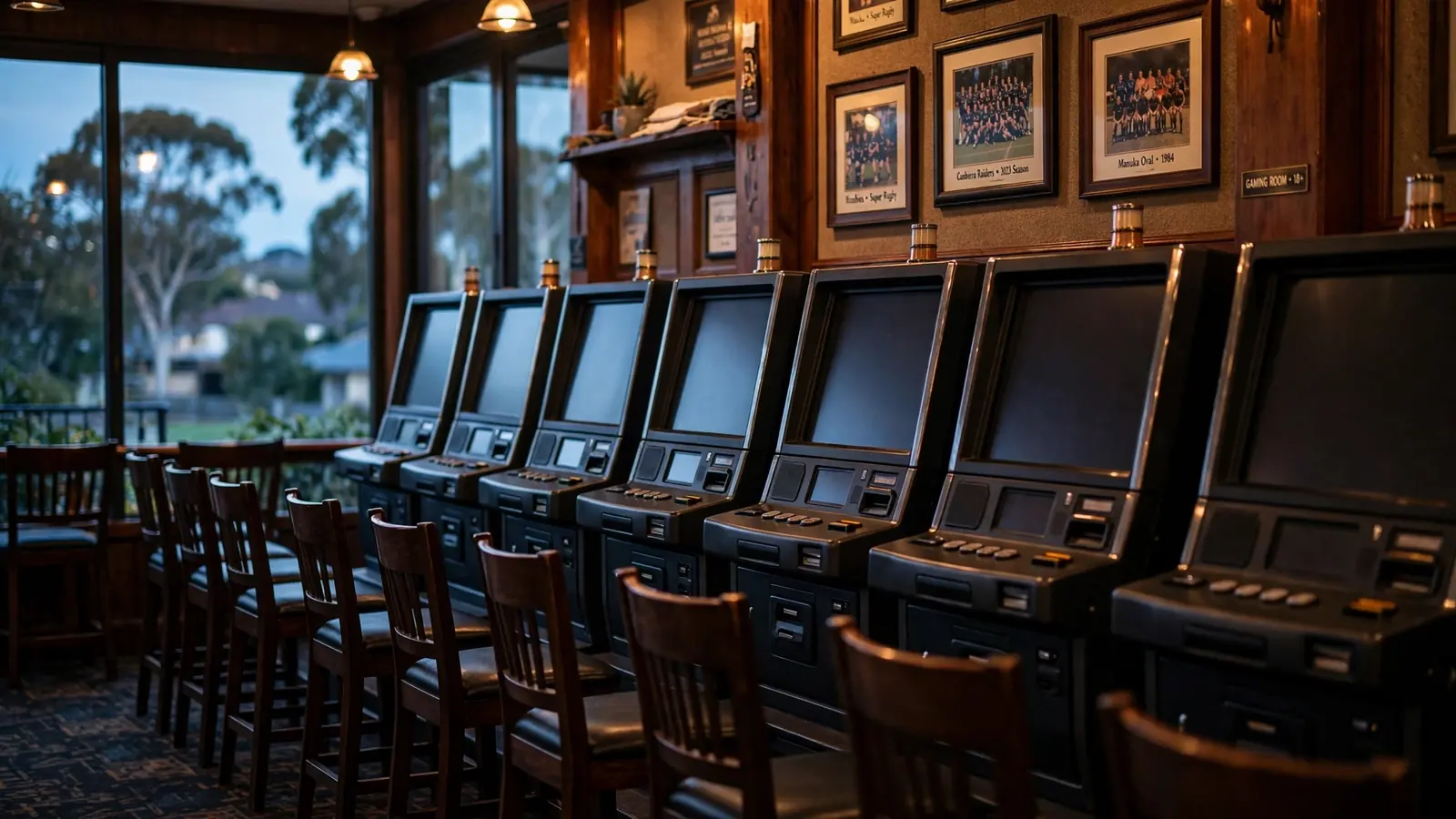
“Open now” is a narrow question dressed up as a complete answer. It may indicate that a venue is trading at the moment a listing is checked, but it does not establish that its gaming area is available, that every service is operating, or that the same hours will apply later. For anyone trying to find Canberra pokies open at a particular time, the distinction matters: a venue’s general opening status is not a promise about the machines.
Opening information is time-sensitive. A listing can be out of date, and a venue’s hours may differ across days or change for reasons that have nothing to do with the machines themselves. A result displayed early in the morning may show regular business hours rather than confirm that pokies are available then. The word “open” does a great deal of work for a very small word.
The most reliable way to check a specific venue is to consult its own current information or contact it directly. A map listing or directory can help identify whether a place appears to be trading, but it is still a snapshot assembled for a particular moment. Where an exact opening time matters, the venue is the party able to confirm it. This is less satisfying than a neat list of early or late options, but it avoids turning a guess into a timetable.
That is particularly relevant to searches for pokies open early in Canberra, including requests for a six or seven o’clock start. A time entered into a search box does not establish that any particular venue offers access then. Nor does a general business-hours label settle whether the gaming area is operating. The practical answer has to come from current, venue-specific information, not from the clock in the wording of the search.
The same caution applies late at night. A venue may have one set of public-facing hours and separate arrangements for particular facilities; a listing alone may not make that distinction clear. “Open late” can mean different things in ordinary use, and it should not be treated as a precise operating schedule. If the stated hours matter, an explicit confirmation is more useful than an ambiguous label.
There is also a difference between asking whether pokies are open and asking whether a particular place is open. Canberra is not a single venue with a single switch. Each business sets and communicates its own trading information, so a city-wide answer would be too broad to rely on. A search result that combines several locations can be a starting point, but it cannot replace checking the place in question.
Timing changes the value of an answer. Someone deciding whether to leave home now needs current information; a saved result from an earlier visit may no longer help. Even when a venue’s stated schedule is stable, a quick check before setting out is a sensible way to avoid relying on an old listing. No drama. Just housekeeping.
A further limit is that opening status says nothing about the experience inside. It does not indicate which games are available, how busy the room may be, or what return setting applies to a game. Those are separate matters. In particular, a venue being open cannot establish a pokie’s payout percentage. A timetable is not a performance report.
Attention: A venue's general opening status is not a promise that its gaming area is available or that pokies are operating at that time.
The word “pokies” also appears in searches about online play, but online availability is not the same as a Canberra venue being open. Under Australia’s Interactive Gambling Act 2001, companies cannot provide real-money online casino games to people in Australia without a domestic licence, and no Australian online casino licences have been issued. The legal restriction is directed at operators rather than individual players. A website appearing accessible is not evidence that it is licensed to provide those services here.
For a physical venue, the useful question is therefore specific and immediate: is this particular place open at this time, and does its own information confirm the part of the venue being sought? For an online result, an “open” indicator answers a different question altogether and should not be mistaken for local venue hours or domestic licensing. The interfaces may look similarly definite. Their meanings are not.
The search for Canberra pokies open now is ultimately a request for a current operational detail, not a ranking of venues or a guarantee of access. Listings can narrow the uncertainty; direct confirmation can reduce it further. Neither a search result nor a venue’s general opening label can sensibly stand in for the exact information needed.
For Canberra players considering online pokies in 2026, this list is a starting point for reviewing available operator information. Check the stated licensing and payment details to see what is relevant to you.
Playfina Casino
Playfina is listed with a Curacao eGaming license held by Hollycorn N.V. since 2017. Its minimum deposit is A$20–30, depending on the offer.
Kingmaker
Kingmaker lists crypto payouts at around 90 minutes and fiat payouts at 1–5 days. The minimum deposit is A$30.
Ricky Casino
Ricky Casino lists crypto payouts in under an hour and PayID payouts in 1–3 business days. The minimum deposit is A$20, or A$30 to qualify for the bonus.
LevelUp Casino
LevelUp Casino is listed with Curacao eGaming license OGL/2023/174/0082, held by Dama N.V. Its minimum deposit is A$15.
WinSpirit Casino
WinSpirit Casino is listed with Curacao eGaming license OGL/2024/923/0383, held by Antillephone N.V. Its minimum deposit is A$30.
JustCasino
JustCasino is listed with a Curacao Gaming Control Board license. That licensing detail is the available point of reference here.
MrPacho
MrPacho lists crypto payouts at 30–120 minutes and fiat payouts at 24–72 hours. The minimum deposit is A$30.
Bizzo Casino
Bizzo Casino is listed with a Curacao Gaming Control Board license, with TechSolutions Group N.V. named as the operator. The licensing information is the available point of reference here.
7Bit Casino
7Bit Casino is listed as operating under a Curacao license, with Dama N.V. as the operator. This licensing detail is the available point of reference here.
Roby Casino
Roby Casino is listed with a Curacao eGaming license, with Roby Games Ltd named in connection with it. The licensing information is the available point of reference here.
“Best-paying” sounds like a stable property, like a posted price. With pokies, it is better understood as a claim about a game’s theoretical return under particular settings—not a promise about what a player will receive. That distinction matters when comparing Canberra pokies, whether the interest is in a club floor or a casino-style game online.
Each spin is an independent event, determined by a Random Number Generator. The result of the previous spin does not make a win more or less likely on the next one. A long losing run is not evidence that a game is “due”; a recent win does not mean the machine has become generous. The machinery has no memory in the human sense. It does not notice patience, frustration or the size of a player’s last stake.
Return to player, or RTP, describes a theoretical share of stakes returned across a very large number of plays. It is a statistical measure, not a forecast for an individual session. A stated return cannot say whether a particular player will leave ahead, lose steadily or see a large result early. Short sessions may look nothing like the long-run figure. That is not a malfunction in the arithmetic; it is what randomness looks like at close range.
There is another complication for anyone trying to identify the best-paying pokies in Canberra: the title alone may not identify the return setting. A specialist review reports that some providers give casinos a choice of multiple RTP configurations for the same pokie. If a casino selects one setting and another venue selects a different one, the familiar name on the screen does not settle the comparison. A game’s advertised or commonly quoted return may therefore not establish the setting used in a particular place.
This makes neat rankings fragile. A list that places one title above another needs comparable information about the actual configurations, not merely game names or a general RTP figure repeated across websites. Without that, “best paying” can be a label detached from the machine being played. It may describe a version available somewhere, rather than the version present at a Canberra venue—or any specific version at all.
The same caution applies to claims about volatility. The term describes the pattern of wins: some games may produce smaller results more often, while others may have less frequent, larger outcomes. It does not turn random play into a schedule, nor does it mean that a high-volatility game will eventually pay a particular person. Even a description that is accurate about a game’s design cannot predict the next spin.
So a comparison has two separate limits. First, an RTP figure speaks about theoretical long-run behaviour, not a personal outcome. Second, the same game may be configured differently across casinos. A ranking that ignores either point gives the appearance of precision without enough information to support it. The polished percentage is not a receipt.
Return to Player (RTP) is a statistical measure of theoretical long-run behaviour, not a forecast for an individual session or a guarantee of a personal outcome.
For someone weighing claims about Canberra casino pokies, the useful distinction is between a game-level statement and a venue-level fact. A provider or review may describe a title’s possible return settings; that does not, by itself, establish which setting a particular venue uses. Nor does a high theoretical return mean that a session is likely to return that proportion of the money played. The figure belongs to a model over extensive play, while a session belongs to one person and a limited run of independent events.
That is why a supposed winner among pokies in Canberra cannot be established simply by collecting familiar titles and attaching payout claims to them. The machine’s name, the theoretical measure and the configured version are different pieces of information. Where the setting is unknown, a precise comparison is not possible. A clean answer would be more satisfying. It would also be less honest.
The word “best” may still describe a player’s preference for a theme or style, but it cannot make random outcomes predictable. No title can be identified here as a guaranteed earner, and no recent sequence tells what comes next. In the end, “best-paying” is a conditional description of theoretical return, not a dependable way to choose a winning spin.
A search for online pokies from Canberra belongs to a different category from a search for a local venue. The distinction matters because Australia has no licensed online casino. Under the Interactive Gambling Act 2001, companies cannot legally provide real-money online pokies to people in Australia without a domestic licence, and none has been issued.
Offshore sites may still accept Australian players, but that does not give them an Australian licence or place them under Australian consumer protections. If an offshore casino withholds winnings, a player has no legal recourse in Australia to compel payment. The neatness of a website, its advertised bonus or the appearance of familiar games cannot change that position. A bright interface is not a regulator.
BetStop has a narrower reach than its name might suggest: it applies to Australian-licensed operators and does not bind offshore sites. Since no Australian-licensed online casino exists, registration with BetStop should not be mistaken for protection from offshore casino marketing or access. It is a boundary, not a net.
A bonus headline can obscure the amount of wagering attached to it. A specialist review has advised treating requirements of 35x or less as a more manageable benchmark and described anything above 40x as punishing; these are that review’s judgments, not a statutory standard or a promise about any operator.
The arithmetic shows why the multiplier matters. At a 40x requirement, a $500 bonus would mean $20,000 in required bets before winnings could be withdrawn. If the requirement applies to the deposit plus the bonus, a $500 deposit and $500 bonus at 35x would require $35,000 in bets. The same multiplier can therefore produce very different obligations depending on which amount the terms count.
“Wagering” means the required turnover, not a sum that must be lost. Even so, the calculation can expose how much play is demanded before a withdrawal becomes available. Free-spin offers may also limit the winnings eligible for cash-out, so the headline offer is only one part of its conditions. The small print does the heavy lifting.
Legal Risk
Under the Interactive Gambling Act 2001, providing real-money online casino games to people in Australia without a domestic licence is illegal.
Specialist reviews have also reported that some casinos set weekly or monthly withdrawal caps between $5,000 and $10,000. Under such a cap, a $50,000 jackpot could be paid in instalments over years rather than as one transfer. Those reported figures describe terms found by reviewers, not a rule applying to every offshore site. A withdrawal ceiling can matter more than the advertised jackpot: a balance is not the same thing as money received.
Before a first withdrawal, identity and address documents should be verified. That can mean preparing proof of identity and proof of address, and checking that the details submitted match the account. Leaving verification until after a win introduces another condition at the point when access to funds matters most. The operator’s rules still govern its process, while Australian remedies do not become available merely because documents have been supplied.
Online-play searches and Canberra venue searches may use similar language, but they lead to different questions: one concerns a physical place; the other concerns a service operating across borders and outside Australia’s licensing system. The legal position is plain. The practical risks are less tidy.
A request for pokies near Canberra Airport sounds straightforward: find a gaming room close to the terminal, perhaps somewhere on the way into town. But “near” is not a location, and a search result is not proof that a venue exists where its label suggests. Without a confirmed address, a list of nearby places would turn a geographic guess into a recommendation.
The airport gives the search a clear starting point, not a confirmed destination. A result might refer to a club elsewhere in Canberra, a business using broad regional wording, or a listing whose map pin is inaccurate. Even a venue name appearing beside the airport on a map does not establish that its machines are on airport grounds or within any particular travelling distance. Proximity has to be measured from an actual address, not inferred from a shared city label.
The same caution applies to requests for pokies inside Canberra Airport. A terminal, an airport precinct and the wider area around the airport are different places. A result tagged “Canberra Airport” may describe the area rather than a venue located within the terminal. The distinction matters: a traveller looking for something within the airport is asking a different question from someone willing to go elsewhere in Canberra.
There is also a familiar cartographic muddle in searches that attach “Victoria” to Canberra. Canberra is in the Australian Capital Territory, not Victoria. The added state name may reflect a traveller’s route, a broad regional search or a mistaken assumption; it does not establish that a Canberra venue is in Victoria. Nor does the appearance of “north Canberra” in a listing prove that a particular gaming room lies there. Those words can help orient a search, but they cannot substitute for a verified street address.
A useful location check separates three things that online listings often compress into one: the venue’s identity, its address and its relationship to the airport. The name should correspond to a real place; the address should resolve to the building rather than a general suburb or district; and the route should be considered from the airport entrance, not from an abstract map label. If any of those pieces is unclear, the result remains a lead, not a confirmed nearby option.
That is especially important when search wording shifts between the airport, the central business district and the northern suburbs. Canberra is one city, but the labels do not describe interchangeable locations. A broad result for “Canberra” cannot answer a precise question about the airport, just as a listing for a central area cannot be treated as an airport listing by association. Geography is not a service guarantee.
The careful answer is therefore narrower than a directory: the airport-centred wording identifies the area being sought, but it does not establish a named venue or machine location there. A confirmed location needs more than a convenient map pin. The pin is only the beginning.
A venue’s appeal is easy to describe in terms of atmosphere, food or convenience. Oversight is less visible, but it says more about what happens around the machines when play becomes difficult to separate from harm. Canberra venues should not be treated as interchangeable simply because they offer pokies: the relevant question is how gaming spaces are supervised and how troubling incidents are recorded.
A report by regionriverina.com.au describes a requirement taking effect from 1 July for venues operating more than 20 gaming machines: a dedicated responsible gambling officer (RGO) must be on duty while those machines are running. The report also describes a one-month transition period for venues to introduce the officers and remove signage. Those details concern the change described in that report; they do not, by themselves, establish which Canberra venues are covered or how any individual venue has implemented it.
That distinction matters. A named role on a roster is not the same as a public measure of how a venue handles every situation, and a general rule is not a venue-by-venue audit. A search for the best pokies venue in Canberra may sound like a request for a simple ranking, but there is no meaningful score in these requirements. They describe accountability arrangements, not machine quality, winning chances or a guarantee of a particular experience.
The other measure in the report is a gambling incident register. Venues are to record occurrences, including cases where a patron’s behaviour suggests they may be at risk of gambling harm or already affected by it. A register turns an incident from something that can disappear into the noise of a busy room into something capable of being documented. That is the point of a record: not to make risk vanish, but to stop the venue’s knowledge of it being purely informal.
For someone comparing Canberra pokies venues, the practical value is therefore modest but real. The presence of a formal oversight framework is more relevant than a glossy description of a gaming lounge, yet it cannot settle whether a particular venue follows its procedures well. Nor does the existence of an officer or a register establish that every patron will be recognised at the right moment. Rules create duties; people still have to carry them out.
The framework also changes what “best” can sensibly mean. It need not mean the largest gaming room or the most enticing surroundings. It can mean a place where responsibility is assigned rather than left to chance, and where incidents are treated as matters to document rather than overlook. That is a standard to ask about, not a ranking to invent. The paperwork has a human subject.
“Twenty-four-hour pokies” sounds like a promise about the clock. It is better understood as a description that needs checking: it does not, by itself, establish that a particular Canberra venue is open all night, or that its gaming machines are available whenever the doors are. A phrase can travel further than the timetable it appears to describe.
That distinction matters because venue access and machine operation are not interchangeable. A venue may have its own opening arrangements; the hours during which pokies operate are another question. Without a confirmed schedule for the specific place and date, the round-the-clock label cannot settle either one. Nor does “open now” mean much without knowing what is open: the venue, a particular area, or the machines themselves.
There is also an operational rule behind the hours. A report by regionriverina.com.au describes a requirement taking effect from 1 July: a venue with more than 20 gaming machines needs a dedicated responsible gambling officer (RGO) present while those machines are running. The condition is tied to machine operation, not simply to the venue’s general opening time. It says something about the oversight expected during play; it does not certify that any Canberra venue operates continuously.
The detail is easy to mistake for a timetable. It is not one. An RGO’s required presence while machines are operating does not establish when those machines start or stop, whether a venue admits people overnight, or whether a particular gaming area follows the same hours as the rest of the premises. Those are separate particulars, and each belongs to the venue’s current arrangements.
The language of “24-hour” availability also compresses several ordinary distinctions into one tidy phrase. A building can be accessible while some facilities are unavailable; a gaming area can have operating hours that differ from other parts of a venue. The phrase alone does not resolve such differences. It is a headline, not a clock on the wall.
For Canberra, then, an all-hours description should not be treated as proof of a current schedule. The RGO rule offers a narrow but useful clue about what must accompany operation at venues above the stated machine threshold. Beyond that, the hour-by-hour picture depends on the particular venue and its own published information. A careful distinction, not a late-night assumption.
A timetable is still a timetable.
Putting “Crown” beside “Canberra” can make a phrase look like a location listing. It is not, by itself, evidence that a Crown venue or pokies room is in the capital. A name in a sentence can point to a brand, a venue elsewhere, an online service, or simply a mistaken association. Those are different things, even when the same words are used for all of them.
The distinction matters because a physical venue and an online casino are not interchangeable. A search for pokies at a named casino concerns a place and the machines available there. A question about online play concerns a service offered over the internet and the law governing that service. One cannot establish the other. Nor does a reference to Canberra settle where a venue is located.
There is no Australian-licensed online casino. That is the relevant answer to the licensing part of a Crown-related online search: the presence of a familiar name does not create an Australian licence, and a website’s branding should not be confused with domestic authorisation. The legal status of online casino-style games is not changed by attaching a city name to them.
Note: The presence of a familiar brand name or a city name in an online search does not create an Australian licence or domestic authorisation.
This is where search language can flatten useful distinctions. “Casino” may mean a building, a company name, or an online product; “pokies” may refer to machines in a venue or to digital games. In ordinary conversation, those meanings blur. In a licensing question, the blur is consequential.
The same caution applies to requests for the best pokies room in Canberra or the maximum cash payout from a machine. Those phrases express a desire for a venue comparison or a payout figure; they do not establish the location of a particular room, the machines it has, or the terms attached to a payout. A figure without a defined machine and venue would be decoration, not guidance.
Names travel more easily than venues. A casino name can appear beside a city in a headline, a map entry, or a web address without proving a local connection. Treating that pairing as a confirmed Canberra destination risks turning an assumption into directions. The safer distinction is also the simpler one: venue presence is a location matter; online licensing is a legal matter. Neither can be inferred from the other.
The name does not settle it.
A request for pokies in central Canberra can sound like a request for a map. The words “CBD” and “club” seem to promise a neat answer: a venue, an address, perhaps a row of machines behind the entrance. But a geographic label is not evidence of a particular location, and the word “club” does not establish what a venue offers.
That distinction matters in a city where civic buildings, offices, hospitality and social life share a compact centre. A club may be a place to meet, eat or attend an event; the label alone says nothing reliable about gaming machines. Nor does a general reference to Canberra establish that a venue is in the CBD. A list built on those assumptions would look useful while quietly turning uncertainty into directions.
“Best” adds another complication. It can mean the most convenient location, a preferred atmosphere or the games someone hopes to find. It cannot, on its own, identify a verified CBD venue or show that one place is better than another. A ranking without a clear basis is mostly confidence arranged in columns.
For anyone considering a venue, the practical distinction is between a club’s general presence and its current, specific facilities. Those details need confirmation directly with the venue before a trip is planned. This is not a judgement on Canberra’s clubs; it is a refusal to make a place out of a phrase.
Self-exclusion belongs to a different part of the question. It is a responsible-gambling tool, alongside deposit, loss and session-time limits. Its existence as an option does not establish which CBD venues participate, how a particular venue administers it, or whether an arrangement applies across venues. Those are details to clarify with the relevant venue or service, rather than infer from a city-wide description.
There is a broader civic point in the distinction. A club is not merely a set of facilities: it is a social institution, often associated with gathering and belonging. Gaming can sit within that setting, but the familiar name on the door does not tell the whole story. Specifics matter.
Self-exclusion, deposit limits, and session-time limits are responsible-gambling tools, but their administration varies by venue.
So central Canberra can be the area in mind without the phrase itself identifying a particular place to play. A CBD label is geography, not a directory; a club label is not confirmation of pokies.
Parkes can mean a precise place on a map, but a place-name in a search does not by itself point to a particular club, hotel or room of pokies. That distinction matters in Canberra, where a broad request for pokies in the city and a narrow request involving Parkes may sound alike while asking for different things. One seeks a general sense of what is available; the other needs a reliable location.
The phrase “best pokies in Canberra” also leaves the word *best* doing too much work. It might mean a venue nearby, a particular atmosphere or simply a place someone has heard about. None of those meanings establishes that a specific machine or venue is in Parkes. Nor does a result that combines Parkes and Canberra prove that the location has been checked: place names travel easily through listings, snippets and copied descriptions.
A useful distinction is between a machine’s location and a game’s supposed quality. A name attached to a place is not evidence of either. The location needs to be confirmed through current venue information, while claims about a pokie’s performance require a different kind of evidence altogether. Search results can collapse those questions into one neat line. Geography is less obliging.
That is why a Parkes-specific answer should not be assembled from the wording of a listing alone. The venue’s own current details, an address that can be matched to the intended area, and confirmation that gaming machines are actually available there would each matter. Without that chain, “pokies in Parkes” remains a request for a place, not proof of one.
The broader Canberra wording offers no shortcut. A city-wide result may concern a different part of Canberra, and a Parkes reference may be incidental rather than a reliable guide to a nearby gaming room. The difference is small on a screen and substantial on the ground.
In this case, restraint is more useful than a confident directory entry. A place-name narrows the question; it does not answer it.
“Cashless” can mean different things in different settings. In a venue, it may refer to how money is handled around gaming machines; PayID, by contrast, is a bank-transfer facility. The two ideas are not interchangeable, and the presence of PayID in a payment menu would not establish how a Canberra venue’s pokies accept funds.
PayID works as an alias layer on the New Payments Platform (NPP). A transfer can be addressed using an email address, mobile number or Australian Business Number rather than bank account details. That describes the route for a payment, not what it is paying for. It says nothing by itself about a site’s licensing, the fairness of a game or the terms attached to a transaction.
There is also a practical complication: a specialist review reports that some Australian banks, including members of the Big Four, occasionally block PayID transfers to gambling merchants they recognise. That is a report about payment behaviour, not a guarantee that a transfer will be accepted or rejected in any particular case. Banks have their own controls. Payment rails are not a public endorsement.
The phrase “cashless pokies in Canberra” therefore leaves several separate matters tangled together: the venue’s payment arrangements, the bank’s transfer rules and the machinery itself. A search term cannot settle those details. Cashless does not automatically mean PayID, and PayID does not prove that a gaming machine can be funded through it.
Newcastle is a separate place, not a clue about Canberra. Wording that joins Newcastle and Canberra may reflect two destinations being compared or simply a blended search, but it does not establish that a venue in either city is connected to the other. Geography remains stubbornly literal. A payment method cannot bridge it.
No Australian-licensed online casino exists, and Australian players have no legal recourse in Australia if an offshore casino refuses to pay winnings. A site being accessible does not show that it is licensed to provide online casino games in Australia.
Australian companies cannot legally offer real-money online pokies without a domestic licence, and no such licences have been issued. The law targets operators, not individual players, so Australians can legally play on offshore sites that accept them.
You must be 18 or older to gamble online in Australia, including on pokies.