Australian payment habits do not establish which casinos accept Paysafecard or resolve questions about deposits, withdrawals and offshore legality.
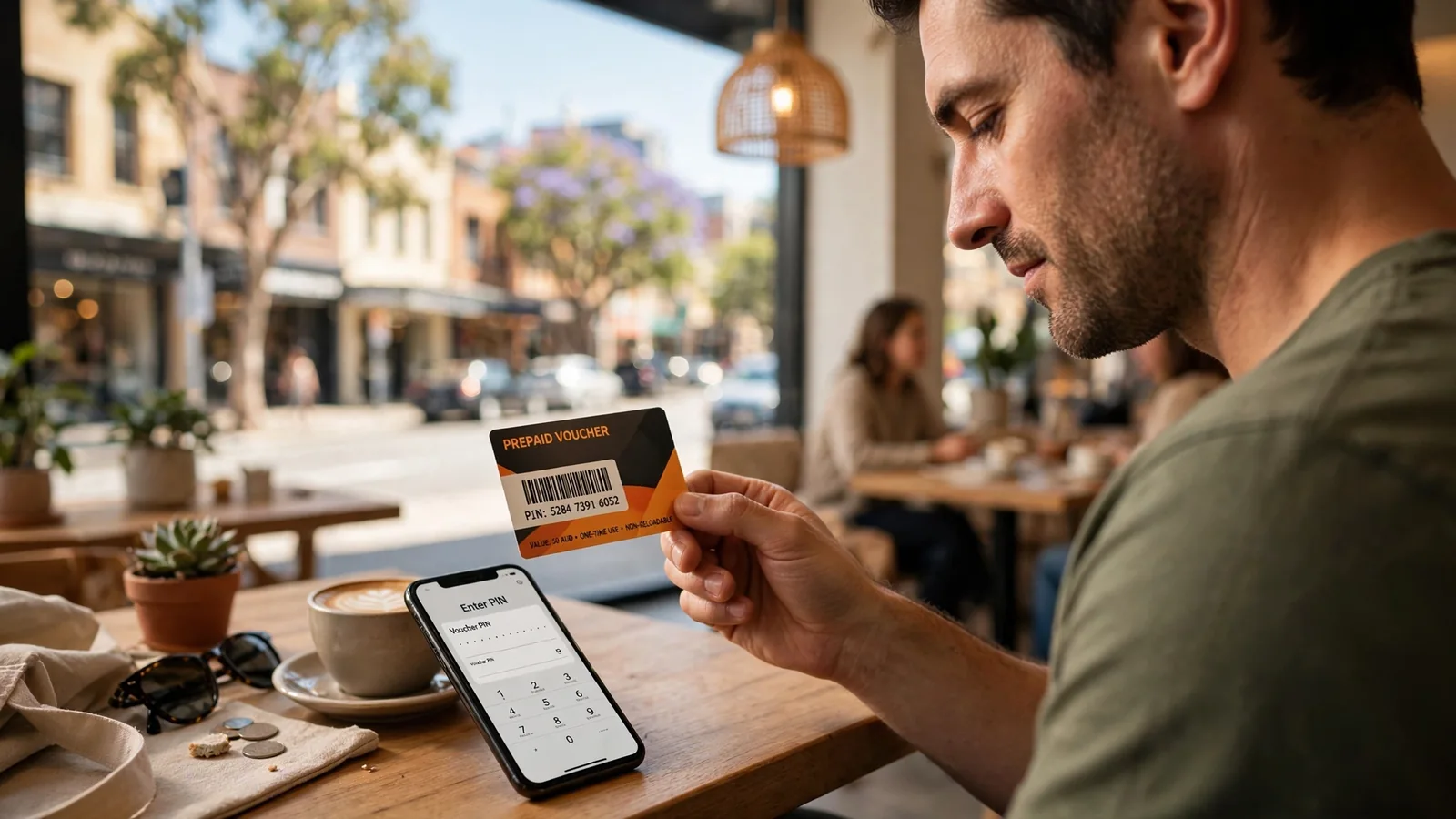
Australian payment culture is shaped by ordinary convenience: contactless credit and debit cards are accepted almost everywhere, and mobile wallets such as Google Pay and Apple Pay are similarly widespread. Switching between a card, a phone and a bank-linked service such as PayPal is familiar rather than novel. A payment method that sits outside that everyday pattern can therefore attract a particular kind of attention.
Paysafecard enters the conversation as an alternative people may want to compare with the methods already woven into daily life. That comparison is not simply about technology. Cards and mobile wallets fit neatly into a culture of tapping and moving on; a separate payment brand asks for a little more thought about where it fits and what a particular merchant will accept. The distinction matters when the subject is an Australian casino and Paysafecard: a general preference for one payment method says nothing by itself about whether a particular service supports another.
There is a broader habit at work, too. Australians are comfortable moving among cards, mobile wallets and services connected to banks. That flexibility leaves room for curiosity about other ways to pay, but it does not turn curiosity into evidence of availability. A familiar payment landscape can make a new option seem as though it ought to be interchangeable with the rest. It need not be.
Choosing a paysafecard-friendly casino in Australia is about checking which available details matter to you, from licensing information to minimum deposits and payout speed. Use these notes as a starting point and confirm the payment options available to you before depositing.
Playfina Casino
Playfina Casino is listed with a Curacao eGaming license held by Hollycorn N.V. since 2017. Its minimum deposit is A$20–30, depending on the offer.
Kingmaker
Kingmaker lists crypto payouts at around 90 minutes and fiat payouts at 1–5 days. Its minimum deposit is A$30.
Ricky Casino
Ricky Casino lists crypto payouts in under an hour and PayID payouts in 1–3 business days. The minimum deposit is A$20, or A$30 to qualify for the bonus.
LevelUp Casino
LevelUp Casino is listed with a Curacao eGaming license, OGL/2023/174/0082, held by Dama N.V. Its minimum deposit is A$15.
WinSpirit Casino
WinSpirit Casino is listed with a Curacao eGaming license, OGL/2024/923/0383, held by Antillephone N.V. Its minimum deposit is A$30.
JustCasino
JustCasino is listed with a Curacao Gaming Control Board license. No minimum deposit or payout details are provided here.
MrPacho
MrPacho lists crypto payouts at 30–120 minutes and fiat payouts at 24–72 hours. Its minimum deposit is A$30.
Bizzo Casino
Bizzo Casino is listed with a Curacao Gaming Control Board license, with TechSolutions Group N.V. identified as the operator. No minimum deposit or payout details are provided here.
7Bit Casino
7Bit Casino is listed as operating under a Curacao license, with Dama N.V. identified as the operator. No minimum deposit or payout details are provided here.
Roby Casino
Roby Casino is listed with a Curacao eGaming license, with Roby Games Ltd identified as the license holder. No minimum deposit or payout details are provided here.
The useful context, then, is neither that Paysafecard is alien to Australian payment habits nor that it belongs automatically beside the methods people already use. It is that Australians are accustomed to choice across several kinds of payment, while each method still has its own acceptance conditions. Habit explains why the comparison arises. It cannot settle the practical question.
A payment label can make a service look more settled than it is. When Paysafecard appears beside references to Australian online pokies, it may seem to answer several questions at once: whether a site takes the payment method, whether its games are available locally, and whether the service is lawful. It answers none of those questions by itself.
Paysafecard is a payment method. Its name in a cashier, a review or a promotional description would not establish that a particular transaction can be completed by someone in Australia. Nor would it show that a gambling service is authorised to provide online casino games to people physically located here. Those are separate matters, even when a website presents them on the same screen.
That distinction matters because online casinos are not simply another kind of Australian entertainment business. Under the Interactive Gambling Act 2001, operators must not provide real-money online casino games, including pokies, to people in Australia. The law concerns the operator’s provision of the service; it does not make a player’s use of an offshore site a criminal offence. A payment method cannot alter that boundary. It does not turn a prohibited service into a permitted one.
The language surrounding such sites can blur this point. “Australian” may describe the intended audience, the currency displayed or the wording of a page, rather than the legal status of the operator. A site may be accessible on a screen and still be operating outside the rules that govern services offered in Australia. Accessibility is a technical condition, not a legal endorsement. The internet has always been better at making doors appear than at explaining who is entitled to open them.
The same caution applies to claims that a casino accepts Paysafecard. Even if a page names the method, that statement is not proof that the payment is available to Australian customers, that it applies to every account, or that the operator may lawfully offer casino games here. Payment information can describe a cashier feature; it cannot establish the status of the service around it. The two propositions should not be folded into one.
There is also a difference between a site’s advertised reach and its practical availability. Offshore gambling services can be subject to blocking and enforcement in Australia. A page that loads, or a payment brand shown in its materials, does not prove that the service will remain accessible or function as described. Nor does a familiar payment name amount to oversight of the casino. The institution behind a payment method and the operator accepting it occupy different roles.
Legal Warning
Under the Interactive Gambling Act 2001, operators must not provide real-money online casino games to people in Australia.
That leaves a narrow but useful meaning for a Paysafecard reference: it may be a claim about a payment option. It is not evidence of a lawful Australian online casino, a guarantee of access, or a statement about the protections available if something goes wrong. Australian consumer law does not protect people who use offshore casinos. A payment logo does not fill that gap.
Searches for Australian pokies that accept Paysafecard often compress all these questions into a single phrase. The wording sounds like a category of local service, but the phrase does not make one. It joins a payment method to a kind of gambling and a national audience; it does not settle whether the operator can legally provide that gambling to people in Australia. The grammar is tidy. The underlying distinctions are not.
This is why a list framed around “the best” Australian Paysafecard pokies would risk implying more than a payment claim can support. Ranking or naming operators would not resolve whether a service is legally available, and a payment mention would not establish consumer protection. The relevant point is not which label appears most prominently, but what that label actually proves—and what it leaves untouched.
For Australian readers, the boundary is consequential rather than technical. The law places responsibility on operators not to provide real-money online casino games to people here, while players using offshore services do not face criminal liability under that prohibition. Yet the absence of player liability is not the same as local approval or consumer protection. Those are different statements, and a cashier cannot make them interchangeable.
Paysafecard, then, can be part of a claim about how an offshore site says it handles payments. It cannot establish that the site is an Australian casino, that its games are lawfully offered in Australia, or that a person using it receives the protections of Australian consumer law. Convenient shorthand. Not a legal status.
A deposit question sounds narrow: can a Paysafecard balance be used to fund an account, and what happens when the payment is submitted? But those are separate matters. A payment method named in a search, a payment option displayed by a service and a completed deposit are not interchangeable evidence. The wording alone establishes none of them.
That distinction matters especially for searches about a small deposit. A low-value amount in a phrase is a requested threshold, not proof that any particular cashier accepts it. It does not establish the minimum deposit, whether the payment method can be used for that amount, or whether the account currency affects what is accepted. Those details belong to the specific payment arrangement, not to the words “Paysafecard deposit.”
Nor does the word “best” resolve the practical question. It expresses a wish for a comparison, but a comparison would need current, verifiable details about the payment option at each service. Without those, a list of supposed accepting sites would turn an unanswered question into a recommendation. The names would do the persuasive work while the central claim remained unproved.
A cashier is where a deposit method would need to be confirmed, but its appearance there would still answer only part of the question. The relevant terms would need to make clear that the option applies to the account in question and can be used for the intended transaction. A general mention of Paysafecard elsewhere on a site would not, by itself, show that it is available for deposits. Nor would a payment logo establish the conditions attached to a particular transaction.
The distinction is familiar from ordinary commerce. A shop may display a payment brand without every product, account or transaction being eligible for that method. Online gambling adds another layer: payment options can depend on the operator, the customer’s location and the rules governing the account. A single label cannot carry all of that information. It is a small piece of interface, not a full account of the payment.
Deposit cost is another detail that should not be guessed. A statement that a method is accepted does not establish whether the operator adds a charge, whether a payment service applies its own terms, or how the transaction is treated if something goes wrong. The amount entered is not necessarily the whole cost of a payment. Without clear terms for the particular transaction, claims of a fee-free deposit or a fixed charge are just claims.
Timing is equally specific. A page that names a method does not show whether a deposit is credited immediately, delayed for review or left pending after a failed transaction. Even a successful payment and a visible balance are different steps. It would be misleading to attach a promised speed to Paysafecard as though every operator and payment route behaved alike.
The same restraint applies to payment instructions. It would be premature to tell someone to choose a particular cashier option, enter a code or follow a particular sequence: those steps are not established merely by the method’s name. A payment process should be described only where the service’s own current instructions confirm it. Otherwise, detailed directions can sound authoritative while leading nowhere.
A careful deposit check therefore separates several claims: whether the option is offered for deposits, whether it applies to the relevant account, what minimum and charges apply, what currency is used, and how a pending or rejected transaction is handled. Each is a different question. An answer to one cannot be stretched to cover the rest.
For Australians, there is a further boundary that no payment label can soften: Australian consumer law does not protect players who use offshore casinos. That is not a deposit condition, but it matters to the setting in which these claims are encountered. A payment method cannot confer protection or make an otherwise prohibited service lawful.
The result is less satisfying than a neat cashier guide. It is also more honest. A deposit claim needs transaction-specific support; the phrase “Paysafecard accepted” cannot supply the terms around it. Until those terms are clear, a small amount in a search phrase remains a question, not an available deposit option. Clarity first.
A payment method answers a narrow question: how money might move between a customer and a service. It does not answer the prior question of whether that service may lawfully offer online casino gambling in Australia. Paysafecard cannot alter that boundary, and its acceptance by an offshore operator would not amount to approval by Australian authorities.
ACMA Enforcement
The Australian Communications and Media Authority (ACMA) administers the Interactive Gambling Act 2001 and actively restricts access to offshore casino services.
The governing line is set by the Interactive Gambling Act 2001. It makes it illegal for operators to provide real-money online casino games to people physically in Australia. The prohibition covers casino-style services, including poker and table games, as well as slots. The law is directed at the provision of the service; it does not explicitly make an Australian player’s use of an offshore site a criminal offence.
That distinction is easy to blur. An operator’s willingness to take a payment does not establish that its service is lawful, locally licensed or subject to Australian oversight. Nor does a payment brand’s presence at a cashier certify the operator. A prepaid method may alter how a transaction is made; it cannot rewrite the law governing the business receiving it.
The Australian Communications and Media Authority, generally known as ACMA, administers enforcement of the Act. Offshore casino services are not simply treated as ordinary local businesses with a different address: access is actively restricted, and enforcement is pursued. A site appearing in a search or remaining reachable at a particular moment is not proof that it is authorised to serve Australian customers. Digital doors can be difficult to keep shut. That is not permission.
The consequences for operators and the position of players are separate matters. The Act prohibits operators from supplying these services to people in Australia, while it does not explicitly criminalise players for using offshore sites. That distinction should not be mistaken for a promise of safety. Australian consumer law does not protect people who use offshore casinos. If there is a dispute over funds, account access or a payment, the ordinary protections attached to Australian consumer transactions may not be available in the same way.
This is the practical limit behind searches for Australian casino sites that accept Paysafecard. A cashier’s payment options, even if stated by an offshore operator, cannot establish that the operator may lawfully offer casino gambling here. The same is true of a foreign licence: it does not replace Australian permission, and it does not make the service compliant with the local prohibition.
The legal position is therefore not a checklist for finding a permissible offshore casino. It is a boundary around what operators may offer to people in Australia, enforced by ACMA, alongside a separate and less protective position for players who use offshore services. Payment compatibility sits on the other side of that distinction. It describes a transaction, not a legal status.
A casino’s acceptance of Paysafecard is not a property of the payment name alone. It is a relationship between a particular operator, its cashier and the payment arrangements available to a customer in a particular location. The same label can appear in general descriptions of a payment method without establishing that it is enabled for every account or every market.
“Accepted” also has a narrower meaning than it can seem to have in a headline. It may refer to a payment option being displayed, or to a transaction being permitted under an operator’s terms. Those are not interchangeable claims. A name on a page does not establish that the service can be used in practice by an Australian resident, and an operator’s payment arrangements can differ across locations.
This distinction matters because a payment method is not a certificate for the service taking it. Paysafecard’s presence in a cashier would say something about a payment route; it would not determine whether the underlying gambling service may lawfully be offered in Australia. The Interactive Gambling Act 2001 prohibits operators from providing real-money online casino games to people physically in the country. A payment label cannot redraw that boundary.
Nor does the phrase “Paysafecard casino” settle what happens after a payment is made. It names an association, not a complete account of the operator’s financial terms or the status of any winnings. Treating the phrase as proof of a full payment arrangement compresses several separate questions into one convenient label.
The question of whether a casino accepts Paysafecard is therefore best understood as operator-specific, not as a general feature of online casinos. A statement about one service cannot be carried across to another merely because both are described as casinos or use the same payment name. Market language is tidy. Payment arrangements are not.
A payment label and a game catalogue answer different questions. Paysafecard information, even when clearly stated, would describe a way to fund an account; it would not establish which games an operator makes available, whether those games work in Australia, or whether they can lawfully be offered to people there. The word “casino” can make these separate matters appear to belong together. They do not.
That distinction matters in searches pairing Paysafecard with casino games, table games or pokies. A cashier’s list of payment options is not a catalogue, and a game page is not evidence that a particular payment method can be used. Neither one, by itself, confirms the other. A page may discuss a payment method alongside games because both belong to the same commercial setting, but proximity on a screen is not proof of a working connection.
There is also a more consequential boundary. Under the Interactive Gambling Act 2001, online casino-style games—including poker, blackjack, roulette and slots—are prohibited interactive gambling services when offered to customers in Australia. Payment information cannot alter that classification. A method associated with funding an account does not make a prohibited service permissible, nor does a game title become legally available because a payment page mentions it.
The same caution applies to descriptions of “Paysafecard casino games.” The phrase may sound as though a particular group of games is designed for, or enabled by, that payment method. It says no such thing. Games are provided by operators; payments are handled through separate arrangements. One may be listed without the other, and availability can depend on circumstances that a brief label does not explain.
Australia’s ordinary payment culture offers a useful contrast: cards, mobile wallets and bank-linked services are familiar ways to pay across many settings. That familiarity can make it tempting to treat a payment brand as a passport into every service attached to a website. It is not. A payment option establishes neither the content of an account nor the status of the service behind it.
The clean distinction is modest but important: payment concerns how money might be moved; game availability concerns what is offered and to whom. Conflating them makes a cashier entry carry more meaning than it can bear. A label is not a catalogue.
A deposit and a withdrawal are different movements of money, even when both appear under the same cashier heading. Paysafecard may be part of a deposit discussion, but that alone says nothing about how a casino would return funds. A payment method used to put money into an account cannot, by that fact alone, be assumed to work in reverse. The word “instant” does not bridge the gap.
That distinction matters because withdrawal searches often bundle several hopes into one phrase: a Paysafecard deposit, a rapid payout, real-money play and sometimes a bonus that requires no deposit. Each is a separate claim. A payment option does not establish that a site accepts Australian customers, that it offers a particular promotion, or that money can be withdrawn through the same channel. None of those conclusions follows from the payment label.
The cashier is where those separate questions may be displayed, but a list of icons is not a complete account of the transaction. Deposit options and payout options can differ. A method shown for adding funds may not be shown for receiving them, and a displayed option does not by itself settle account eligibility, verification status or the terms attached to a payout. “Instant withdrawal” is therefore not a description of Paysafecard unless the relevant operator’s conditions explicitly establish that connection.
Even then, “instant” can obscure the stages involved. A payout may depend on the operator reviewing a request, confirming account details and then using a permitted payment route. Those are not interchangeable steps, and a fast step at one point would not establish that the entire process is immediate. Without clear, applicable terms, a headline promising speed is just a headline.
Online casinos commonly require a Know Your Customer assessment before allowing financial transactions. In practice, that means an account holder may need to complete identity checks before a withdrawal can proceed. The assessment is a condition of the financial relationship, not a feature of Paysafecard, and it does not turn a deposit method into a payout method.
Verification and payment are often treated as if they were one obstacle, but they answer different questions. Verification concerns who is seeking to transact and whether the account information can be checked. Payment rules concern where funds can be sent and under what conditions. Completing an identity assessment does not guarantee that a particular payout route is available; likewise, a payment option does not establish that an account has passed verification.
This is why a claim about a “Paysafecard withdrawal casino” needs more than a mention of Paysafecard. It would need to specify whether the method is accepted for deposits, whether it is available for withdrawals, and what applies to the account and the transaction. Those details can vary by operator and can change. A broad label cannot substitute for the actual cashier terms.
A request for an instant payout is especially easy to misread. The phrase may refer to processing by the operator, transfer by a payment provider, or the time until funds become accessible. Those are distinct events. If the wording does not explain which one it means, there is no reliable way to infer a complete payout timeframe. A confident adjective is not a payment schedule.
Payout Process
Identity Verification
The account holder must complete a Know Your Customer (KYC) assessment and identity checks.
Operator Review
The casino operator reviews the withdrawal request and confirms account details.
Payment Routing
Funds are sent via a permitted payment route according to the operator's terms.
The same separation applies when a search combines instant withdrawals with a no-deposit bonus. The existence of a promotion, if one is offered, would not establish that Paysafecard can receive a withdrawal or that a payout would be immediate. Promotion conditions and withdrawal conditions are separate matters. A bonus headline cannot answer a cashier question.
Nor does “real money” clarify the mechanics. It describes the kind of activity being sought, not the route by which funds move or the checks that may precede a transaction. A deposit, a promotional credit and a withdrawal are not equivalent balances. Any conditions attached to them would need to be read separately; the presence of one does not prove that another can be cashed out through a particular method.
The attraction of an “instant” promise is plain enough: it makes a complicated chain sound like a single button. But identity checks, operator review and payment routing do not disappear because a search phrase compresses them. The practical point is less dramatic. Verify what the cashier says about withdrawals, not merely what it says about deposits, and do not treat a payment logo as evidence of a payout route.
There is also a larger limit to the idea of reassurance through verification. A completed identity check is not a guarantee of successful payment, and a stated payout option is not a guarantee that every transaction will qualify. They are pieces of information about a process, not a promise that the process will end in a particular way. The distinction is ordinary, though often buried beneath unusually confident wording.
Australian consumer law does not protect people who use offshore casinos. That matters to withdrawal claims as much as to any other claim about an offshore service: a statement about speed or payment compatibility should not be mistaken for a local consumer guarantee. Verification can establish details for an operator’s process. It cannot establish a level of protection that is not there.
So Paysafecard and withdrawals belong in separate columns unless the applicable terms connect them explicitly. One concerns a possible way to fund an account; the other concerns the route and conditions for receiving funds. Between them sit identity checks and operator rules. No shortcut in wording removes those distinctions.
A page labelled “best” can look like a verdict, but the word often conceals several different judgements: whether a payment method is accepted, whether a service is available in Australia, whether its terms are clear, or simply whether a publisher has chosen to feature it. Those are not interchangeable claims. A ranked list cannot settle them merely by placing names in order.
The same caution applies to pages describing casino websites, bonuses or games alongside Paysafecard. A mention of the payment brand establishes only that the writer has put the words together. It does not, by itself, show that a particular operator currently accepts the method, that an Australian resident can use the service, or that the stated conditions apply to that person. Nor does a bonus label establish its terms. Each claim would need evidence tied to the relevant operator and the time it was made.
Attention Australian consumer law does not protect people who use offshore casinos, regardless of the payment methods they use.
This is where the neatness of a list becomes misleading. Lists make varied businesses look comparable, even when one entry may refer to an operator’s current policy, another to an old review, and another to a general description with no clear basis. A prominent position is not independent confirmation. Neither is repetition: several pages can echo the same assertion without turning it into a checked fact.
“Best” is also a judgement, not a payment feature. Without a stated and meaningful basis for comparison, it cannot tell a reader whether the list concerns payment acceptance, service availability, consumer safeguards, or something else. A page about casino games adds yet another subject. Game descriptions do not prove anything about how a service handles payments, and payment references do not establish which games are available. The labels may sit side by side; the underlying questions remain separate.
There is a further Australian context that a ranking can obscure. Under the Interactive Gambling Act 2001, operators may not provide real-money online casino games to people physically located in Australia. The Australian Communications and Media Authority is responsible for enforcing that law. A foreign-facing page or an overseas payment claim does not alter the legal position. Australian consumer law does not protect people who use offshore casinos.
That distinction matters because a list can appear to offer a safe route through a market where the service itself is prohibited for operators to provide. It cannot convert an offshore casino into a locally authorised service, and a payment method cannot supply that missing protection. The tidy ranking is no substitute for the untidy legal reality.
A useful account would separate what is claimed from what can actually be established: whether a payment reference is specific and current, whether it applies to Australian users, and whether the service is lawful to provide here. Without those distinctions, a list of Paysafecard casino sites is only a collection of assertions, not a reliable guide to available or protected services.
The distinction is plain. The evidence is not.
“Paying with Paysafecard” can sound like one clear promise. In practice, the phrase may bundle together several separate claims: that a cashier displays the method, that it is available to Australian customers, that a payment can be completed, and that the terms attached to it are known. One claim does not establish the others.
A payment logo or a general statement about accepted methods is not, by itself, a complete account of what happens at checkout. The relevant details are the ones tied to the actual transaction: whether Paysafecard is shown in the cashier, whether the option applies to the customer’s location and account, and what conditions appear before a payment is submitted. Those details can vary between operators and can change. A description copied from an old review may no longer describe the current cashier.
The wording also matters. “Paysafecard accepted” might refer only to deposits; it does not establish anything about other financial transactions. Nor does seeing a payment option prove that a particular payment will succeed. A transaction can depend on the conditions shown at the time, rather than on a broad label used elsewhere.
There is a larger distinction beneath the small print. A payment method describes a way to move money; it does not establish that an online casino may lawfully offer its services to people in Australia. The Interactive Gambling Act 2001 prohibits operators from providing real-money online casino games to people physically located in the country. Australian consumer law does not protect people using offshore casinos.
The careful reading of any claim is therefore narrow: what payment is said to be possible, for whom, under which stated terms, and at what point in the transaction? If those particulars are absent, the claim remains incomplete. A confident phrase is not a receipt.
Jackpot City Casino, Spin Palace, Ruby Fortune, Ignition Casino, Joe Fortune and PlayAmo are among the operators listed as supporting Amex deposits for Australian players. Availability may still depend on whether Amex or the card issuer permits the transaction.
Look for American Express in the casino cashier’s deposit methods. If it is available, select it, enter your card details and the deposit amount in AUD, then submit the payment.
Yes. Each casino sets its own Amex deposit and withdrawal limits, and these can vary; Amex limits are usually higher than those for Mastercard and Visa.
Some casinos allow Amex withdrawals, but not all do, and you generally need to have deposited with Amex first. Where available, withdrawals can take up to five days to clear.
Amex deposits are typically free, but a casino may apply a 1.5% surcharge, and Amex cards incur a 3% currency conversion fee. Withdrawal fees may also apply.
Check whether Amex appears among the deposit methods in the casino cashier. Even if it does, the payment may be declined if Amex or your Australian bank blocks gambling transactions to that site.
Limits are set by each casino and vary. Amex transaction limits are usually higher than Mastercard and Visa limits, but check the individual casino’s cashier for its applicable limits.