The guide separates hotel and room-rate claims from searches about poker, gaming, dining and online casino legality.
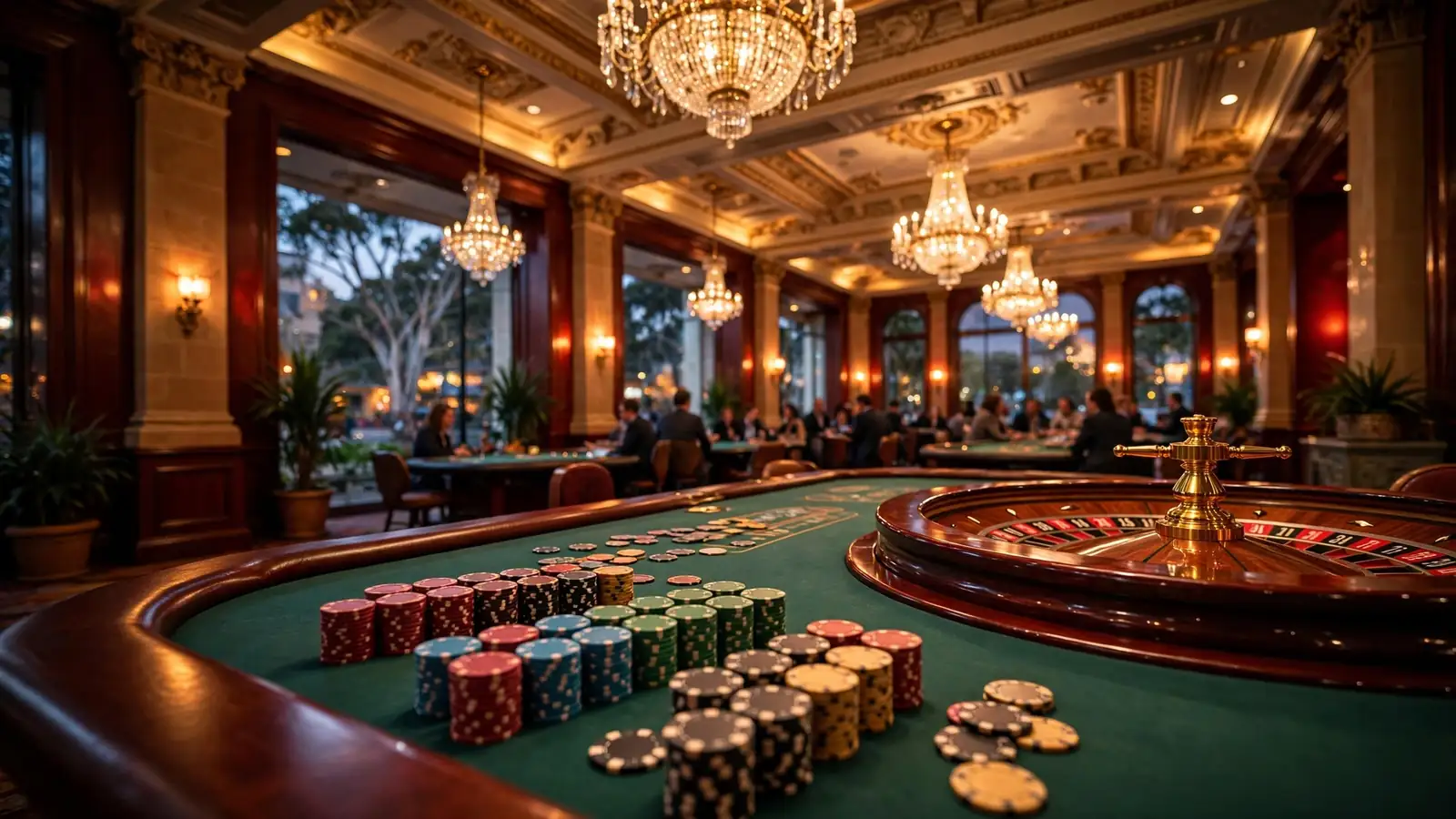
A request for a casino stay in Canberra sounds straightforward: a room attached to a casino, perhaps with a rate that makes the combination worthwhile. But those are two separate claims. One is that a casino hotel operates in Canberra; the other is that it has rooms available on particular terms. Neither should be treated as established simply because the phrase appears in a travel search.
That distinction matters because hotel listings can make a place seem more definite than it is. A page may use “casino” to describe a nearby attraction, a package category or a broad destination search, rather than a hotel that forms part of a casino. A room offer, meanwhile, is meaningful only when it identifies the property, dates and conditions. Without those particulars, “deal” is a label, not a price.
For anyone planning a stay, the useful starting point is a confirmed property name. From there, the essentials are ordinary but decisive: whether the hotel is operating, whether rooms can be booked for the intended dates, what the quoted rate includes and what cancellation terms apply. A polished description cannot answer those questions on its own. Nor does the word “casino” establish that gambling facilities are inside the hotel, connected to it or available to guests.
Choosing an online casino while in Canberra calls for checking the details that matter to you, such as licensing and payment terms. This list gives you a concise reference for considering the options in 2026.
Playfina Casino
Playfina Casino is listed with a Curacao eGaming license held by Hollycorn N.V. since 2017. Its minimum deposit is A$20–30, depending on the offer.
Kingmaker
Kingmaker lists crypto payouts at around 90 minutes and fiat payouts at 1–5 days. The minimum deposit is A$30.
Ricky Casino
Ricky Casino lists crypto payouts in under an hour and PayID payouts in 1–3 business days. The minimum deposit is A$20, or A$30 to qualify for the bonus.
LevelUp Casino
LevelUp Casino is licensed under Curacao eGaming, OGL/2023/174/0082, with Dama N.V. Its minimum deposit is A$15.
WinSpirit Casino
WinSpirit Casino is licensed under Curacao eGaming, OGL/2024/923/0383, with Antillephone N.V. The minimum deposit is A$30.
JustCasino
JustCasino is listed with a Curacao Gaming Control Board license.
MrPacho
MrPacho lists crypto payouts at 30–120 minutes and fiat payouts at 24–72 hours. The minimum deposit is A$30.
Bizzo Casino
Bizzo Casino is listed with a Curacao Gaming Control Board license and is operated by TechSolutions Group N.V.
7Bit Casino
7Bit Casino is listed as operating under a Curacao license, with Dama N.V. as its operator.
Roby Casino
Roby Casino is listed with a Curacao eGaming license held by Roby Games Ltd.
This is less a matter of scepticism than of geography and naming. A casino and a hotel can share a brand or address in one city, while a search result elsewhere may simply gather travel pages around a broad phrase. The difference is practical: an attached hotel suggests one kind of arrival and evening; a hotel elsewhere in the city entails a separate journey. The distinction should be settled before a booking decision, not inferred from a headline.
The phrase “Canberra casino hotel” therefore carries more certainty than it may deserve. It can express a wish for a combined stay, rather than identify a known property. The same applies to requests for casino hotel rooms or special offers: those are understandable travel intentions, but they do not confirm that such rooms or offers are available locally.
A reliable booking trail should lead from the accommodation provider itself to a live availability page, with the property and the terms clearly named. If a page supplies only a general destination, a promotional phrase or an undated offer, it does not establish that a bookable casino hotel room exists in Canberra. A reservation should not rest on a suggestion assembled from search wording.
Opening times are a separate detail. Even where a venue’s hours are published, they would not prove that it has a hotel, or that a guest room is part of the same operation. Hotel availability and venue hours answer different questions and should be checked independently. One cannot stand in for the other.
The sensible reading of a request for a Canberra casino stay is thus a request for a verified property, not a prompt to fill in missing details with assumptions. Until a hotel is clearly identified by its operator and booking information, claims about its rooms, deals or connection to a casino remain ungrounded. Better a plain distinction than a confident itinerary built on a name alone.
A poker room and a room of poker machines describe different kinds of gambling. One suggests tables where players compete against one another; the other means electronic gaming machines. That distinction matters in Canberra, where searches for poker tables or tournaments cannot be answered by borrowing details from clubs across the border.
Club Liverpool has the highest number of operational poker machines among clubs in New South Wales. It is a specific comparison about machines in NSW clubs—not a measure of poker tables, tournament activity or facilities in Canberra. A large machine count says nothing about whether a venue hosts live poker, what format a tournament might use, or when one might take place. Those are separate questions, and the categories should not be allowed to blur simply because the word “poker” appears in both.
Club Liverpool holds the record for the highest number of operational poker machines among clubs in New South Wales, but this does not indicate the availability of live poker tables or tournaments in Canberra.
There is a broader institutional difference, too. Canberra is in the Australian Capital Territory; Club Liverpool belongs to the NSW club context. Rules and venue information attached to one jurisdiction do not automatically describe the other. NSW requires players to be at least eighteen to gamble on poker machines. It also requires pre-commitment systems, through which a player sets a loss limit before play. These provisions concern poker-machine gambling in NSW. They do not establish an age rule for a Canberra poker tournament or describe the conditions of a local poker room.
The machinery of pre-commitment is a revealing feature of the NSW approach: the limit is chosen before play begins, rather than left entirely to the moment when a session becomes difficult to leave. It is a rule about managing exposure to electronic gaming, not a promise that a particular club offers poker tables. A regulatory measure can be meaningful without answering every practical question attached to a venue.
Searches for a Canberra casino poker room, a poker tournament, or recurring tournaments carry a more particular expectation than a general interest in gambling. They imply a live-game setting, perhaps with a schedule, entry details and a defined format. None of those details follows from a count of poker machines. Nor does the NSW ranking make Club Liverpool a proxy for Canberra; it remains a fact about that club and its machines.
The same care applies to searches combining poker with casino rooms or a sports bar. A room can mean accommodation, a gaming area or a table-game space, while a sports bar is a separate amenity. The words do not supply evidence that these facilities belong to one venue or operate together. Treating a machine statistic as proof of a bar, a tournament calendar or a room would turn a narrow fact into an imaginary floor plan.
For someone trying to understand the local poker scene, the useful distinction is therefore not between a larger and smaller machine room, but between electronic gaming and live poker. NSW’s rules and Club Liverpool’s machine ranking belong to the former context. They offer no shortcut to a Canberra tournament listing. A search for poker at a Canberra casino needs local, venue-specific information; a cross-border machine comparison cannot stand in for it.
That is the boundary. A machine is not a tournament.
Baccarat and craps are recognisable table games, but their names do not establish that either is available at a Canberra venue. The same distinction applies to a bar, car park or concert programme: these are separate services, each requiring its own current venue information. A search result that brings them together under a casino label can make them look like one package. They are not.
A map pin can help locate a business once its identity is clear; it cannot confirm what happens inside, where visitors can park or whether a performance is scheduled. Contact details need the same care. A telephone number copied from an old listing may lead nowhere useful, while a venue’s own current channels are the sensible place to check practical arrangements. No invented address, number or amenity would make that check easier.
There is a small social history in the expectation that a casino should be several places at once: gaming floor, bar, car park and entertainment calendar. The modern leisure venue is often imagined as a self-contained evening, with each convenience presumed to follow from the name. Presumption is not a floor plan.
Online pokies are a different subject from the facilities of a physical venue. Their basic mechanics are software-defined. Each game uses a Random Number Generator, or RNG, to produce outcomes. A spin stands alone: the sequence does not remember earlier results or adjust the next one to compensate. A run of losses does not make a win “due”; a recent win does not make another one more likely.
That independence can be obscured by the rhythms of play. Repeated spins invite people to read patterns into a process that keeps no score. The machine has no memory. RTP, or return to player, describes a theoretical share of wagers returned across an extremely large number of spins. It is a long-run statistical measure, not a forecast for one session or a promise about any individual’s result.
The distinction matters because a percentage can sound personal when it is not. RTP does not tell a player what will happen next, nor does it turn a losing session into an investment waiting to mature. Increasing stakes to recover losses only raises the amount at risk. Chasing losses is not a strategy; a session budget drawn from the available bankroll sets a boundary before emotion starts negotiating with it.
Nor does a VPN make a restricted online game an ordinary local option. A VPN can disguise a player’s apparent location, but using one to reach region-blocked pokies sites breaches the site’s terms and may result in account suspension. The technical ability to alter a digital location is not permission.
Bars, parking, concerts and table games remain venue-specific matters, not consequences of a casino label. Online pokies, meanwhile, follow mathematical rules that are easy to mistake for a personal narrative. The distinction is useful. The narrative is persuasive.
A search that combines Canberra, online casino games and parking places unlike subjects side by side. Parking belongs to a physical venue; online play belongs to a separate legal and technical landscape. The two should not be treated as evidence of one casino offering both. Nor does a search for bingo or dining establish that a particular Canberra venue provides those services.
The legal distinction is sharper than the wording of such searches suggests. Under the Interactive Gambling Act 2001, operators based in Australia cannot provide real-money online casino games to people in Australia. That restriction covers pokies, blackjack and roulette, among other casino-style games. Sports betting is treated differently and remains widely accessible and legal. One category is not a back door into the other.
Legal Restriction
Under the Interactive Gambling Act 2001, operators based in Australia are prohibited from providing real-money online casino games to people within Australia.
Offshore platforms complicate the picture. It is technically not illegal for an Australian player to use one, but such platforms are not regulated under Australian law. That does not make them local, lawful Australian casino operators, or a dependable substitute for a Canberra venue. The law draws its line around the operator’s provision of the service; the practical status of offshore sites remains a grey area, not an endorsement.
The distinction matters when a search for an online casino in Canberra appears beside searches about a local casino’s address, dining or parking. A website’s availability from a device does not establish that its operator may lawfully provide casino games to people in Australia. And a page about a physical venue cannot, by itself, verify online services. Different questions, different rules.
Parking is particularly resistant to being folded into the online question. A request for free parking or valet service concerns access to a physical location, not the legality of internet gambling. The words may sit together in a search, but that does not turn a digital platform into a Canberra building with a car park. Geography is not a feature that can be added at checkout.
This division also explains why “Australian casino” can mean two very different things in everyday language. It may refer to a bricks-and-mortar venue, or it may be used loosely for a website accessible from Australia. The second description says little about the operator’s legal status. Under the Interactive Gambling Act, Australian-based operators are prohibited from offering real-money online casino games to people here; offshore platforms sit outside Australian regulation. The phrasing is casual. The consequences are not.
There is no sound basis for treating an online listing as proof of a local casino’s services, or for reading venue searches as evidence that online play is lawful. Casino dining and parking belong to venue-specific enquiries; online casino games belong to a tightly restricted legal category. Canberra in the search bar cannot reconcile the two. A name is not a licence.
“Near” sounds like a simple measure, but it depends on a fixed point. A hotel can be close to a city centre and still be inconvenient for a particular destination; a short-looking map distance can also mean little about the journey on foot or by road. Accommodation described as being near a Canberra casino therefore cannot be meaningfully compared without a confirmed venue location. A label alone does not settle the geography.
That distinction matters because lodging searches often fold several different expectations into one phrase. Some concern a hotel operated by a casino; others mean an independent place to stay within convenient reach of one. The latter is a separate accommodation question. It should be assessed by the property’s own location and booking conditions, rather than by an assumed connection to casino facilities or services.
The same care applies to accommodation deals. A reduced room price, a package and a casino promotion are not interchangeable offers. A lodging deal is defined by its stay dates, included services, payment terms and cancellation conditions. A casino promotion, by contrast, may relate to gambling activity and carry its own restrictions. Treating both as one bargain can obscure what is actually being purchased.
For a Canberra stay, the practical comparison is between the room and the intended journey: where the property is, how transport would work, and what the booking includes. Without a confirmed destination, a claimed distance or travel time would create false precision. The same applies to claims that a particular property is the closest, best value or specially linked to casino visitors. Those labels need evidence, not atmosphere.
There is also a broader Australian distinction behind the wording. A physical accommodation booking and an online gambling service are different things, even when both appear in the same set of searches. The Interactive Gambling Act 2001 prohibits operators from providing real-money online casino games to people in Australia. That legal position does not turn a hotel booking into a casino product, nor does an accommodation offer establish that a local venue provides gaming.
A sensible reading of “accommodation near a Canberra casino” is therefore modest: it describes a hoped-for location relationship, not a verified hotel category. Room rates and conditions belong to the accommodation provider; proximity depends on the venue’s actual address; and a promotional label should say clearly whether it applies to lodging or gambling. Until those pieces align, the phrase promises more certainty than it contains. A map needs a pin.
Breakfast, buffet service, rewards and employment belong to different parts of the casino idea. A resort suggests a stay; a breakfast listing describes a meal; a rewards scheme concerns repeat custom; a job notice concerns an employer. Their appearance together in Canberra-related searches does not make them one package, or establish that a local venue provides any of them.
A breakfast or buffet description, where one exists, should be treated as a specific service with its own hours, menu and access conditions—not as an automatic feature of a casino or resort. “Buffet breakfast” can sound like a small promise of abundance, but the useful details are practical: when service begins, whether it is open to non-guests, and whether the price is included in a room booking. Without those particulars, the label tells little.
Rewards language also needs care. A venue loyalty scheme and an online gambling bonus are not interchangeable. A free-spin offer, in particular, may attach conditions to winnings before withdrawal. PSU.com reports wagering requirements in the range of 20x to 50x for free-spin winnings; a separate specialist review describes a 30-times requirement. These are reported terms, not a universal rule or a Canberra venue benefit. The operator’s own current terms would determine what applies to a particular offer.
The arithmetic is less generous than the word “free” suggests. A wagering requirement means winnings must be staked again before withdrawal, and bonus conditions may also set cashout limits or allow winnings to be voided. The headline offer is only the doorway; the conditions decide what stands behind it.
There is a more consequential distinction in Australia. Under the Interactive Gambling Act 2001, operators may not provide real-money online casino games—including pokies, poker and table games—to people physically in Australia. A promotion for online casino play should therefore not be mistaken for a locally lawful casino rewards programme. The law draws a firm line. Promotional language does not move it.
Attention Wagering requirements for free-spin winnings can range from 20x to 50x, meaning winnings must be staked again before they can be withdrawn.
Employment searches raise another separate question: whether a named employer is recruiting, and for which role. A casino job listing should identify the employer, duties, location and application process; a general hospitality vacancy is not evidence of casino employment. Nor does the word “resort” by itself establish a local workplace, staff benefits or recruitment activity.
For anyone considering a hospitality role, the distinction matters because front-of-house service, accommodation work and gaming operations involve different responsibilities. A job title and employer details carry more weight than a broad label. The same restraint applies to rewards: a programme needs published eligibility and conditions before it can be understood as a real benefit.
Breakfast is a meal, rewards are contractual terms, and jobs are employment. Search language can bundle them together; the underlying arrangements remain separate.
Whether a casino is open is a question about a particular venue at a particular time. An old listing, a mention of a proposed development or an event announcement cannot, by itself, establish that a Canberra casino is operating now. Opening hours can change; reopening is a separate claim, and needs a clear announcement tied to the venue and its date.
That distinction matters because the words “open” and “reopening” often gather very different kinds of information. A development proposal describes an intention, not an operating business. A job advertisement may point to planned staffing, but does not establish that doors have opened. An events listing can refer to a future program, a past occasion or another organisation altogether. The vocabulary is suggestive. The evidence has to be more exact.
Canberra casino events are best understood in the same way: as claims about a named organiser, venue and date, rather than proof supplied by the word “casino” alone. Entertainment can be part of a venue’s identity, but an event announcement does not settle its regular schedule or establish that a venue has reopened. Nor does a review, however confident its tone, substitute for current operational information. Reviews tend to preserve a moment; opening times belong to the present.
There is a broader Australian distinction behind some of the confusion. The Interactive Gambling Act makes it unlawful for an Australian-run online casino to provide its services to people in Australia. Offshore platforms occupy a different legal position: it is technically not illegal for Australian players to use them, but those platforms are not regulated under Australian law. Neither category answers whether a physical venue in Canberra is open. Online access and a local door are different propositions.
That separation is easy to lose in a page of mixed results. A reopening story may concern a proposal; an event notice may belong to a one-off gathering; a review may describe a visit that is no longer current. None should be treated as a live timetable unless it identifies the venue and gives an up-to-date schedule. The same care applies to development claims: an announced project is not evidence of completion, and employment activity is not a public opening notice.
The most useful record of a venue’s status would be a current announcement from the venue or the body responsible for its operation, with dates and practical details. Without that, a confident answer about hours or a reopening date would be theatre dressed as service. Search terms can gather possibilities; they cannot turn them into a calendar.
For Canberra, the question of whether a casino is open remains separate from the online gambling landscape and from any broader discussion of events or development. A city’s plans, a platform’s availability and a venue’s operating status are not interchangeable facts. A small distinction, with large consequences.
An address is the simplest casino detail to get wrong and the hardest to make useful without naming the venue. “Canberra casino” may be used as a destination label, but a label is not a street address. A reliable listing needs to connect the property name to its location; otherwise, directions can lead to the wrong business or to a place that is not the casino being sought. The distinction is mundane, until a journey depends on it.
Dress-code searches pose a different problem. There is no universal Australian casino dress standard that can be assumed to apply to every venue. A rule may depend on the property, the area being entered or a particular event. General claims such as “smart casual” can sound authoritative while leaving the practical questions unanswered: whether sportswear is accepted, whether footwear matters, or whether an event has its own requirements. Only a venue’s current policy can settle those points.
Spa searches also need a clear venue match. A spa may be part of a hotel, a separate business nearby, or not offered at the property at all. The word “casino” in a listing does not establish that spa facilities exist, nor that they are available to visitors who are not staying at a hotel. A day-spa visit and access to a hotel treatment area are not necessarily the same arrangement.
These details are often gathered together because they belong to the logistics of a visit: where to go, what to wear and what facilities may be available. Yet each has a different source of authority. An address belongs to an identifiable property; dress requirements belong to its current entry policy; spa access belongs to the facility operating the service. Combining them into one confident description can turn assumptions into apparent facts.
A venue’s own current information is the sensible reference point for all three. Third-party listings can be useful for orientation, but an old address or copied dress guidance may persist after circumstances change. The safest description is precise about what is confirmed and silent about what is not. That is less glamorous than a full amenities list. It is also more useful.
The same care applies when a venue name appears alongside searches for bars, games or careers: those are separate questions, not proof of a single package of facilities and services. A destination is not a catalogue.
A restaurant associated with a casino is not simply a restaurant that happens to be in the same city. The phrase can mean a dining room inside a gaming venue, a separate business on the same site, or a restaurant somewhere in the surrounding district. Those distinctions matter before a menu, booking or opening time can be attached to the name.
For Canberra, a restaurant listing needs an identifiable venue behind it. A city name and the word “casino” do not establish that a particular dining room operates there, what it serves, or whether it is open. Nor does a rooftop-bar reference confirm a restaurant with rooftop seating. The setting may sound persuasive; it is not a menu.
That is why restaurant searches tied to a Canberra casino can be difficult to resolve from a short phrase alone. A result may concern another city, a former venue, a planned development, or a business merely described as being nearby. The word “near” is especially elastic: without a confirmed address, it cannot establish walking distance or any practical connection to a casino.
A reliable listing would need to identify the business and connect it to a current venue, then provide details that can be checked directly: its location, menu, booking arrangements and service hours. Those details can change independently. A restaurant might alter its menu or schedule without any change to the wider venue, while an old listing may continue to circulate after its information has gone stale.
There is also a difference between a casino dining room and a restaurant in Canberra that serves people visiting the city. Similar wording can make the two sound interchangeable, but it does not show that one is part of the other. A dining claim should rest on an identifiable operator or venue listing, not on the atmosphere suggested by a name.
So a request for Canberra casino restaurants cannot be answered with a fabricated shortlist or an imagined menu. Until a specific venue is established, the useful distinction is between confirmed restaurant information and descriptions that merely sound local. No elaborate mystery. Just a name that must belong to somewhere.
Food and a food court are not interchangeable descriptions. A food court suggests a shared dining area with several counters; “casino food” may mean anything from a meal service to packaged snacks. Neither phrase, by itself, establishes what is available at a Canberra casino. The name of a venue cannot do that work.
The distinction matters because amenities are often folded into an imagined package: gaming, a quick meal, somewhere to sit, perhaps a pool beyond the main floor. But each is a separate facility, with its own access arrangements and operating details. A pool is not an automatic extension of a casino, any more than a food court follows naturally from the presence of gaming rooms.
That is the quiet trick of destination language. A building can be imagined as a little city, complete with places to eat and places to linger, even when a name alone says nothing about its layout. In Canberra, claims about food counters, dining areas or pool access need to be tied to a named venue and its own current information; otherwise, they remain an itinerary built on assumption.
For practical planning, the useful distinction is not between a grand meal and a quick bite, but between a facility confirmed by the venue and one inferred from the word “casino”. The same applies to pool access: it may be part of a broader property, or not. That cannot be determined from the casino label.
No itinerary should treat a casino as an all-purpose leisure complex by default. Food, food-court service and swimming are separate propositions, not bundled promises. The architecture may invite expectation. It does not settle the matter.
Australian-run online casinos cannot legally offer online casino games to players in Australia, while it is technically legal for Australian players to use casinos licensed offshore; those platforms are not regulated under Australian law. In NSW, players must be at least 18 to use poker machines, and mandatory pre-commitment systems require them to set a loss limit before play.
Club Liverpool has the highest number of operational poker machines among clubs in NSW.
Check the pokie’s RTP, whether it has a progressive jackpot or a bonus-buy feature, and the wagering requirements attached to any free spins. Each spin is independent and determined by a Random Number Generator.