Search interest can point to accommodation, entertainment and practical questions, but it does not verify a property, its offers or its facilities.
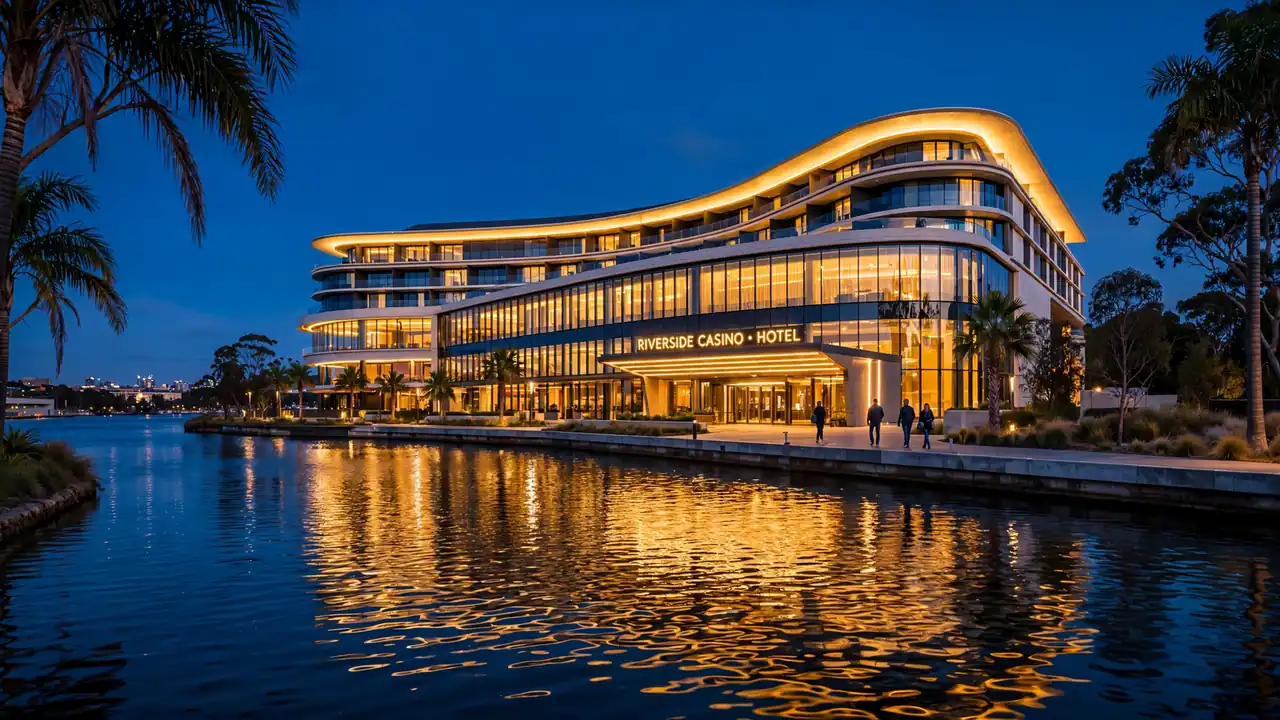
A hotel stay attached to a casino carries a particular promise: the room and the venue appear to belong to one plan. That is different from booking somewhere in the city and arranging a separate visit. The phrase “Perth casino hotel” expresses the first idea, but it does not, by itself, identify a property, confirm that rooms are available, or establish what a stay includes.
Those distinctions matter because hotel language can make an arrangement sound more settled than it is. A casino may be part of a hotel’s identity, a nearby attraction, or simply the reason someone is looking for a room. Search wording alone cannot tell which relationship applies. A credible booking description would need to name the accommodation and make the terms of the stay clear.
The same caution applies to requests for casino hotel rooms. A room is not a single, self-explanatory product: the description should specify what is being booked, the relevant dates, and the conditions attached to the reservation. Without those details, “rooms” remains an intention rather than a usable offer. The wording gives a destination and a theme; it does not supply the practical substance of a booking.
Choosing a casino for Perth play means checking the details that matter to you, such as licensing and payment terms. Use this list as a reference when deciding which options to explore further.
Playfina Casino
Playfina Casino is listed with a Curacao eGaming license held by Hollycorn N.V. since 2017. Its minimum deposit is A$20–30, depending on the offer.
Kingmaker
Kingmaker lists crypto payouts at around 90 minutes and fiat payouts at 1–5 days. The minimum deposit is A$30.
Ricky Casino
Ricky Casino lists crypto payouts in under an hour and PayID payouts in 1–3 business days. Its minimum deposit is A$20, or A$30 to qualify for the bonus.
LevelUp Casino
LevelUp Casino is listed under Curacao eGaming license OGL/2023/174/0082, held by Dama N.V. Its minimum deposit is A$15.
WinSpirit Casino
WinSpirit Casino is listed under Curacao eGaming license OGL/2024/923/0383, held by Antillephone N.V. Its minimum deposit is A$30.
JustCasino
JustCasino is listed with a Curacao Gaming Control Board license.
MrPacho
MrPacho lists crypto payouts at 30–120 minutes and fiat payouts at 24–72 hours. The minimum deposit is A$30.
Bizzo Casino
Bizzo Casino is listed with a Curacao Gaming Control Board license, with TechSolutions Group N.V. identified as the operator.
7Bit Casino
7Bit Casino is listed as operating under a Curacao license, with Dama N.V. as its operator.
Roby Casino
Roby Casino is listed with a Curacao eGaming license, with Roby Games Ltd identified as the license holder.
A request for a Perth casino hotel deal adds price to the picture, but the word “deal” is not a condition. A meaningful offer depends on its stated rate, availability, inclusions and restrictions. Those details can shape the value of a stay more than the label attached to it. A discounted room with inconvenient conditions may be less useful than a plainly described standard booking. Dry arithmetic has its uses.
The distinction is especially important where hotel and casino branding appear together. A name or promotional phrase may suggest a combined experience without establishing that a room reservation includes anything beyond accommodation. Meals, entertainment, access arrangements and other extras should not be assumed from the casino association. Each inclusion belongs in the booking terms, not in the reader’s imagination.
“Casino hotels in Perth” can also suggest several properties, while “casino hotel in Perth” may imply one. Neither grammatical form proves how many hotels fit the description. The plural is not a directory; the singular is not confirmation of a specific venue. The sensible standard is ordinary and unromantic: a property should be identifiable, and the room and rate should be described before a stay is treated as bookable.
There is a further distinction between a hotel stay and a visit to the casino. They may be linked in a traveller’s plans, but they are not interchangeable services. A room booking does not establish the casino’s operating schedule, and venue opening hours do not describe check-in, check-out or room availability. Those belong to separate arrangements, each with its own terms. One itinerary, several clocks.
For anyone comparing hotel offers, the useful questions are therefore concrete: which property is named; which room is included; which dates apply; what does the price cover; and what restrictions govern the reservation? Cancellation terms and payment conditions also matter, because a headline rate is only one part of the commitment. If any essential detail is absent, the offer cannot be compared fairly with another.
The search language signals interest in accommodation marketed as part of a casino stay, but it should not be mistaken for confirmation that a particular hotel offer exists. That is a modest conclusion, though a necessary one. In travel, an attractive phrase is not yet a reservation.
Questions about whether Perth’s casino is open can refer to different things: ordinary trading, a temporary interruption, a reopening after a closure, or the return of a particular part of the venue. Those are not interchangeable. A venue may operate while a room or activity is unavailable, and an announcement about reopening may concern only a specific service. Without a dated, authoritative notice, none of those phrases establishes the casino’s present status or hours.
Attention: Opening information is time-sensitive; results saved or indexed earlier can linger after circumstances change. Always verify the date of the notice and the current status via the venue's own communications.
That distinction matters because opening information is time-sensitive. A result saved, reposted or indexed earlier can linger after circumstances change. The useful detail is not simply that the venue is described as open, but the date of the notice and precisely what it says is operating. For a planned visit, the venue’s own current communications are a better reference than an undated snippet or a general listing. No timetable should be inferred from the name of the venue or from the fact that it is a casino.
The same caution applies to Perth casino events and entertainment. A broad description of a casino as an entertainment destination is not a schedule. It does not confirm a concert, performance, public event, ticket availability or the hours of any individual attraction. Event listings can also refer to nearby locations or separate promoters, so the venue and the event need to match before a listing is treated as useful. A date in a search result is not proof that an event remains scheduled.
There is a social history behind the expectation that a casino should offer more than gambling. Large leisure venues are often imagined as all-purpose places: a night out, a performance, a meal, perhaps a visit that does not revolve around the gaming floor. That expectation can make the word “entertainment” sound like a promise. In practice it is only a category until a named event, location and date are attached to it.
Development carries a similar ambiguity. It can mean a physical project, a change in how a venue operates, a planning proposal, or a broader story about investment and employment. Those subjects are connected, but not identical. A development announcement does not, by itself, establish that construction has begun, that a project is complete, or that jobs are currently available. Employment interest may arise when a venue or project changes, yet a search for work is not evidence of an open position or of current hiring.
The distinction is particularly important when a headline uses future-facing language. “Planned,” “under way” and “completed” describe different stages, and a proposal can remain a proposal. Responsible reporting identifies the stage and the date; a reader assessing an announcement should look for those details rather than treating the word “development” as a finished result. Otherwise, intention quietly becomes fact.
Reopening language deserves the same care. It may describe a return after a temporary closure, the opening of a renovated area, or a proposed future date. The word alone says neither why the venue closed nor whether every part is operating again. Nor does a general reopening notice establish event programming or employment conditions. Each claim belongs to its own date and scope.
This is a modest standard, but a useful one: separate the venue’s status from the status of its services, and an event announcement from a general description of entertainment. For a current opening time, event, development update or vacancy, use a dated statement from the relevant venue or organiser. If no such statement is available, the honest answer is not a guessed schedule dressed as certainty. Dry, but necessary.
A stay near a casino is not the same thing as a room inside one. The distinction matters: a nearby property may be chosen for its location, price or ordinary accommodation services, while the casino remains only one destination among several. The phrase “near the casino” sounds precise, but without a confirmed address and a route, it says little about the time or effort involved in getting between the two.
Proximity is experienced on the ground, not measured by a label. A map can show distance; it cannot, by itself, explain whether a route is pleasant on foot, practical late at night or easy to manage with luggage. Nor does the word “nearby” settle questions about transport, access or the character of the surrounding area. Those details belong to a particular property and journey, not to the general idea of accommodation around a casino.
That is why a useful comparison starts with the lodging itself. The location should be considered alongside the room type, cancellation conditions, included services and the full price shown at booking. A low headline rate may describe only one set of dates or a restricted booking, while another offer may bundle services that are not needed. The word “deal” is not a description of value until its conditions are clear.
A casino accommodation deal can also be used loosely. It might mean a room at a casino property, a nearby stay found through a booking service, or a promotion linked to a particular reservation. These are different arrangements, with different terms. A nearby hotel’s price does not automatically include access, meals or benefits at the casino, and a casino promotion should not be assumed to apply to independent accommodation.
The most reliable way to think about the choice is to separate the two decisions. First comes the question of where to sleep: what is included, what rules govern changes or cancellation, and whether the property suits the purpose of the visit. Then comes the question of how to reach the casino and return. Keeping those questions distinct prevents an appealing phrase in a listing from doing the work of actual details.
The same restraint applies to broader amenities. Accommodation listings may mention dining, leisure facilities or access to local attractions, but such descriptions belong to individual properties and can change. A phrase suggesting a pool or a food court does not establish that either is part of a particular stay, still less that it is available to guests on the terms expected. Lodging and casino facilities should not be treated as one package unless the booking terms explicitly connect them.
For a Perth visit, the search for a place to stay near the casino is therefore best understood as a location-and-booking question, not as a promise of a bundled experience. The city name identifies the intended destination; it does not settle which property fits, what the journey entails or what a quoted rate covers. Those answers depend on the specific listing and the conditions attached to it.
There is a small but useful discipline in reading accommodation offers literally. “Close” is not a travel plan. “Special” is not a price comparison. And a casino’s presence in a booking description does not make independent lodging part of the venue. Once those distinctions are kept clear, the choice becomes less about a promotional label and more about the ordinary details that make a stay workable.
A trip to a casino begins with ordinary questions: which entrance to use, where a car can be left, and how to reach the venue if plans change. Those details are easy to mistake for settled facts when they appear in a map listing or an old directory. An address, parking arrangement or telephone number should be checked against the venue’s own current information before setting out; search snippets can preserve details long after circumstances have changed.
A map is useful for more than locating a building. It can clarify the approach by car or on foot, nearby transport links and the point at which a visitor enters the property. But a pin is not a parking policy. It cannot establish whether spaces are available, whether charges apply, or whether access arrangements differ at particular times. For a planned visit, the distinction matters: a location marker answers where, not how.
The same caution applies to contact details. A direct number can be useful for questions about access or a booking, but directory pages may repeat outdated information. The venue’s own contact page is the more dependable place to confirm a number and the right department. When no current official detail is at hand, it is better not to substitute a remembered address or a plausible-looking phone number. Practical advice becomes fiction very quickly when it borrows the form of a fact.
Inside, searches for baccarat and craps point to particular table games, not proof that either is offered at a specific Perth venue. Casino games are part of a wider history of rules, chance and social ritual; their names can travel farther than the tables themselves. Availability, table arrangements and any conditions of play need confirmation directly with the venue. A game’s familiar name is not a local timetable.
Likewise, a request for a bar near the gaming floor may mean a place to pause, meet someone or wait between activities. That does not establish which bars operate, where they sit or when they are open. Those are current venue details, not things that can safely be inferred from the word “casino.” Concert listings need the same care: a past event, an announced performance and a regular programme are different claims, and only current venue information can distinguish them.
For anyone considering poker-machine gambling at a venue, identification checks are part of the entry into a regulated activity, not a decorative formality. Venues must check identification, and ignoring applicable requirements can have legal consequences. That small exchange at the threshold reflects a broader Australian approach: access is managed through rules as well as architecture.
A useful visit plan therefore separates what a map can show from what only the venue can confirm. Location, parking, contact channels, table-game availability and bar access each require their own current answer. Convenience is not evidence.
Breakfast searches often carry a modest expectation: a meal before the day begins, perhaps included in a room booking or available as a separate purchase. A buffet adds another idea—that a range of food is served in one setting, with guests choosing what suits them. Neither word, by itself, settles the practical questions: what is served, when service runs, whether advance booking is needed, or whether the meal is tied to an overnight stay. Those details belong to a particular offer, not to the label.
The same distinction matters when a casino is described as a resort. “Resort” is a broad hospitality term, not a precise inventory of facilities or inclusions. It can suggest a place organised around several kinds of leisure, but it does not establish that breakfast, a buffet, accommodation or any particular service is part of a given package. The attractive breadth of the word is also its weakness. A description becomes useful only when its individual components are clear.
Breakfast and buffet plans are best compared as specific arrangements rather than as impressions of abundance. A buffet describes a style of service; it does not promise a certain menu or establish that breakfast is served every day. A breakfast offer might be attached to a stay, sold separately or unavailable at a particular time. The conditions matter more than the phrase printed above them. Hospitality has always been good at giving an ordinary meal a sense of occasion. Fine print remains less romantic.
Casino rewards programmes are another category that can sound more definite than it is. The term may refer to a membership scheme, but it does not explain how points are earned, what benefits are available, whether rewards expire or what conditions apply. Those rules are set by each operator and can change. A rewards label is not a promise of a particular saving, upgrade or hospitality benefit.
For a useful comparison, the important questions are concrete: what activity qualifies, how benefits are calculated, whether there are exclusions, and what happens to points if membership becomes inactive. Benefits tied to food or accommodation should be read separately from the general membership description. A programme may exist without every advertised category being available to every member.
There is a larger social idea behind the arrangement. Membership turns repeat custom into something countable, then returns a portion of that attention in the form of recognition or benefits. It is a familiar bargain in hospitality, where loyalty is both a relationship and a business measure. The word “rewards” describes the promise; the terms describe the exchange.
People considering casino jobs are looking at a different part of the same operation. Employment listings should identify the actual employer, work location, duties and conditions, rather than relying on a broad phrase such as “casino careers.” Hospitality and entertainment businesses can contain many kinds of work, but no job title should be inferred from the venue category alone.
A vacancy is also a dated offer, not a standing description of the organisation. Applicants need to distinguish an active listing from general career information and check the stated requirements, hours and application process. The name of a city in a job search does not establish that a role is currently available there.
Breakfast, membership and work may sit under one resort label, but they answer separate questions: what is served, what a member receives, and what an employee is asked to do. The wording is easy. The terms are the substance.
A poker room and a poker tournament are not the same proposition. The first suggests a dedicated place to play; the second, an organised event with its own format, entry conditions and timetable. A phrase combining Perth with either one cannot establish that the venue currently offers it. Nor does it confirm whether poker is played in a separate room, as part of a wider gaming floor, or at all.
Tournament information is especially time-sensitive. Events can be added, changed or cancelled, and a past listing would not settle what is available now. Without a current venue announcement, there is no sound basis for naming a schedule, buy-in, game variant or registration process. Those details matter more than the word “tournament” in a heading: they determine what the event actually is.
The same caution applies to a poker room. The phrase may describe a specific facility, or simply reflect the expectation that a casino with poker would have one. A search term is evidence of interest, not a floor plan.
Then come the rooms: sometimes the word means accommodation, sometimes a dedicated gaming space. Here, those meanings should not be collapsed. A hotel room belongs to a stay; a poker room, if one exists, is a venue amenity. Neither establishes the other. The distinctions are mundane, but useful. Hospitality language is very good at making separate things sound like a package.
The gym question belongs to the same category of assumption. A casino hotel may sound like the sort of place that would include fitness facilities, but the label alone confirms nothing about equipment, access, hours or whether a gym is available to non-guests. The existence of a room for sleeping does not prove there is a room for exercise.
Searches mentioning a sports bar or coffee shop likewise point to possible venue amenities, not confirmed services. They should not be read as evidence of a particular outlet, menu, opening time or connection to poker. A sports bar is not a tournament notice, and a coffee shop is not proof of a complete resort offering. One noun does not bring its neighbours into existence.
This restraint is not a verdict on the Perth venue. It is a boundary around what can responsibly be said without current, venue-specific information. Anyone relying on a poker event or a particular facility would need a direct, up-to-date confirmation before making plans. That is less satisfying than a neat list of rooms and dates, but a fabricated timetable would be worse.
In the end, the useful distinction is between an amenity someone hopes to find and one the venue has actually announced. Poker, tournaments, accommodation and a gym each require their own confirmation. A shared postcode does not make them one offer.
A spa can change the shape of a casino visit: it turns an evening out into a day organised around leisure, with separate questions about treatments, access and bookings. But a Perth casino spa should not be treated as an established facility on the strength of its name appearing in a search result. The same restraint applies to a day spa supposedly attached to the venue. Without a confirmed service listing, there is no sound basis for describing treatments, facilities or prices.
Bars raise a different practical question. Their existence, location and service arrangements are details that belong to a current venue listing, not to assumption. A bar may be part of a casino’s wider hospitality offer, but that general possibility says nothing about what is available in Perth. Dining is a separate subject; here, the useful distinction is simply that a bar’s presence and operating arrangements need their own confirmation.
Dress codes are often less visible than the building’s architecture and more consequential at the door. A policy may vary by area or occasion, so a broad idea of casino attire cannot stand in for the venue’s actual rules. Neither formal dress nor casual clothing should be presented as acceptable without a current policy to support it. The small print of an evening, as ever.
Address details are similarly unforgiving. A street address, entrance location and directions are not interchangeable, and an outdated listing can send someone to the wrong point even when the venue name is correct. A Perth address should therefore be taken from an up-to-date official venue channel before travel is planned, rather than reconstructed from third-party references.
Career enquiries belong to another practical category. A casino’s general reputation as an employer cannot establish that a particular role is open, what it involves or how applications are handled. Those particulars change, and only a current recruitment notice can speak for them. There is no useful shortcut from the word “careers” to a promise of work.
The same caution applies to games. A physical venue’s game offering is not established by a broad label, and online casino games raise a distinct legal issue in Australia: the Interactive Gambling Act 2001 prohibits operators from providing real-money online casino games to people in the country. A Perth venue’s physical facilities should not be confused with an online service.
For spa, dress, bars, careers and directions, the practical answer is not a guessed detail but a current, venue-specific confirmation. Familiar categories are not evidence.
A search for online play is not a search for a Perth building. The words may sit beside the name of the city, but they lead into a different question: what Australian law permits online operators to offer, and what happens when a platform is based elsewhere.
Legal Warning
Under the Interactive Gambling Act 2001, operators cannot lawfully provide real-money online casino games to people in Australia.
Under the Interactive Gambling Act 2001, operators cannot lawfully provide real-money online casino games to people in Australia. That includes casino-style games such as pokies and table games. The law is directed at providers; Australian players do not incur criminal liability simply for using an offshore platform. Yet “not a crime for the player” is not the same as “regulated and protected”. Offshore casino services are not regulated under Australian law, and the legal grey area offers little comfort when an account, a withdrawal or a complaint becomes disputed.
The distinction matters for searches that combine Perth with online casino play, bingo or dining. A physical venue and an internet platform do not share a licence merely because both use the word “casino”. A local licence search cannot establish that an offshore website is authorised to provide online casino games in Australia. All gambling sites operating lawfully in Australia must hold the relevant local authorisation; that does not make prohibited online casino services lawful.
Access can be restricted before a game is even reached. Online operators and software providers can use a player’s IP address to estimate their location and block access from excluded countries. A blocked game may therefore be absent from the lobby when a connection appears to come from Australia. Regional restrictions can also prevent a game from loading. The screen may look like a technical failure. It may be a boundary drawn in code.
A VPN can make a connection appear to come from another country, but using one to reach region-blocked pokies or other casino games breaches site terms and may result in account suspension. It does not change the law applying to someone physically in Australia, nor does it create local consumer protection. A workaround is not a licence.
There are practical risks beyond access. Offshore operators may offer limited ways to resolve disputes, and winnings may not be protected if a company fails. Bonus terms can also contain demanding wagering conditions, cashout caps or clauses that allow winnings to be voided. The fine print is where the apparent offer meets its limits.
The safer distinction is a plain one: Perth venue information concerns a physical place; online casino access concerns a prohibited service offered to Australians by operators, often offshore. Search results can blur those categories. Law does not.
A casino dining search can mean several different things: a restaurant inside a gaming venue, a place in the surrounding district, or simply somewhere associated with a casino in a directory. Those are not interchangeable. A result’s proximity to the words “Perth casino” does not establish that the restaurant is on the premises, currently operating, or part of the venue.
That distinction matters when planning an evening around dinner. A listing may be old, refer to a separate business nearby, or describe a past arrangement. Even a polished menu page cannot, by itself, settle whether a restaurant is open on a particular date or whether its details have changed. Search visibility is not a booking confirmation.
The same caution applies to claims of rooftop dining. “Rooftop” is a specific feature, not a flourish that can be inferred from a city view or a venue’s association with a casino. A photograph, an old review or a third-party directory can preserve an impression long after the underlying offer has changed. Without current information from the restaurant or venue, such descriptions should remain unconfirmed.
There is a small social history in the way casino dining is imagined. The word “casino” suggests a self-contained evening: food, spectacle and gaming gathered under one roof. That idea has long helped leisure businesses sell convenience as an experience. But an imagined itinerary is not a map. A restaurant in the same neighbourhood may be entirely separate from the casino, with its own entrance, trading hours and booking arrangements.
For anyone comparing options, the useful questions are ordinary and exact: What is the restaurant’s own current page? Does it identify the location clearly? Are the menu and service times dated or otherwise current? Does a booking link lead to the restaurant itself? These checks establish more than a search snippet can. They do not require assuming that every listing attached to a casino name belongs to the venue.
Perth’s dining possibilities should be judged on their own information, not on an unverified association. Until a restaurant’s location and current offer are confirmed directly, it would be misleading to present a list of casino restaurants, describe a menu, or promise a rooftop setting. The search phrase points toward an appealing evening; it does not prove what is available.
A useful dining guide begins with named places and details that can be checked. Where those details are not established, restraint is more practical than an invented recommendation. The distinction is modest, but it can prevent a dinner plan from resting on a directory entry that says less than it appears to.
Questions about poker machines at a Perth casino often sit beside questions about poker and membership. They belong to different subjects: a machine’s outcomes are a matter of game mechanics, while venue access and membership depend on local arrangements. One cannot establish the other.
For online pokies, the mechanism behind each result is a Random Number Generator, or RNG. It produces outcomes independently: a previous spin does not make a win more or less likely on the next one. The system does not remember a run of losses, keep score or recognise that a player is “due”. Patterns that seem persuasive in the moment are not instructions from the machine.
That distinction matters because repetition can feel like evidence. A losing sequence may prompt a larger stake in the hope of recovering ground; a near miss may look like a promise. Neither changes the next independent outcome. Randomness is not a debt owed to anyone.
These mechanics describe online pokies. They do not confirm what machines, if any, a particular Perth venue offers, nor do they establish its membership conditions. A question about casino membership needs information about that venue’s own terms; general facts about RNGs cannot supply it. The same caution applies to assumptions about poker-machine access or venue procedures.
For gambling at a venue, identification checks are part of the safeguards around poker-machine play, and non-compliance with applicable requirements can have legal consequences. Such checks are not a prediction about a game’s outcome. They are a reminder that gambling is governed by rules beyond the machine itself.
A session budget should be set in advance and kept within the available bankroll. Once that amount is spent, chasing losses or raising stakes to win them back can deepen the loss without improving the odds. This is not a strategy problem. The next spin has no memory.
Yes. Online pokies use a Random Number Generator, and each spin is independent, so previous results do not affect the next outcome.
Free-spin winnings commonly require wagering of 20 to 50 times before withdrawal; one stated free-spin condition requires 30 times. Check the specific bonus terms, as requirements can differ.
Each online pokie uses a Random Number Generator to produce independent spin outcomes. Its RTP represents the theoretical share of wagers paid back over a very large number of spins; access to games can also be restricted by location.