A practical guide to browser access, licensing, Australian restrictions, bonus conditions and crypto payment security.
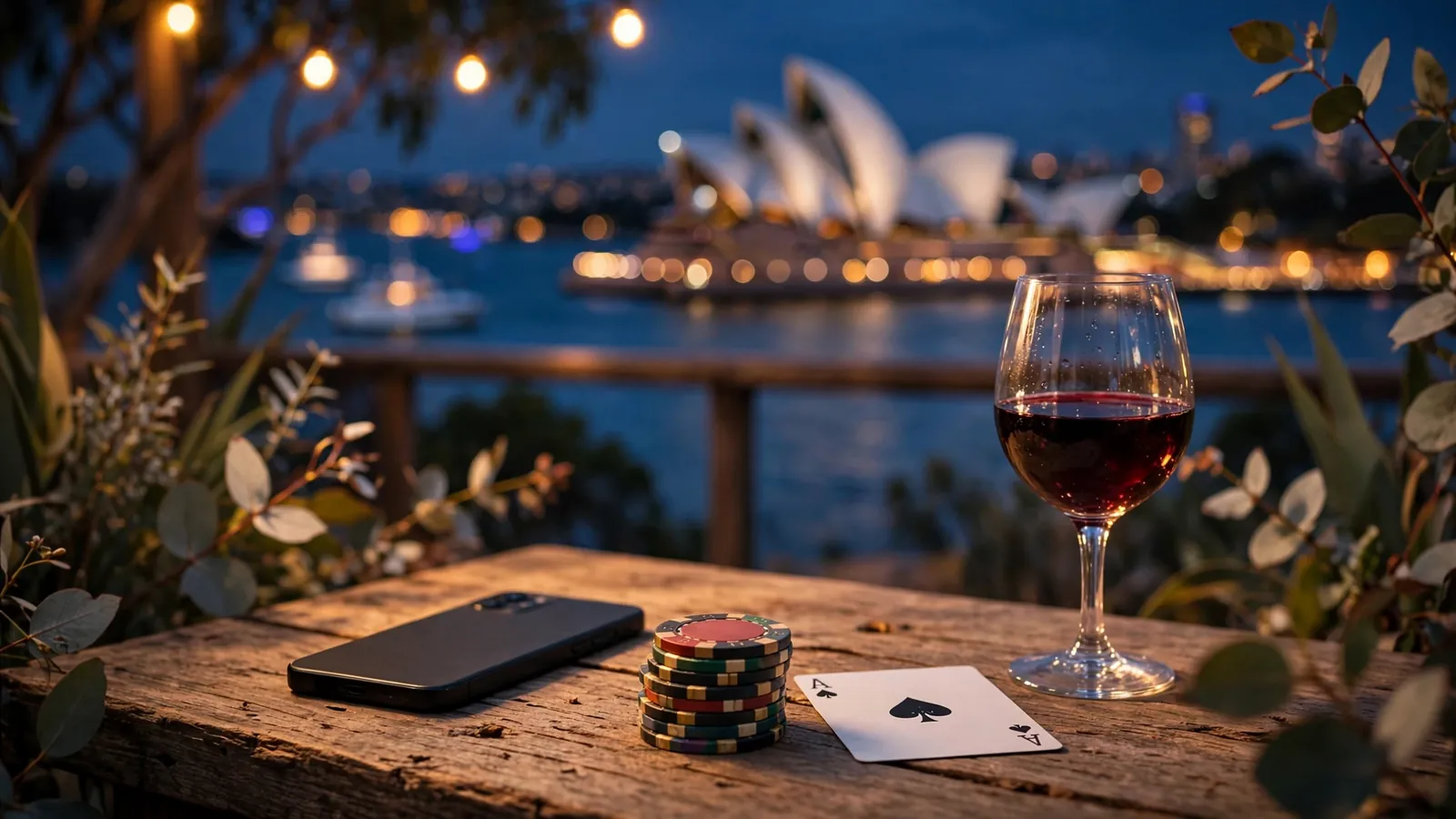
On a phone, the route to an offshore casino site is usually less like downloading a conventional app and more like opening a website. A mobile browser loads the casino’s pages, and the account used there is generally the same one available on desktop. The screen may be designed to resemble an app, but the browser remains the usual point of entry.
That distinction matters because casino apps are rarely listed in the Australian Google Play Store or Apple App Store. A search through either store may turn up social or free-play casino apps, which use virtual credits, but those are not the same thing as real-money casino services. Their presence in an app store says little about how a separate casino website is accessed.
For offshore crypto-friendly casinos, a mobile page can be built to adapt to a small screen: menus stack, buttons become easier to tap, and the game area adjusts to the device. The underlying service is still a website. A browser tab is not a lesser version of the experience so much as its ordinary form on Australian phones.
Some sites also offer a Progressive Web App, usually shortened to PWA. Despite its technical name, a PWA is essentially a shortcut to the casino website, configured to behave more like a native app when opened on a mobile device. It may appear as an icon on the home screen and open in a cleaner, app-like window rather than among ordinary browser tabs.
Installation begins on the casino website itself. If the site provides an install or add-to-home-screen prompt, tapping it and confirming the action places the shortcut on the phone. The exact prompt can depend on the device and browser; the important point is that the PWA is added from the site, not obtained as a conventional casino app from an app-store listing.
The shortcut does not turn the website into a different service. It is a more direct doorway to the same online pages. A punter moving between the browser and the PWA is not necessarily moving between separate accounts or platforms: the same account can be used on mobile and desktop. The interface may feel more immediate, but the distinction is mostly one of presentation and access.
There is a small historical irony in this arrangement. The app icon became the familiar symbol of a service that has been installed and made personal; the PWA borrows that symbol while leaving the service on the web. A shortcut can look settled without being an independent application. The icon is not the architecture.
App stores give people a familiar way to find and install software, but their catalogues do not contain every kind of service. In Australia, casino apps are rarely listed on Google Play or Apple’s App Store, so browser access is the default route for mobile casino websites. That absence can make the browser seem like a workaround, when it is more accurately the expected format.
A website that can be opened in a browser does not need to be installed to function. The PWA option simply puts a site shortcut alongside other home-screen icons. Someone who prefers not to add one can continue using the browser; someone who installs one can still return to the site through the browser. Neither choice changes the basic fact that both lead to web content.
The distinction between real-money casino services and social or free-play apps is worth keeping clear. Apps using virtual credits are available through the major app stores in Australia. They are a separate category, not evidence that real-money casino apps are similarly distributed. Familiar logos and app-store conventions can blur that line, though the underlying products differ.
A PWA installed from a casino website should not be confused with a native app downloaded from an official store. Sideloaded casino apps carry security risks, and their safety depends on the operator. Browser access remains a separate option, avoiding the need to install a file from outside an app store. That does not make every website safe; it simply means a phone can reach a site without installing a separate application.
VPN Risks
Using a VPN to reach a blocked casino site may lead to winnings being voided and your account being closed.
Using a VPN to reach a blocked casino site also carries a practical risk: winnings may be voided and an account closed. A change in how the connection appears does not make access dependable. The phone may display a page, but display is not assurance.
In ordinary use, then, the Australian mobile route is straightforward in form: open the site in a browser, sign in with the account used elsewhere, and use the mobile layout. If offered, a PWA adds a home-screen shortcut and an app-like opening. The machinery is modest. The consequences are not always.
The word *offshore* describes a relationship to a border. In the Australian context, it points to an online casino whose licensing jurisdiction is outside Australia, rather than to a particular style of website or a distinct kind of game. The label can sound like a complete explanation. It is not: the name of a jurisdiction tells where a licence is associated, not what every operator’s terms say or how a particular dispute would be handled.
Curaçao, the Malta Gaming Authority (MGA) and Gibraltar are among the licensing jurisdictions commonly associated with casinos that accept Australian players. They are not interchangeable names for one general “international” licence. Each identifies a different jurisdiction or authority, and a site’s reference to one should be read as a claim about its licensing connection—not as evidence that it is licensed in Australia.
That distinction matters because a licence is tied to a place. An offshore casino licence does not become an Australian licence simply because the site is available to people in Australia, uses Australian currency, or presents information for an Australian audience. Nor does a foreign licence change the Australian legal position: the Interactive Gambling Act 2001 prohibits operators from offering online casino-style games to users in Australia. A licence elsewhere does not displace that rule.
The border is doing real work here. Online, a service can look local in its language, payment references and customer-facing presentation while remaining licensed abroad. These surface details do not identify the licensing authority. The jurisdiction named in a site’s licensing information is the relevant clue to where it says its authorisation comes from; the country of the customer is a separate matter.
There is also a difference between naming a licensing jurisdiction and establishing what that name means for a particular site. A casino may display a jurisdiction in its footer or terms, but that alone does not settle whether the information is current, what activities the licence covers, or what protections apply to a punter. Those questions depend on the operator and the terms attached to its service. A label is a starting point for understanding the site’s claimed status, not a substitute for the status itself.
This is why “offshore casino licence” can be a misleadingly tidy phrase. It compresses several matters into two words: the operator’s connection to a jurisdiction, the scope of its permission there, and the position of people accessing the service from elsewhere. Only the first of those is conveyed by the jurisdiction’s name. Treating the name as a universal assurance would give it more meaning than it carries.
One of the licensing jurisdictions commonly associated with casinos that accept Australian players.
A licensing authority often referenced by offshore casinos serving the Australian market.
A jurisdiction frequently associated with the licensing of offshore casino operators.
Curaçao, the MGA and Gibraltar recur in descriptions of casinos accepting Australians, but that shared association does not make the sites alike. The jurisdictions remain distinct, and operators remain distinct from one another. A list of places where licences are commonly associated with these casinos cannot, by itself, establish the quality of an individual operator or make its terms predictable. Geography supplies a category, not a verdict.
The distinction also helps separate licensing from the broader question of what an offshore site offers. A site might present itself as an option for Australian punters, but that presentation does not alter where it is licensed. Conversely, seeing a foreign jurisdiction named does not explain every feature of the service. Deposits, fees and other conditions belong to the operator’s own arrangements; the licensing location alone does not specify them.
For the same reason, the phrase “best offshore casino sites” cannot be answered by selecting a jurisdiction and treating it as a quality mark. The three names commonly encountered—Curaçao, the Malta Gaming Authority and Gibraltar—identify licensing connections, not a ranking. The same care applies to descriptions of offshore pokies: the game category does not reveal the operator’s licensing position, and the licence name does not turn an offshore service into an Australian one.
There is a cultural oddity in the way the word *licensed* travels. In ordinary life it often suggests a single public standard, legible across borders. Online, the word needs its location attached. Without that location, it can sound more settled than it is. With it, the picture becomes clearer, though not necessarily simpler: a casino may be associated with a foreign jurisdiction while its Australian-facing presence remains subject to a different legal framework.
For Australian readers, the useful distinction is therefore narrow but important. Curaçao, the MGA and Gibraltar are common licensing associations among casinos accepting Australians. They are not Australian licensing authorities, and their appearance on a site should not be mistaken for local authorisation. The place named on the licence and the place from which a punter connects belong to separate parts of the story. One does not erase the other.
A casino described as “offshore” is offshore from somewhere. Without that point of reference, the word sounds more precise than it is. In an Australian discussion, it means outside Australia; in a discussion framed around the United States, it would be measured against a different country. The same label can therefore point in different directions, even when the words look nearly identical.
That distinction matters when American wording appears beside Australian information. A reference to the United States does not, by itself, establish where a casino is based, which authority licenses it, or whether it accepts customers in any particular country. It may describe an intended audience, a site’s own framing, or simply the way a subject has been labelled. Those possibilities are not interchangeable. A country name is not a passport for the claims attached to it.
For Australians, the useful question is not whether a site can be called an American offshore casino in the abstract. It is which jurisdiction the description refers to, and whether that description says anything reliable about the site’s relationship with Australia. The phrase can blur two separate ideas: a casino may be offshore relative to one country, while its licence is issued in another. Location and licensing are related subjects, but they are not the same fact.
The licensing jurisdictions commonly associated with casinos that accept Australian players include Curaçao, the Malta Gaming Authority and Gibraltar. None is Australia. That simple distinction is the centre of the matter. A site’s connection to one of those jurisdictions does not turn it into an Australian-licensed casino, nor does an American label change where a licence originates. Geography tends to resist the tidy shortcuts of marketing language.
This is why country labels need to be read as claims about a particular relationship, not as complete descriptions. “For Australians” can indicate an intended market; it does not name the licensing authority. “Based in” and “licensed in” may refer to different places. “Offshore” says only that the reference point lies elsewhere. Once these meanings are folded into one phrase, a reader can be left with an impression of national oversight that the wording itself has not established.
The American framing can also tempt an unwarranted comparison. A US-facing label may sound as if it brings a known set of rules, familiar consumer protections or a particular type of operator with it. The label alone demonstrates none of those things. It should not be treated as proof that American sites, American licensing arrangements or American rules have been checked. Nor does a casino’s apparent interest in an Australian audience establish that it is based in the United States. A country name can travel farther than the facts behind it.
The reverse confusion is just as easy. An Australian punter reading about offshore casinos may encounter a site described with American language and assume that the description makes it relevant to Australia. But relevance depends on the relationship being described. A site may be discussed in an American context without being an Australian option; equally, a casino accepting Australians may be connected to a licensing jurisdiction elsewhere. The label and the licensing location answer different questions.
There is a small history of habit in these phrases. Online descriptions often compress audience, location and regulatory identity because short labels are easy to repeat. The compression is convenient for the person writing the label and less useful for anyone trying to understand what it means. A country name can become a kind of decorative shorthand, carrying an air of specificity while leaving the central detail unresolved. Neat wording; untidy geography.
For an Australian-focused account, the sound distinction is therefore plain: American wording should not be mistaken for evidence about Australian availability or licensing. The jurisdictions commonly named in connection with casinos accepting Australian players—Curaçao, the Malta Gaming Authority and Gibraltar—are external to Australia, but that fact does not validate every other country label attached to a site. Each claim must retain its own meaning. A US reference is not an Australian licence, and an Australian audience is not proof of a US base.
This is less a matter of vocabulary than of keeping categories separate. Audience describes whom a service is presented to. Location describes where an operation is situated. A licence identifies a jurisdictional connection. “Offshore” makes sense only when its reference country is clear. When those categories are allowed to collapse into one another, a label can suggest more certainty than it contains. The prudent reading is the less dramatic one: country wording is a clue to investigate, not a substitute for knowing which country it actually describes.
“Offshore casino” describes an online casino operating from outside Australia. The word is geographical: it identifies where the service is based in relation to the people it reaches. It does not describe a different kind of game, nor does it mean that the service is authorised to offer casino games in Australia.
That distinction matters because an operator’s location and the place where its customers are physically situated are not the same thing. A business can operate from abroad while making its website available to people in Australia. Under the Interactive Gambling Act 2001, gambling operators are prohibited from offering online casino-style games to users in Australia. Moving the business offshore does not turn that offer into a permitted one.
The law’s focus is the service being provided. Casino-style games offered online to people in Australia fall within the prohibition, whether they resemble a familiar table game or a digital version of a casino pastime. “Offshore” therefore describes the operator’s position outside the country; it is not a label that settles the legality of the service for the Australian market.
There is a separate question about the person who plays. The Act does not make it illegal for an individual Australian player to play at an offshore mobile casino. That is different from saying that operators may lawfully provide such games to people in Australia. The law distinguishes between the prohibited offer and the individual’s act of playing.
This split can seem counterintuitive. Everyday language often treats a prohibited service and its customer as parts of one transaction, so the same rule is assumed to apply to both. Here, the legal position is not symmetrical: the operator’s provision of online casino-style games is prohibited, while playing at an offshore casino is not, by itself, an offence for an individual under the Act.
The distinction also prevents a common misunderstanding: an offshore casino is not a category of Australian casino. It is an online service operating from beyond Australia’s borders, and the term says nothing on its own about whether the service is permitted to reach Australian users. Nor does it confer a special legal status. Geography is a description, not a permission slip.
Under the Interactive Gambling Act 2001, the law distinguishes between the prohibited offer by the operator and the individual act of playing at an offshore casino.
The phrase “best offshore casino” can make the subject sound like a question of preference alone, as though the only meaningful difference between sites were the experience they offer. But a label of quality cannot change the legal distinction. A site might present itself as intended for Australian customers; that does not alter the Act’s position on operators offering online casino games to users in the country. Marketing language is not legislation.
Likewise, the fact that an individual player is not made criminally liable for playing does not mean that the service is locally regulated or that an Australian institution stands behind the transaction. Those are different questions. The status of the operator, the rules that apply to its offer, and the position of the person who plays should not be collapsed into one broad claim that offshore gambling is simply “legal” or “illegal.”
That shorthand loses the useful detail. The more precise account is that the Interactive Gambling Act 2001 prohibits operators from offering online casino-style games to users in Australia, while it does not make an individual Australian’s play at an offshore mobile casino illegal. The term “offshore” names the distance between the operator and the country in which its customers are located. It does not erase that difference in legal treatment.
A border can be distant in business paperwork and close on a screen. The law still distinguishes who provides the service from who uses it.
Australia draws a firm line between the conduct of an offshore casino and the conduct of an individual punter. Under the Interactive Gambling Act 2001, operators must not provide real-money online casino-style games to people in Australia. That prohibition covers services such as poker, blackjack, roulette and pokies. It is directed at the business supplying the service, not at an individual simply for playing.
That distinction matters when people ask whether offshore casino play is legal. An Australian player does not face a fine or criminal prosecution under this Act merely for using an offshore casino. The operator, by contrast, is offering a service prohibited to customers physically located in Australia. A site’s foreign location does not turn that service into one authorised for the Australian market.
The practical landscape is not merely a question of wording in a law. The Australian Communications and Media Authority actively blocks access to illegal gambling sites. A page that stops loading may therefore reflect an access block rather than a temporary fault with a phone or browser. Blocking is enforcement, not a recommendation to find another route around it.
A VPN does not remove the underlying risk. Using one to reach a blocked casino may breach the operator’s own location rules; winnings may be voided and the account closed. Nor does a successful connection establish that the service is lawful for the operator to provide in Australia. A technical workaround answers only the technical question.
Age rules operate on a separate, ordinary threshold: a person must be at least 18 to register and gamble in Australia. That requirement does not make an offshore casino an Australian-regulated service. Age eligibility and the operator’s legal status are different matters, even when a registration form treats them as adjacent boxes.
The difference becomes most consequential when something goes wrong. If an offshore casino refuses to pay winnings, there is no Australian government body to complain to that can resolve the dispute on the punter’s behalf. The site may have its own complaint process, but that is not equivalent to recourse through an Australian authority. A dispute may therefore leave the player dealing with the operator under arrangements based outside Australia, while Australian enforcement remains focused on the prohibited service.
This is an imbalance built into the arrangement: the law can restrict the supply of online casino games to Australians, and the regulator can block access, but neither fact creates a local consumer remedy for a private dispute with an offshore operator. The boundary is clear. The practical remedy is not.
The same caution applies to access itself. A site that can be reached is not necessarily a site that accepts Australian residents, and a connection made through a VPN can create further account risks. Access, eligibility and legal protection are separate questions; treating them as one is how a working page comes to look like a safe one.
An Australian-focused comparison of offshore crypto-friendly casinos is a snapshot of services operating beyond the country’s online gambling framework, not a guarantee that any particular site is available to people in Australia. Its purpose is to make the limits of comparison visible: a favourable-looking entry cannot establish that a site accepts a person’s location, or that its terms will suit every punter.
Location acceptance is a threshold issue, not a detail to leave until checkout. A site’s pages may be visible while registration or gambling from Australia is not permitted under its own rules. Acceptance should be confirmed directly with the operator before any deposit; a listing or comparison entry is not that confirmation.
Nor does a comparison make blocked access safe. Using a VPN to reach a casino that blocks access may breach the operator’s terms, put winnings at risk and lead to account closure. A change in apparent location is not a change in the underlying agreement. A poor trade.
The offshore and crypto-friendly character of these services also matters when something goes wrong. If an offshore casino refuses to pay winnings, there is no Australian government body to complain to as a route for resolving that dispute. The distance is institutional as well as geographical.
For that reason, a comparison should be read as a limited aid to scrutiny, not as an invitation or assurance. Its entries cannot settle questions of location eligibility, terms or recourse on a punter’s behalf. Those conditions remain with the operator, and the consequences of proceeding remain with the person using the service. A polished table can arrange information; it cannot turn offshore terms into Australian protections.
Choosing an offshore casino as an Australian player means weighing practical details against the information available about each operator. Use these verdicts as a concise reference when deciding which options to research further.
Playfina Casino
Playfina Casino is listed with a Curacao eGaming license held by Hollycorn N.V. since 2017. Its minimum deposit is A$20–30, depending on the offer.
Kingmaker
Kingmaker lists crypto payouts at around 90 minutes and fiat payouts at 1–5 days. Its minimum deposit is A$30.
Ricky Casino
Ricky Casino lists crypto payouts in under an hour and PayID payouts in 1–3 business days. The minimum deposit is A$20, or A$30 to qualify for the bonus.
LevelUp Casino
LevelUp Casino is listed with a Curacao eGaming license, OGL/2023/174/0082, held by Dama N.V. Its minimum deposit is A$15.
WinSpirit Casino
WinSpirit Casino is listed with a Curacao eGaming license, OGL/2024/923/0383, held by Antillephone N.V. Its minimum deposit is A$30.
JustCasino
JustCasino is listed with a Curacao Gaming Control Board license. No deposit or payout details are provided here.
MrPacho
MrPacho lists crypto payouts at 30–120 minutes and fiat payouts at 24–72 hours. Its minimum deposit is A$30.
Bizzo Casino
Bizzo Casino is listed with a Curacao Gaming Control Board license, with TechSolutions Group N.V. identified as the operator. No deposit or payout details are provided here.
7Bit Casino
7Bit Casino is listed as operating under a Curacao license, with Dama N.V. identified as its operator. No deposit or payout details are provided here.
Roby Casino
Roby Casino is listed with a Curacao eGaming license held by Roby Games Ltd. No deposit or payout details are provided here.
“Top” is a verdict-shaped word, but on its own it explains very little. It does not say what was compared, how the judgement was reached, or whether the criteria matter to a particular punter. A prominent position can reflect an editorial choice; it is not proof that a site’s rules are clear, its services fit a person’s circumstances, or its terms will remain unchanged.
Any casinos described as recommendations here are offshore and crypto-friendly. That description is not a guarantee of suitability. Before depositing, a punter must confirm that the site accepts their location. A ranking cannot answer that question on their behalf, and a VPN used to reach a blocked casino may put winnings at risk and lead to account closure.
The label also says nothing reliable about the practical meaning of a payout comparison. A specialist review has reported weekly withdrawal limits in the range of $4,000 to $10,000, but that is a report from one review, not a dependable rule for the market. The useful question is not whether a site is called “top”, but what its own conditions say and whether those conditions are plainly stated.
Rankings compress judgement into a neat order. The underlying terms do not become neat with it. A flattering label cannot replace checking the site’s rules, and it cannot turn an offshore operator into an Australian one. Dry distinction.
The phrase “top offshore casinos” may help describe what a page is about; it cannot certify the operators discussed. Suitability depends on details that a heading rarely carries: location acceptance, the relevant terms, and the limits attached to any claim. A ranking is a starting label, not evidence.
A list of offshore casinos can make unlike offers look neatly comparable. The names sit in a column; the practical differences sit elsewhere. A comparison beside the list gives those differences room to matter, especially when it separates the stated payout speed from the rules governing how much can leave an account.
Withdrawal limits change the meaning of a fast payout. A casino may process a withdrawal promptly, yet cap the amount that can be withdrawn in a week or month. A specialist review has reported weekly limits in the range of $4,000–$10,000 at some casinos. That is a reported range, not a universal market rule, and the individual terms remain decisive.
The distinction is simple but consequential: processing time describes how quickly a request moves; a withdrawal limit describes how much can move within a period. A headline payout comparison that records only speed can therefore flatter an offer. A large balance subject to a modest cap may arrive in stages, not as one transfer.
This is why lists work best as indexes, not verdicts. The comparison alongside them should make clear which figures concern processing and which concern withdrawal ceilings. Where a casino sets weekly or monthly limits, those limits belong in the same mental frame as any claim about payout speed. Otherwise, the list suggests a clean race where the rules may be different for every entrant.
The figures also need a date and a stated basis: terms can change, and a review’s account of a limit is not the casino’s own contract. The relevant question is not simply whether a withdrawal is described as quick, but what amount can actually be requested and under what conditions. A list that leaves that distinction obscure is still a list. It is just a poor measuring instrument.
A no-deposit offer can sound like value without a purchase, but the label says little about what can actually be withdrawn. The conditions attached to a bonus decide whether it is usable, how long it remains available and whether any resulting balance can be cashed out. The arithmetic, not the headline, carries the weight.
A specialist review describes welcome-bonus wagering requirements in the range of 30x to 50x the bonus amount, and treats requirements above 40x as steep. Those figures are a guide from that kind of review, not a universal rule: each offer sets its own terms. A punter considering an offshore casino no-deposit bonus still needs to establish what the wagering figure applies to. The bonus alone and the bonus plus an associated deposit are not interchangeable bases for calculation.
A minimum deposit can also alter the apparent value. An offer described as no-deposit may have separate conditions for withdrawing winnings, or may be paired with terms that require a deposit before cashout. The distinction belongs in the terms, not in the promotional headline.
Time is another cost. A specialist review reports that many bonuses must be cleared within 7–10 days; missing the stated deadline can mean losing the bonus. The exact expiry date and what counts as qualifying play therefore matter as much as the headline amount. A short window can make a large wagering requirement especially difficult to meet.
Before claiming, the full terms need to be read for the wagering calculation, minimum deposit, eligible games, expiry date and cashout cap. Game restrictions can mean that some play contributes less—or not at all—to clearance. A cashout cap may limit what can be withdrawn even after the requirement is met.
The offer is not a gift in the ordinary sense. It is a contract with several moving parts, and the headline is merely the easiest one to notice.
An offshore crypto-friendly casino may offer cryptocurrency as a route for both deposits and withdrawals, but the word “crypto” does not settle the practical questions. The operator’s cashier sets out which currencies it accepts and the conditions attached to a transaction. Those details matter: a punter should confirm that the site accepts people in Australia before depositing. A payment option cannot make an otherwise inaccessible account suitable.
Timing claims need similar care. One specialist review reports that crypto withdrawals are processed in less than a day, but that is a source-specific estimate, not a promise applying to every operator or transaction. Processing by the casino is also distinct from what happens after a withdrawal is released. The operator’s stated procedure, identity checks and any pending period can affect the experience, so a headline speed alone tells little.
The more consequential security question often concerns the software used to reach the site. Some operators distribute mobile apps outside the official app stores, requiring a sideloaded installation. Such apps carry security risks, and their safety depends on the operator. A polished icon is not evidence of careful handling. Browser access remains a separate option; installing an app is not necessary simply because a casino offers one.
A VPN adds another risk rather than removing one. Using it to reach a blocked casino may lead to winnings being voided and the account closed. If an offshore operator refuses to pay, there is no Australian government body to complain to for that dispute. Crypto does not change that position, and the irreversible character often associated with digital-asset transfers can make a payment dispute harder to unwind.
The distinction is plain, if not comforting: payment technology can move funds, but it cannot supply local protection. An offshore account remains a relationship with an operator outside Australia, whatever appears on the phone screen.
Yes. Casinos may offer loss limits, deposit limits, wager limits, session time limits and self-exclusion.
Yes. Social and free-play casino apps use virtual credits and are available through the Google Play Store and Apple App Store.
You must wager the required amount before a bonus can be cleared. Welcome offers commonly require wagering 30x to 50x the bonus amount, and many must be cleared within 7–10 days.
No. Most players access casinos through a mobile browser using their usual account; some sites also offer a PWA shortcut that can be added to the home screen.
Crypto and e-wallet withdrawals are typically processed in under 24 hours. E-wallet funds usually arrive within 24 hours after the casino’s pending period.