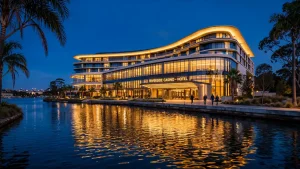
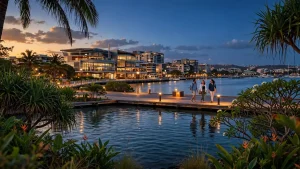
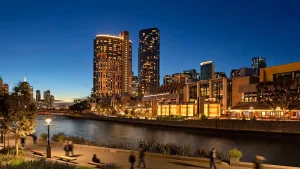
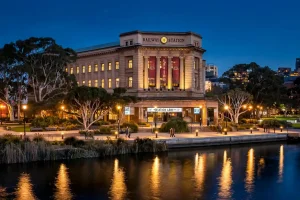
The guide separates on-site accommodation from independently operated nearby hotels and frames practical questions around a casino-focused trip.
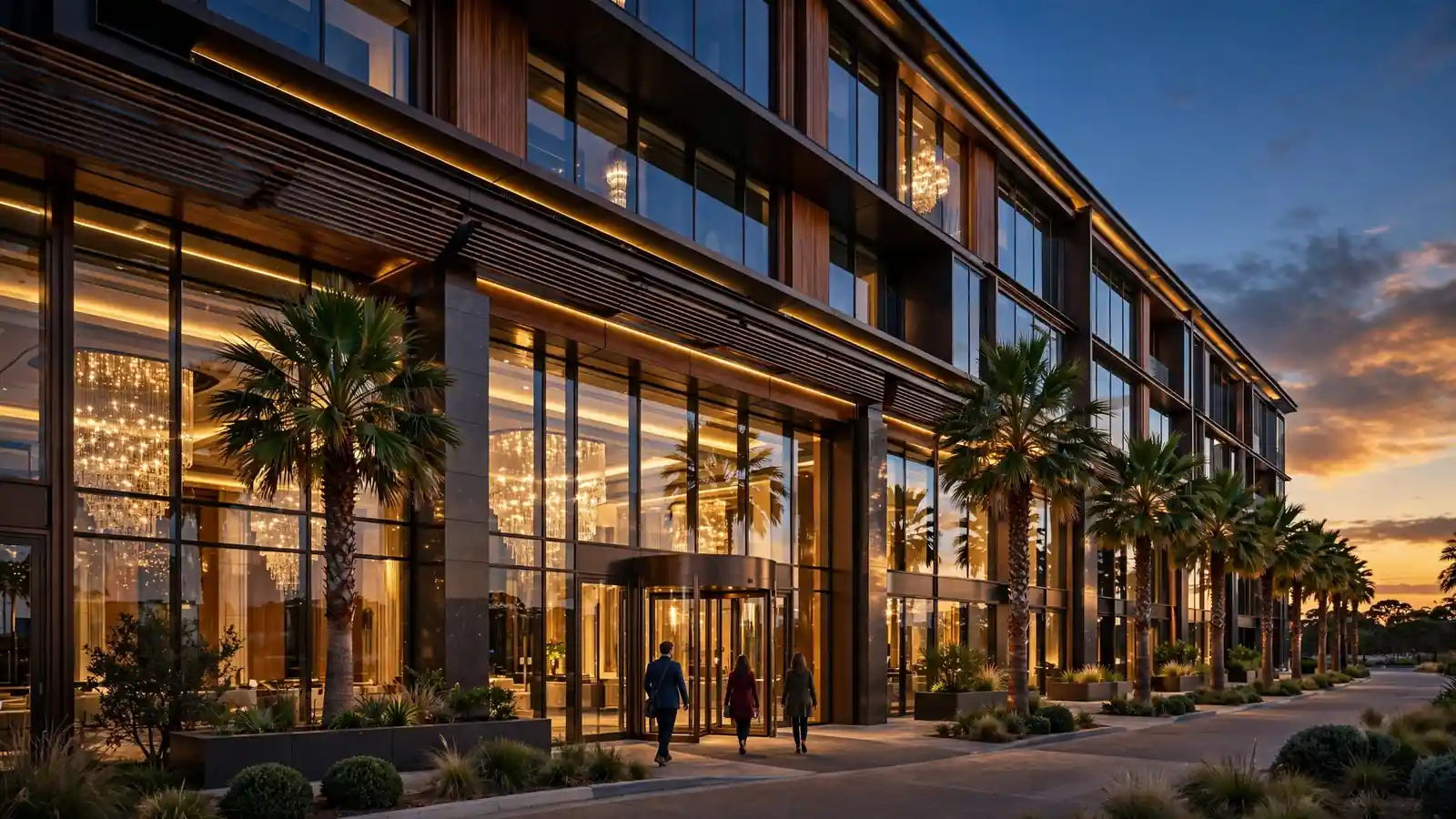
A casino hotel and a hotel near a casino describe different kinds of stay. The first suggests accommodation operated as part of the venue or situated on the same property; the second may mean an independently run hotel elsewhere in the surrounding area. Search results can blur that distinction, especially when “casino” is used as a location marker rather than as part of a hotel’s name. The difference matters before any room, rate or package is considered.
An on-site stay makes the hotel part of the casino visit. A nearby stay makes the hotel a separate decision, with its own operator, location and terms. Neither arrangement is automatically better. The relevant question is what the trip is meant to contain: a venue-centred visit, a wider stay in the area, or simply a place to sleep while other plans take priority. The word “casino” can make a result look more connected than it is.
That is why a listing’s language deserves more attention than its proximity label. “At the casino,” “connected to the casino,” “in the same precinct” and “near the casino” do not necessarily mean the same thing. A map pin can show that two places are close without establishing that they share an entrance, a booking system or any formal relationship. Distance is geography; affiliation is a business arrangement. Search listings often compress both into a few words.
Choosing an online casino in Western Australia means checking the details that matter to you before you sign up. This list offers a concise reference to the information available for each operator.
Playfina Casino
Playfina Casino is licensed by Curacao eGaming through Hollycorn N.V., with that licensing relationship dating from 2017. Its minimum deposit is A$20–30, depending on the offer.
Kingmaker
Kingmaker lists a A$30 minimum deposit. Payouts are listed at around 90 minutes for crypto and 1–5 days for fiat.
Ricky Casino
Ricky Casino lists a A$20 minimum deposit, or A$30 to qualify for the bonus. Its stated payout times are under an hour for crypto and 1–3 business days for PayID.
LevelUp Casino
LevelUp Casino is licensed by Curacao eGaming under OGL/2023/174/0082, with Dama N.V. named as the license holder. Its minimum deposit is A$15.
WinSpirit Casino
WinSpirit Casino is licensed by Curacao eGaming under OGL/2024/923/0383, with Antillephone N.V. named as the license holder. Its minimum deposit is A$30.
JustCasino
JustCasino is listed as licensed by the Curacao Gaming Control Board. No other operator details are provided here.
MrPacho
MrPacho lists a A$30 minimum deposit. Its stated payout times are 30–120 minutes for crypto and 24–72 hours for fiat.
Bizzo Casino
Bizzo Casino is listed as licensed by the Curacao Gaming Control Board, with TechSolutions Group N.V. identified. No other operator details are provided here.
7Bit Casino
7Bit Casino is listed as Curacao-licensed and operated by Dama N.V. No other operator details are provided here.
Roby Casino
Roby Casino is listed as licensed by Curacao eGaming, with Roby Games Ltd named in connection with the license. No other operator details are provided here.
For anyone comparing a Western Australian casino hotel with accommodation nearby, the first useful distinction is operational. Is the hotel itself part of the venue, or is it a separate property? If it is separate, the casino may be no more than a nearby point of interest. If it is part of a wider complex, the relationship may be closer, but that still does not settle what a room booking includes. The label describes a connection, not necessarily a bundle of services.
The phrase “casino hotel rooms” can also hide several different expectations. It might mean an ordinary hotel room in a property associated with a casino, a room promoted alongside a casino visit, or simply a hotel room near one. Those are not interchangeable offers. A room rate and a casino package, where one is offered, are separate kinds of purchase: a package may combine elements, while a room booking concerns accommodation. The exact contents of any offer have to be understood on their own terms, not inferred from the casino in the headline.
There is a small history in that distinction. The hotel once functioned in many leisure settings as a place to stay while travelling; the destination resort turned the hotel into part of the attraction. A casino can become one anchor in that arrangement, alongside other amenities, but the word “resort” does not itself guarantee a particular experience. It is a broad commercial label, not a room description. The modern traveller is left parsing names that promise a world and bookings that sell a bed.
Western Australia adds a geographical complication without needing a grand theory of distance. The state is not a single neighbourhood, and “near” only has meaning in relation to the purpose and route of a particular trip. A hotel that appears close in a broad regional search may not be close in the practical sense intended by someone arranging an evening around a venue. Conversely, a property described as separate may fit a stay whose other plans are elsewhere. The map cannot decide what the visit is for.
Hotel deals create a second kind of ambiguity. A discounted room, a casino-linked package and a promotional rate are not necessarily the same thing, even when a listing presents them together. A lower displayed price can be tied to dates, room conditions or included services; a package can have value only if its components suit the trip. The word “deal” is a verdict, not a description. Its usefulness depends on what is being compared and what the booking actually includes.
This is particularly relevant when accommodation appears in a casino-focused result. The venue may draw attention, while the hotel’s conditions sit in smaller print or in a separate booking flow. That does not make the offer suspect; it simply means the two parts should not be mistaken for one another. The hotel determines the stay. The casino association may explain the location or the marketing, but it cannot by itself establish the room’s features, availability or terms.
A quiet practical distinction also separates “hotel in Western Australia near a casino” from “casino hotel in Western Australia.” The first describes a hotel by location; the second can imply that the casino and hotel belong together. In ordinary speech, those phrases can overlap. In a booking decision, they should be treated as different claims. A hotel’s own identity and the nature of its connection to a venue are more informative than a general label repeated across listings.
The same caution applies to photos and amenity descriptions. A picture may represent the property, a room category, a shared area or a promotional scene; it does not necessarily define every booking. Likewise, the presence of a casino in a hotel’s broader description does not mean that every room rate carries casino access or other inclusions. Accommodation is sold through particulars: room type, terms and what the reservation covers. The setting can be compelling; the reservation remains specific.
For a stay centred on the casino, proximity may be the leading consideration, but it is not the only one. A separate hotel can still be a deliberate choice, while an on-site property may not suit every itinerary. When a stay is part of a broader Western Australian visit, the hotel’s relationship to the casino becomes one element among others rather than the whole plan. That is a more useful way to read a listing than letting the venue name make the decision in advance.
The phrase “casino hotels in Western Australia” can therefore refer to a category of accommodation, not a guaranteed collection of properties with identical arrangements. Some travellers mean hotels within casino complexes; others mean hotels around a casino district or venue. A search result may serve both meanings at once. Precision begins by separating them: property first, location second, and any casino-related inclusion only where the booking states it.
For a prospective guest, the sensible comparison is not simply one casino-branded result against another. It is between the accommodation arrangements that actually fit the visit: integrated lodging, a nearby independent hotel, or a stay elsewhere that better serves the wider itinerary. That comparison avoids mistaking a convenient phrase for a confirmed relationship and a promotional association for a room benefit.
The appeal of a casino hotel is easy to understand. It promises a compressed holiday, with the place to sleep and the reason for going seemingly under one roof. Yet the name alone cannot tell whether that promise is literal, how a particular booking is structured, or whether a nearby hotel is a better fit. A little separation in the language helps: hotel, venue, connection, package. Each is its own thing.
A poker room and a room full of poker machines are not the same thing, though the language can make them sound like close relatives. One usually means a place for people to play poker against one another; the other may refer to Electronic Gaming Machines (EGMs), known in Australia as pokies. A venue’s association with casino gaming does not, by itself, establish that it has either facility.
That distinction matters in Western Australia, where a search for poker at a casino may be trying to solve several different problems. It could mean a dedicated table-poker area, a scheduled tournament, casual games, or simply a place with pokies. Each calls for a different answer. A general casino listing, or a passing reference to gaming, cannot settle which one is available at a particular venue.
In Australia, Electronic Gaming Machines (EGMs) are commonly referred to as pokies, which are distinct from table-based poker rooms.
Tournament information is especially time-sensitive. A tournament involves more than the existence of poker: it requires a format, dates and entry arrangements, all of which can change. A venue may host a one-off event without running a regular series; a poker room may operate without any tournament schedule. Neither possibility should be treated as a local fact without confirmation from the venue’s own current information.
The word “rooms” brings a further ambiguity. It may mean a poker room, accommodation rooms, or spaces within a casino complex. Those are separate facilities, not interchangeable labels. The same goes for a casino sports bar: it is a distinct kind of venue space, not evidence of poker tables or tournament play. Search language compresses all these intentions into a handful of words. Reality is less obliging.
The safest way to read claims about poker in Western Australia is to look for details that identify the activity rather than relying on the word “casino”. For poker rooms, that means an explicit description of table poker and its availability. For tournaments, it means a current event notice with the relevant format and scheduling information. For pokies, the venue should identify the gaming facilities as such. Without those distinctions, a result may answer a neighbouring question rather than the one being asked.
There is also a broader Australian context that can muddy the terminology. Rules and information about poker machines in one state do not establish what a Western Australian casino offers, and they do not prove anything about poker rooms or tournament schedules. The fact that a venue or club is discussed in connection with EGMs elsewhere in Australia cannot be carried across state lines as evidence of table games. Different activity, different location.
For anyone comparing claims, the useful habit is modest: separate poker from pokies, rooms from bars, and a tournament announcement from a general description of a gaming venue. Then check whether the information is clearly about a Western Australian location and is current enough to describe what is actually operating. A polished page can still blur these categories; confident wording does not turn one facility into another.
This is not a small distinction for people planning a visit. Someone seeking competitive poker needs different information from someone looking for EGMs or a place to watch sport. A venue’s name, its casino status or the presence of gaming elsewhere in its complex cannot fill in those practical details. Where a specific room or tournament cannot be confirmed, the honest answer is not to invent one. In casino listings, restraint is a useful service.
Parking is part of the practical calculation behind a visit to a casino in Western Australia: the route, the arrival point and whether a car is needed at all. Searches for parking or valet service do not, by themselves, establish what a particular venue provides. Those details can change, so they belong in current venue travel information rather than in assumptions built from a search result. A car park mentioned in an old listing may be nearby, shared or unavailable; the word “valet” is not a promise until the venue confirms it.
Legal Warning
The Interactive Gambling Act 2001 makes it unlawful for Australian-run operators to provide real-money online casino games, such as pokies, blackjack and roulette, to people in Australia.
That is a question of getting to a physical place. It has little to do with an online casino, despite the shared word. A visit involves a venue and its local arrangements; online gambling is governed by a separate national framework. The distinction matters in a country where familiar forms of betting do not all sit under the same rules.
The Interactive Gambling Act 2001 makes it unlawful for an Australian-run operator to provide real-money online casino games to people in Australia. Pokies, blackjack and roulette fall within that restriction. Sports betting, by contrast, remains widely accessible and legal. The boundary is not a neat division between gambling and no gambling; it reflects a policy choice about which products may be offered online.
Offshore platforms occupy a less settled position. Australian players’ use of them is technically not illegal, but those services are not regulated under Australian law. That leaves a gap between the player’s position and the operator’s: the absence of a local rule making a player’s use an offence does not turn an offshore site into an Australian-regulated casino, nor does it make the operator’s service lawful here. Grey area is an accurate description, not an endorsement.
The distinction also complicates the phrase “licensed casino”. A foreign licence belongs to another jurisdiction; it is not Australian approval to provide online casino games to people in Australia. Nor does a site’s apparent availability settle its legal status. Offshore access is subject to blocking and enforcement, and a page that opens is not proof that the service is authorised locally. The screen is a poor regulator.
For a search about an online casino in Western Australia, the useful first question is therefore not whether the site has a polished lobby, but what kind of service it is and which law governs it. For a physical visit, the relevant question is different: what travel and parking arrangements the venue itself currently confirms. Combining those two searches can make them seem like alternatives for the same evening. They are not.
This separation is easy to miss because both experiences borrow the vocabulary of entertainment, and both can appear beside searches about dining or bingo. But a restaurant booking, a car park and a remote gambling platform do not share a legal framework simply because they are associated with a casino. In Australia, online casino access is not an extension of the local venue’s front door. It is a separate, restricted market, with no Australian consumer-regulation layer for offshore platforms.
A casino’s telephone number is useful only when it belongs to the venue itself. Third-party directories can preserve old details long after a business changes its arrangements, so contact information is best treated as operational rather than permanent: a published number, email address or enquiry form should be checked against the casino’s own current channels before plans depend on it. The distinction is mundane, but a wrong number has a way of becoming the evening’s main event.
Maps raise a similar issue. A pin can mark a broad property rather than a particular entrance, and a venue name may be used loosely for a surrounding precinct. A map is therefore a starting point for identifying the intended destination, not proof of where a specific service or entrance is located. Car-park questions belong to the practical business of arrival, but an address or map marker alone does not establish parking availability, access arrangements or cost.
Verify numbers and emails against the casino's current channels to avoid outdated directory information.
Use pins as starting points rather than proof of specific entrances or parking access.
Consult the official directory to distinguish between internal gaming bars and separate licensed spaces.
The word “bar” is less precise than it appears. It may refer to a counter inside a gaming venue, a separate licensed space, or a bar elsewhere in the same precinct. Those distinctions matter for anyone arranging a meeting or looking for a particular atmosphere. A venue’s own directory is more useful than assuming that every casino has the same layout or range of spaces. Bars are amenities, not a universal architectural rule.
Baccarat and craps also carry different expectations. Baccarat is a card game in which the contest is between hands, while craps is played with dice and a table organised around the results of rolls. Knowing the names does not establish that either game is offered at a particular Western Australian casino, or that a venue runs it in a format familiar from films and travel writing. The image travels more readily than the table.
Concert listings need the same separation between a casino and its wider surroundings. A performance associated with a precinct might take place in a dedicated theatre, an event space, or another nearby venue; the association alone does not settle the location, ticketing arrangements or whether the event is part of the casino’s own programme. The venue’s event calendar and the organiser’s listing are the sensible places to establish those details.
Contact pages, maps, game menus and event calendars answer different questions. A general switchboard may not handle gaming-floor enquiries; a property map may not show every internal destination; and a concert announcement says little about the casino’s ordinary entertainment. Treating each detail as venue-specific keeps one familiar name from being mistaken for a complete guide. The small print is often the real address.
Breakfast is a small word carrying a large promise: a meal before the day begins, perhaps inside the same building where a night was spent or an evening was planned. But a casino’s presence in a search for breakfast does not establish that breakfast is served there. Nor does the word “buffet” confirm a buffet, its hours, price or availability. Those are separate details, and each can change independently.
The distinction matters because hospitality language tends to gather facilities into one imagined package. A casino resort sounds like a single destination with rooms, meals, recreation and gaming joined under one name. In practice, “resort” may be a description used in a listing or a search phrase rather than proof of any particular amenity. Breakfast might belong to a hotel, a separate restaurant or nowhere at the property at all. A buffet, if offered, is not automatically a breakfast buffet.
For anyone comparing a Western Australian casino with a resort-style stay, the useful question is not whether the place sounds comprehensive, but which business operates each service. Accommodation, food and casino operations can be presented together while remaining distinct in their arrangements. An official venue or hotel page is a better place to confirm what is currently offered than a broad label repeated across listings. The fine print is less picturesque. It is also more useful.
Rewards programmes deserve the same care. The word suggests recognition for returning custom, but says nothing by itself about who can join, what activity earns benefits, how rewards may be used or whether conditions apply. A programme may be associated with a casino brand without every hotel, dining or entertainment service participating. The name on a card or account is not a guarantee that every part of a property belongs to the same scheme.
Terms like "resort," "buffet," and "rewards" are broad commercial labels and do not guarantee specific amenities or uniform participation across all property services.
Employment searches raise a different question: not what a venue offers to visitors, but who is hiring and under what terms. Casino work can sit within a wider hospitality operation, and a job listing’s location or branding may not identify the employing entity clearly. The employer, role description, work location and application route should therefore be read as particulars, not inferred from a prominent casino name. A vacancy is evidence of that vacancy, not a promise of continuing recruitment.
These distinctions are not pedantry. A meal, a loyalty benefit and a job all depend on arrangements that can be revised, withdrawn or administered by separate organisations. Familiar words such as “resort,” “buffet” and “rewards” make a place feel settled before its details have been checked. Hospitality has always excelled at atmosphere. Administration is another matter.
For Western Australian casino-related breakfast, buffet, resort, rewards or employment information, current official pages are the soundest starting point. They can clarify whether an amenity exists, which business provides it and what conditions apply. A broad description may point towards a subject; only the relevant current terms can establish the particulars.
Opening hours look like a small piece of information until they are treated as a promise. A casino’s public life is made up of different activities, and a single label such as “open” can blur distinctions between gaming, dining, entertainment and other services. A venue may be operating while a particular event space or service follows a separate schedule. The useful question is not merely whether a casino is open, but what is operating, and when.
The word “reopening” carries more weight. It suggests a change in status: a closure, a pause, a refurbishment or a return to business. Those are not interchangeable circumstances, and the word alone does not explain what has changed. In Western Australia, claims about a casino reopening or a new development are best understood through their dates and stated scope. A proposal, a construction announcement and an operating venue belong to different stages. Confusing them turns a future possibility into a present fact.
Development stories also tend to be told in the language of buildings: extensions, upgrades, new spaces. Yet a casino is not only a structure. Its development can affect the work organised around it, the public events it hosts and the role it occupies in the surrounding city. Employment searches sit inside that broader picture. A job listing is evidence of a particular vacancy at a particular time; it is not a permanent measure of the size or security of an industry. Work follows operating decisions, and operating decisions can change.
Events have their own calendar, separate from the idea of a casino being open in general. A performance, a public gathering or a scheduled programme may be announced for a specific date and then altered. That is ordinary administration, not necessarily a sign of wider closure or reopening. The event page and the venue’s general operating information answer different questions. One describes a programme; the other describes ongoing operations.
A review has a different task again. It may describe a visit, assess a service or report on a particular event, but it is not automatically a current guide to hours, employment or development. The date matters because venues and programmes change. Even a confident review can become a record of an earlier moment rather than a description of the present.
This is where the language of casino development can become unusually smooth. “New,” “open” and “coming soon” sound decisive; in practice, each depends on a status and a date. Public-facing announcements may describe intention, progress or completion, and those are not the same thing. A careful account keeps them distinct.
The enduring interest in Western Australian casino events and development is not only about what may be staged or built. It is also about how a public institution changes its relationship with a city: through the work it creates, the gatherings it hosts and the hours it keeps. The timetable is part of the story. Not the whole story.
A casino restaurant can be part of an evening out, a meal before a show or simply a place to eat within a larger venue. Those purposes sound straightforward; the difficulty is that the word “casino” does not identify a particular dining experience. Without a confirmed venue and its current information, names, menus, prices, booking arrangements and service styles should not be treated as established.
That distinction matters in Western Australia, where a broad search for casino dining may bring together several different intentions. Someone may be looking for a restaurant inside a casino, a place to eat nearby, or a rooftop bar with food. These are not interchangeable. “Near” describes location, not ownership; “at” suggests the restaurant is part of the venue. A rooftop bar is a separate kind of outing, even when it serves meals.
The useful question is not whether a casino has restaurants in the abstract, but what a specific venue currently lists. Official venue information is the place to establish whether a named restaurant operates there and what it offers. Menus and service arrangements can change, so old descriptions may not reflect what is available at the time of a visit. A polished photograph is not a menu. Nor is a restaurant name, by itself, evidence of opening times, booking availability or suitability for a particular occasion.
Dining also has a social geography. Casino restaurants sit at the meeting point of hospitality and entertainment: some guests may plan the meal as the main event, while others treat it as a pause in a longer night. That setting can make “casino restaurant” sound like a single category, although the phrase says little about cuisine, atmosphere or price. Those details belong to the individual restaurant, not to the casino label.
For a meal near a Western Australian casino, location should be checked separately from affiliation. A nearby restaurant may be independent, and proximity alone does not establish a partnership or shared service. The same care applies to rooftop dining: a search for a casino rooftop bar does not confirm that a particular venue has one, or that its bar serves food.
A reliable comparison starts with the exact venue and restaurant name, then checks the current menu and practical booking information directly against that venue’s own listing. If those details cannot be confirmed, it is better to leave them open than to turn a familiar casino format into a claim about Western Australia. Dining is specific. The label is not.
No, the label does not identify cuisine, atmosphere, or price; these details belong to the individual restaurant.
Not necessarily; proximity describes location, not ownership or partnership.
Check the specific venue and restaurant name directly against the venue's own official listing.
A casino address is the sort of detail that ought to be exact. A suburb, a street name and a map pin can turn a broad idea into a place to go; a plausible-sounding result can do the opposite. The label “casino in Western Australia” does not, by itself, identify a confirmed venue or establish its address. Until a venue is named and its location checked against an authoritative listing, it is better treated as a regional description than as a destination.
The same distinction matters for spa and day-spa searches. A casino and a spa may seem like natural partners in the language of resort marketing, but that association is not proof of shared premises, treatments or access. Searches for a Western Australian casino spa express an amenity people hope to find. They do not establish that a particular property has one. The word “resort” can do a lot of imaginative work.
Bars raise a similar question of specificity. The general expectation that a casino might have somewhere to drink cannot establish the names, number, location or character of bars at any Western Australian venue. Those details belong to a named property, not to the region as a whole. A search result that blurs the two can make a category sound like a fact.
Dress codes are more practical, and less safely guessed. Even where a venue has a policy, it may depend on the area being visited or the occasion. A broad regional description cannot supply those terms. The sensible distinction is between a general impression of how a casino might expect people to dress and a current rule published for a specific venue. Only the latter can settle the question.
Careers searches also point toward an individual employer. A phrase such as “casino careers in Western Australia” does not confirm a local vacancy, hiring process or workplace. Those belong to a named operator and a particular recruitment notice; the word “careers” alone is not a job listing.
Games are no less venue-specific. The range available at one property cannot be inferred from the word “casino,” much less carried across an entire state. In this part of the subject, precision is not a flourish. It is the difference between a place, a service and a hope.
Food and swimming belong to different kinds of venue planning, even when both are associated with a casino. A food court suggests several counters gathered around shared seating: a format built for choice, speed and a meal without the ceremony of a restaurant. A pool points elsewhere, towards leisure facilities and the resort idea, where a gambling venue is imagined as part of a longer stay.
Those categories should not be allowed to blur into promises. The word “casino” does not, by itself, establish that a venue has a food court, a swimming pool or a resort-style range of amenities. Nor does a photograph of a dining room settle whether it is a food court; the distinction is practical, not decorative. For anyone comparing places in Western Australia, the useful evidence is a venue’s own current facilities information, with the exact amenity named rather than inferred from broad language about dining or entertainment.
This matters because buildings acquire reputations that travel more easily than their details. A complex may be remembered as a place to eat, swim or spend an afternoon, while the actual offer depends on the particular property. The language of destination marketing can make every facility sound adjacent to every other one. It need not be so.
A sensible comparison keeps the questions separate: where food is served, what kind of dining arrangement is described, and whether pool access is explicitly included. If those details are not stated, the absence of a clear answer is not evidence of a hidden amenity. It is simply a reason not to plan around one.
A casino can be a destination. The label alone is not an inventory.
Yes. The Interactive Gambling Act restricts Australian-based operators from offering online casino games such as pokies, blackjack and roulette; offshore sites may still be accessible, but they are not regulated under Australian law.
Examples include NetEnt’s Mega Fortune and Hall of Gods, as well as NYX Gaming/Next Gen titles such as Foxin’ Wins and Doctor Love. Availability may be blocked based on the player’s location.
It is a restriction that uses a player’s IP address to identify their location and prevent access to certain games. A blocked game may not appear in the lobby or may fail to load.
Online pokies use a Random Number Generator, and each spin is independent of previous spins. The RNG does not keep score, so earlier outcomes do not determine what happens next.
You must be 18 or older to gamble on poker machines in NSW.