Separate accommodation terms from casino access, and use venue information to assess gaming, dining and other common searches.
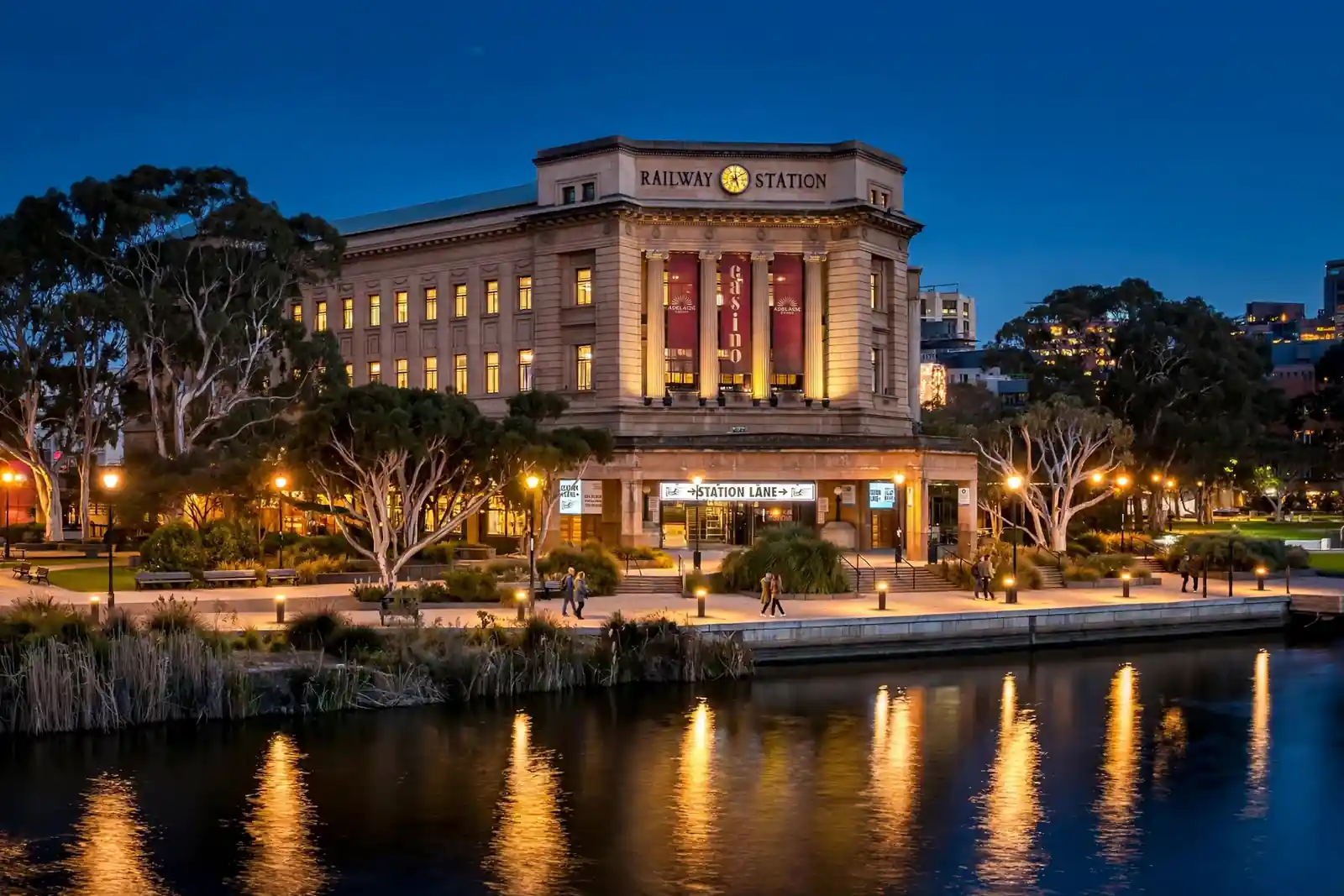
The phrase “Adelaide casino hotel” can suggest a single building where a room, a gaming floor and the rest of an evening belong to one address. But a search phrase is not a property description. The words alone do not establish whether accommodation is part of the casino, connected to it, or simply associated with it in a booking listing. That distinction matters before any room or deal is considered.
A hotel room is a separate purchase from entry to a casino. The word “casino” in a property name, page title or travel listing may describe location, branding or a nearby attraction; it does not, by itself, explain what is included in a booking. A package might bundle services, or it might use the casino as a point of reference. Only the terms attached to the actual reservation can settle that.
The same care applies to room descriptions. A room label is not a full account of what a stay provides: inclusions, cancellation conditions, dates of validity and payment terms belong to the booking itself. A photograph can establish mood more readily than policy. When several pages use similar wording, the decisive detail is not how closely a listing resembles the imagined “casino hotel”, but which property is named as the provider and what the reservation confirms.
Choosing a casino for Adelaide play calls for checking the practical details that matter to you, such as licensing information, deposit requirements and payout methods. Use these concise operator notes as a starting point for your own checks.
Playfina Casino
Playfina Casino is listed with a Curacao eGaming license held by Hollycorn N.V. since 2017. Its minimum deposit is A$20–30, depending on the offer.
Kingmaker
Kingmaker lists crypto payouts at around 90 minutes and fiat payouts at 1–5 days. The minimum deposit is A$30.
Ricky Casino
Ricky Casino lists crypto payouts in under an hour and PayID payouts in 1–3 business days. The minimum deposit is A$20, or A$30 to qualify for the bonus.
LevelUp Casino
LevelUp Casino is listed with a Curacao eGaming license, OGL/2023/174/0082, held by Dama N.V. Its minimum deposit is A$15.
WinSpirit Casino
WinSpirit Casino is listed with a Curacao eGaming license, OGL/2024/923/0383, held by Antillephone N.V. Its minimum deposit is A$30.
JustCasino
JustCasino is listed with a Curacao Gaming Control Board license.
MrPacho
MrPacho lists crypto payouts at 30–120 minutes and fiat payouts at 24–72 hours. The minimum deposit is A$30.
Bizzo Casino
Bizzo Casino is listed with a Curacao Gaming Control Board license, with TechSolutions Group N.V. named as the operator.
7Bit Casino
7Bit Casino is listed as operating under a Curacao license, with Dama N.V. as its operator.
Roby Casino
Roby Casino is listed with a Curacao eGaming license held by Roby Games Ltd.
“Hotel deals” is another phrase with a persuasive looseness. A reduced headline price may be tied to a particular date, room type or cancellation rule; a package may have conditions that alter its value. Without the terms, “deal” is a label rather than a comparison. The useful comparison is between the complete costs and conditions of two actual offers, not between a promotional phrase and an expectation of what a casino stay ought to include.
The idea of a hotel attached to a casino has a particular appeal: it seems to remove the small frictions between an evening out and the return to a room. That convenience is easy to picture, which is why the compound phrase carries more certainty than it deserves. In practice, the name of a venue and the name of an accommodation provider are different pieces of information. Their relationship has to be established, not inferred from their proximity in a sentence.
Opening hours can also be mistaken for hotel information. The hours of a casino, if published, describe the venue’s operations; they do not establish when a hotel accepts arrivals, when its reception is staffed, or whether a room is available. Those are separate matters governed by the accommodation provider. A casino’s schedule should not be used as a substitute for the details attached to a stay.
That separation is less glamorous than the image of a seamless weekend, but it is the part that protects a booking from assumptions. A room reservation identifies where the guest will sleep; casino access concerns a different service. One does not automatically include the other. Nor does a hotel’s association with a casino reveal the conditions of entry, the room’s features or the availability of a particular rate.
The neatness of the phrase hides the ordinary work of travel: identifying the property, reading the reservation conditions and distinguishing a venue’s hours from a hotel’s arrangements. A casino may be the reason a stay is being considered, yet the booking remains a contract with whichever accommodation provider is named. No single label can do that work. A little less romance, a little more precision.
Poker-room and tournament searches point to a particular kind of casino experience: one organised around players at a table, rather than the solitary rhythm of Electronic Gaming Machines (EGMs). But a familiar label is not proof of a particular facility. The name “Adelaide Casino” alone cannot establish whether poker is currently offered, whether a dedicated room operates, or whether a tournament is scheduled.
That distinction matters because poker is unusually dependent on practical details. A tournament has a format, entry conditions, a start time and rules for late arrivals; a cash game has its own table arrangements and stakes. These details can change, and an old event listing may describe a past schedule rather than a current one. Claims about a poker room or tournament calendar therefore need a current, venue-specific confirmation before they can be treated as reliable.
Attention: Poker tournament schedules and cash game details can change; current venue-specific confirmation is required before treating old listings as reliable.
The same caution applies to searches for casino rooms. The word “room” can mean a dedicated poker area, a gaming space, or accommodation. Those are separate things, despite sharing a short and ambiguous noun. Poker-room information belongs to the question of what games are run and where; hotel rooms belong to the question of where a visitor sleeps. Treating one as evidence for the other produces an answer that sounds definite but resolves nothing.
A casino floor is not a single, uniform activity. Table games require staff, scheduled operations and rules that are visible to everyone seated at the table. EGMs are a different form of play, with outcomes generated independently on each spin. The two may occupy the same broad venue, but their operating arrangements and the information a visitor needs are not interchangeable. Nor do facts about poker machines in New South Wales establish what is available at a casino in Adelaide.
Tournament interest often carries its own social appeal. A tournament gives play a beginning and a shared structure: people enter under the same format, and the event proceeds through defined stages. That makes it different from simply asking whether poker is somewhere on a casino floor. Yet the atmosphere people associate with a tournament cannot tell them whether one is actually being held. A date, format and entry information have to come from a current announcement, not from the general idea of what casinos sometimes host.
Searches that combine poker with a sports bar raise another small ambiguity. A bar and a poker area may be imagined as parts of one night out, but the existence, location and operating hours of either cannot be inferred from the other. “Open today” is even more time-sensitive: it asks about the present state of a venue, not its general identity. Opening hours, gaming operations and event schedules are distinct details, and one should not be used as a substitute for another.
There is a wider point in this insistence on particulars. Casinos sell an impression of continuous activity, while the services within them depend on schedules, staffing and rules. The floor may seem permanent; a tournament listing is not. Poker, where offered, is also a setting in which money can move quickly. A defined session budget and a refusal to raise bets to recover losses are more protective than the language of a comeback. The table does not remember what has already been lost.
For anyone comparing poker with other forms of casino play, the useful distinction is not simply “table” versus “machine.” It is between a general impression and a verifiable current offering. Room names, tournament posters and mentions of a sports bar each answer different questions. Only current, venue-specific information can settle whether poker is available, what event is running, or whether the relevant space is open that day.
A casino is more than a floor of games. It is also a building with a public identity, a workforce, a calendar of activity and a history of change. Those parts are often folded into the same name, although each answers a different question. The venue’s development concerns how its role and physical setting have changed; employment concerns the people and work behind its operation; entertainment and events concern what the place stages beyond routine activity.
For Adelaide Casino, those categories should not be mistaken for a ready-made record of particular projects, employers or performances. A development story needs dates and documented changes. An employment account needs reliable information about roles and recruitment. Event listings need confirmation that an event is actually scheduled. Without such particulars, a confident narrative would turn the shape of a venue into an invented history.
That distinction matters because casino buildings tend to acquire meaning beyond their immediate use. They can become landmarks in a city’s leisure economy, places where tourism, hospitality and public entertainment meet. But the general significance of such venues cannot prove a specific claim about Adelaide. A construction project, a new attraction or a hiring round belongs to the record only when it can be tied to an identifiable announcement or event. Atmosphere is not evidence.
The same restraint applies to questions about whether the casino is open, has reopened or is preparing to reopen. These phrases describe different states: ongoing operation, a return after closure, or a future plan. They cannot be used interchangeably. A search for a reopening may reflect a past disruption, an outdated listing or simple uncertainty; the wording alone establishes none of those explanations. Current operating status belongs to current, authoritative information, not to inference from an old notice or a familiar name.
Events have their own small bureaucracy of certainty. A performance may be announced, postponed, cancelled or completed, and each status changes what a visitor can reasonably expect. A venue’s general association with entertainment does not establish a programme. Nor does a listing, detached from its date and context, guarantee that an event remains scheduled. In this respect, a calendar is less a promise than a record that needs to stay current.
Employment searches call for comparable care. Casino work can involve many kinds of labour, from public-facing roles to behind-the-scenes operations, but that broad observation does not identify vacancies at any particular venue. A job title, closing date and employer should come from a live recruitment notice. Otherwise, a description of the industry risks passing itself off as a notice of opportunity.
There is a useful civic question beneath these practical ones: what does a casino contribute to the city as a venue, and who gets to define that contribution? The answer cannot be supplied by branding alone. It rests on verifiable development, the people employed, and the events actually held—not on the promise that any large entertainment space might fulfil. The distinction is plain. A name is not a programme.
A search for an online casino associated with Adelaide can blur two different things: a physical venue in the city and gambling services delivered over the internet. They do not share a legal status simply because the same city or casino name appears in both searches. A licence connected with a land-based venue is not, by itself, permission to provide online casino games to people in Australia.
The Interactive Gambling Act 2001 prohibits operators from offering real-money online casino games to people physically located in Australia. That includes pokies and table games. Australian-run services cannot lawfully provide them here, and all gambling sites operating lawfully in Australia must hold an ILGA licence. Sports betting is a separate category; its legal availability does not make online casino games lawful.
Legal Prohibition
The Interactive Gambling Act 2001 prohibits operators from offering real-money online casino games to people physically located in Australia.
Offshore platforms sit outside Australia’s regulatory system. Although the legal position for an individual player differs from the prohibition on operators, an offshore service is not regulated under Australian law, and access is actively blocked and enforced. That distinction matters: the absence of Australian regulation is not a local licence, nor does it provide the protections attached to a lawful Australian service.
It also leaves practical risks. Disputes with offshore operators may have limited avenues for resolution, and winnings may not be protected if a company becomes insolvent. Terms can impose wagering requirements, cashout caps or clauses that allow winnings to be voided. Payment options are not universally available, and credit cards must not be used for online gambling services. None of this turns an offshore platform into an endorsed alternative.
Location restrictions can appear at the level of individual games. Online casinos use an IP address to estimate where a player is connecting from; a provider or licensing jurisdiction may block access from Australia. A blocked game may not appear in the lobby, or it may fail to load. A specialist review has reported that some providers have restricted games for Australians in anticipation of possible changes to local laws, but that account should not be mistaken for a permanent, market-wide rule.
A VPN can make an internet connection appear to come from another country. Using one to reach region-blocked pokies breaches the service’s terms and can lead to account suspension. It does not change the player’s physical location or remove the legal and financial risks. A workaround is not a safeguard.
The technology behind a pokie offers no memory of a player’s recent results. Each spin is generated independently, so a run of losses does not make a win more likely on the next turn. Increasing bets to recover losses only increases exposure; it does not alter the odds. Gambling should never be treated as a way to cover rent or groceries, and that hope is an illusion. Any lawful gambling activity calls for a session budget grounded in available funds, with losses left unrecovered. A hard stop matters.
That is the divide behind the phrase “online casino in Adelaide”: a physical casino and an internet gambling service are not interchangeable, and a city name cannot bridge the gap.
Looking for accommodation near Adelaide Casino is a different exercise from checking whether the casino itself has rooms. The first is a question of the surrounding lodging market: which properties suit a stay, how their locations compare, and what a quoted rate includes. The second belongs to the casino’s own accommodation offer. Keeping those questions separate makes comparison clearer, particularly when a booking page uses the venue’s name to describe a broad area rather than a property.
“Near” is elastic. A map can make two places look close while concealing the practical difference between a short walk and a trip that depends on transport. A useful comparison starts with the exact property address and the route to the intended destination, not the wording of a package headline. Distance on a screen is only a first clue; the route, access arrangements and the timing of a visit determine what that distance means in practice.
Rates need the same scrutiny. A deal attached to a casino visit may sound like a single offer, but accommodation prices and casino promotions are separate matters unless the terms explicitly connect them. A room rate should be read for what it includes, the dates it applies to, cancellation conditions, and any charges shown before confirmation. Promotional language is not a substitute for those details. “Deal” is a label, not a complete description.
The timing of a stay can matter as much as its advertised price. Availability and rates may vary with dates, while the conditions attached to a booking can differ between properties. Comparing the final amount and the terms on the same dates is more meaningful than comparing headline prices drawn from different calendars. Flexibility can have value; so can a clear cancellation policy. Neither is captured by a large discount figure alone.
Searches that combine accommodation with the casino’s opening times or trading hours mix two practical questions. A lodging listing cannot establish when the casino is open, and a casino schedule does not determine whether a nearby room is available. Those details need to be checked separately and close to the intended visit. The same separation applies to questions about gaming machines or poker machines: they concern activity on the casino floor, not the quality or location of accommodation.
Parking belongs in the comparison only when it is relevant to the particular booking. A property’s own parking terms and the arrangements for reaching the casino are not interchangeable, and neither should be assumed from a phrase such as “city stay” or “casino package.” The useful details are the ones tied to the actual property and dates, rather than a general impression of convenience.
The wider lodging question has no single answer hidden inside the words “Adelaide Casino accommodation.” It depends on the intended route, the dates, the booking conditions and the kind of stay being planned. A nearby address may be the priority; for another stay, cancellation terms or the full quoted price may matter more. The comparison is less glamorous than a promotion banner. It is also more informative.
A map pin, a telephone number and an opening-night listing can look like small facts. They are also the details most likely to send someone to the wrong entrance, an outdated directory page or an event that has already passed. For Adelaide Casino, address and contact information should be treated as practical particulars to confirm close to the visit, rather than copied from an old listing.
The venue’s own current channels are the safest starting point for its address, directions and contact details. Where a listing is not clearly maintained by the venue, its information may have been copied forward after circumstances changed. Map services can help with orientation, but a pin alone does not establish which entrance is in use or whether a route suits a particular journey. A second check against current venue information can prevent a minor uncertainty becoming the main event.
The same caution applies to a phone number. A directory may display a central switchboard, a booking line or a number that no longer reaches the intended department. A contact page, where available, is more useful if it identifies the purpose of each channel. For questions about entry, events or access, the right destination matters more than a number that merely appears in a search result. If an enquiry concerns a particular date, written confirmation can also leave a clearer record than an unanswered call.
Car-park searches raise a different set of practical questions: where vehicles may enter, whether parking is available to visitors, and what arrangements apply at the time of a planned visit. Those details should be checked in current venue information rather than inferred from the word “casino” or from a nearby map marker. A marker can show a location without clarifying access. Parking arrangements can also be affected by works or event-day conditions, so an old post is a weak guide to a future journey.
Bars and concerts belong to the same calendar problem. A venue’s general reputation does not confirm that a bar is open at a particular hour or that a concert is scheduled on a given night. Event listings should be checked for date, start time, entry conditions and any booking requirements; announcements on third-party pages may lag behind changes. A concert listing is not a promise of a regular programme.
Searches about baccarat or craps call for similarly current information. The names of table games do not establish that either game is available on a particular visit, nor where it would be found. A current venue source is the appropriate place to confirm whether a game is offered and what arrangements apply, rather than relying on an old description or an assumption about casino floors.
A useful map answers where. A current contact channel answers whom to ask. Event and access details answer when and how. Keeping those questions separate makes planning less dependent on recycled listings—and leaves fewer surprises for the journey.
Breakfast, buffet, resort, rewards and employment are different questions gathered under one address. Their proximity in a search box can make them seem like parts of a single offer; they are not. A breakfast service is a food question, a rewards programme is a question about conditions and benefits, and a vacancy is an employment matter. None can be inferred from the others.
The word “resort” carries its own small cargo of expectations: a place to stay, perhaps, and amenities gathered around the visit. But a label is not an inventory. It does not establish that breakfast is served, that a buffet operates, or that particular facilities are included. Those details need to be stated in current property information, not supplied by the imaginative work of a search phrase.
Breakfast and buffet are also not interchangeable. A breakfast listing might describe a meal, a service period or an arrangement attached to a stay; “buffet” describes a style of service. The distinction matters because the wording can sound precise while leaving the practical question unanswered: what is actually available, and under what conditions? Without current details, a confident menu of options would be fiction in the costume of hospitality.
Rewards require a different kind of care. The existence of a rewards search does not establish that a programme is operating, who may join, what qualifies for benefits or whether benefits have restrictions. A programme’s name, if one is given, is only the beginning of its terms. Eligibility and conditions are the substance. The small print is where generosity learns its boundaries.
Employment searches should be read just as literally. Looking for work at a casino is not the same as looking for information about a venue, and a general careers page would not itself prove that a suitable role is open. A live vacancy needs a role description, requirements and an application route. Until those particulars are clear, “casino jobs” remains a category of work rather than a promise of available work.
There is a civic difference between these searches, too. A breakfast listing sells a service; a rewards scheme defines an exchange; a job advertisement sets terms between an employer and a worker. They belong to different forms of accountability. A meal can be assessed by what is served, a benefit by the rules attached to it, and a position by its duties and conditions. Treating them as one broad package obscures the details that matter most.
For anyone comparing these kinds of information, the useful distinction is between a description and a commitment. A resort label is descriptive. A dated breakfast offer, written programme conditions or an active job advertisement would make a more concrete claim. Without those particulars, the responsible account stops short of promising a buffet, a reward or a role.
That restraint is less glamorous than a list of perks. It is also more honest.
Spa searches often sit beside searches for a casino’s address, bars and games, as if these amenities naturally belonged to one building. That assumption is not a reliable guide to what a venue provides. A day spa is a distinct service, not an implied feature of a casino, and a phrase such as “casino spa” does not establish that treatments or spa facilities are available on site. The distinction matters: an imagined amenity can shape a day’s plans just as surely as a confirmed one.
The same caution applies to the Adelaide Casino’s address. An address is a practical fact, not a detail to infer from a venue name or an old listing. Before setting out, the current address and entry information should be checked through the venue’s official channels or a dependable map listing. That is especially sensible when travel plans depend on a particular entrance or nearby access point. A location result is useful only if it refers to the right place and remains current.
Dress-code searches call for a similarly literal answer. Clothing expectations are venue policies, not universal rules of casino etiquette; they may depend on the premises or the occasion. It is better to check the current policy than to rely on assumptions about what a casino “normally” requires. A confident guess is still a guess.
Bars and games belong to the broader picture of a casino visit, but their presence, availability and details should not be inferred from the fact that a venue is called a casino. Those are separate practical questions. Keeping them separate prevents a useful-looking list of amenities from turning into a promise that has not been established.
Careers are another matter again. Employment information should come from the venue’s own recruitment material, where roles and application arrangements can be stated directly. A general impression of the venue cannot answer whether a position is open or what it involves.
This is the quiet work behind a smooth visit: distinguishing the thing a place is known for from the services someone hopes to find there. Spa treatments, a particular dress policy, bar access and employment opportunities each require their own confirmation. Names invite assumptions. Details deserve checking.
A restaurant associated with Adelaide’s casino is not a single, self-explanatory proposition. The phrase can mean a dining room inside the venue, a restaurant elsewhere in the surrounding precinct, or simply somewhere convenient before or after a visit. Those distinctions matter: proximity does not establish that a business is part of the casino, and a venue’s name does not tell much about its menu, service or atmosphere.
For anyone considering restaurants at the Adelaide casino, the useful details are practical rather than grand: whether the restaurant is open on the intended day, whether it takes bookings, what kind of meal it serves and whether the current menu suits the occasion. These particulars can change. A listing that was accurate when saved may no longer reflect today’s opening hours or arrangements, so the restaurant’s own current information is the sensible reference point.
The same caution applies to broad descriptions such as “fine dining” or “casual”. They can suggest a mood, but they do not answer ordinary questions about food, price or the time needed for a meal. A menu is more revealing. It shows what is actually offered and whether the restaurant is suited to a quick bite, a planned dinner or a group with different preferences. No label can do that work on its own.
“Near the casino” also deserves a little care. It describes distance, not ownership or access. A nearby restaurant may be an independent business, with its own booking arrangements and opening schedule. That is not a drawback; it is simply a different choice from dining inside the venue. Treating the two as interchangeable can lead to a muddled plan.
The rooftop-bar searches sit at the edge of the restaurant question. A rooftop bar may serve food, drinks, or both, but the label alone does not establish what is available, whether dining is seated, or whether entry follows the same arrangements as a restaurant. Current venue details are needed before making plans around it. A view is not a menu.
For visitors comparing casino restaurants in Adelaide, the most reliable approach is to judge each option by its present menu, hours, booking terms and location, rather than by assumptions attached to the casino name. That keeps the decision grounded in what the business currently offers, not in what a broad search phrase seems to promise. The distinction is modest. It saves confusion.
A food court and a restaurant answer different questions. The first suggests a shared dining area, with several food choices gathered in one place; the second points to individual dining venues. Searches for food at Adelaide’s casino can carry either expectation, but the terms are not interchangeable. A dining option elsewhere in a venue would not, by itself, establish that a food court is present.
The distinction matters because “food” is an expansive label. It can mean a quick meal, a sit-down dinner, a counter service or simply somewhere to pause between other activities. A food-court search is narrower: it implies a particular format, not merely the possibility of eating. The name alone is not a floor plan.
The pool question is narrower still. It concerns a leisure facility, not dining or the casino floor, and should be treated as a separate practical consideration. A casino’s scale or its association with hospitality does not establish that it has a pool. Those are different features, even when visitors imagine them as parts of one resort-style experience.
That imagined package has a familiar appeal: food, gaming and recreation under one roof, with the boundaries between them softened by architecture and branding. Yet each amenity remains a specific facility, not an automatic consequence of the word “casino”. In Adelaide, the distinction between what a venue name evokes and what its current visitor information confirms is worth keeping clear.
For anyone comparing food-court and pool options, current venue details are the useful reference point; broad descriptions of a casino cannot settle either question. The practical distinction is simple. Dining is not necessarily a food court, and a casino is not necessarily a resort.
Yes. The Interactive Gambling Act prohibits Australian-based operators from offering online casino games such as pokies, blackjack and roulette to people in Australia. Offshore platforms are not regulated under Australian law, although it is technically not illegal for Australian players to use them.
Region blocking is a restriction that prevents players in certain countries from accessing particular games. Online casinos and software providers can use a player's IP address to identify their location and hide or block games where access is excluded.
Club Liverpool has the highest number of operational poker machines among clubs in NSW.
A casino or software provider can use a player's IP address to estimate their location and block access from excluded countries. Blocked games may not appear in the lobby or may fail to load.