Venue trading hours do not confirm gaming-room availability, while online searches raise separate questions about licensing and redress.
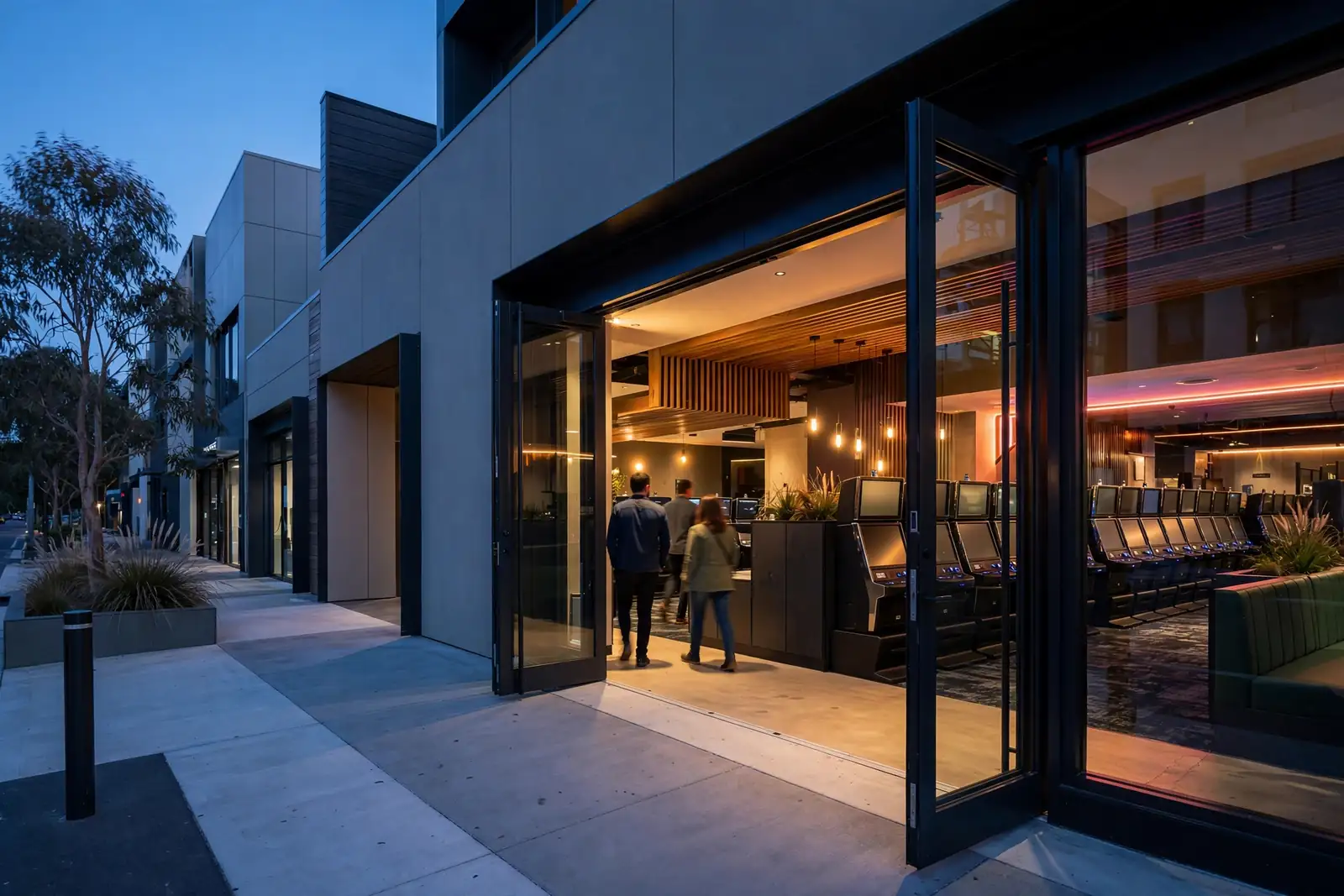
“Open” sounds like a simple status: doors unlocked, lights on, machines available. In practice, it can describe several different things. A venue may be trading while a particular area is closed; a public listing may show ordinary business hours without establishing whether its gaming room is operating at that moment. A result marked open is therefore not the same as confirmation that pokies are available.
That distinction matters most when plans depend on a narrow window. Someone checking for an early start or a late finish needs current information, not a schedule copied from an old directory. Opening details can change, and a listing may lag behind a venue’s own notice. Search results are useful for finding a contact point, but they are poor witnesses to what is happening behind a door right now.
The most dependable confirmation comes from the venue’s current, direct communication: its own website or social account, a recent notice, or a phone call. Even these need to answer the practical question, not merely say that the premises are open. If the purpose is to visit the gaming room, the relevant detail is whether that room and its machines are operating at the intended time. General venue hours may not settle it.
This is not a special puzzle about Adelaide so much as a small problem of language. “Open now” is an assertion about a moment. “Opening hours” is a schedule. One cannot safely substitute for the other, particularly when the information comes from a third-party listing that may have been entered once and left to age. A neat timetable is not evidence of a live update.
There is also a difference between a regular schedule and an exception. A public holiday, a private function, maintenance, staffing arrangements or a temporary change may affect what is available. Those possibilities should not be mistaken for claims about any particular Adelaide venue; they are reasons a standing listing cannot prove present status. The date and time of the information matter as much as the hours printed on it.
For the same reason, a map pin is not an opening notice, and a review mentioning a visit does not establish today’s conditions. Older comments can preserve a past schedule long after it has changed. A venue’s own current announcement is more useful, but even an announcement about general trading may leave the gaming-room question unanswered. The smaller the distinction appears, the more easily it disappears in a directory.
There is no sound basis for treating an early-morning or late-night phrase in a listing as a guarantee. Those words can be copied from a standard business profile, inferred from a broad category, or left unchanged after circumstances shift. The result is a familiar modern contradiction: information appears instantly, while its date of truth remains obscure. Convenience is not verification.
A careful check can therefore be quite modest. Look for a current update from the venue, note when it was published, and make sure it refers to the gaming room rather than only the broader premises. If the status is still unclear, direct confirmation is the cleanest answer. If no current confirmation is available, the honest description is that the status remains uncertain—not that the venue is open, and not that it is closed.
This restraint is especially useful because opening information is not a ranking. A room’s hours say nothing about whether its games are suitable, generous or preferable; those are different claims and require different evidence. Nor does a timetable reveal what happens on an individual visit. A schedule is only a schedule.
The phrase “Adelaide pokies open now” compresses a real practical need into a few words, but the words cannot make stale information current. A search can point towards a venue and a published schedule can offer a starting point. Neither should be mistaken for live confirmation. The decisive detail is whether the gaming room is operating at the time in question, confirmed through information that is both current and specific.
Small distinction. Big difference.
Choosing pokies to play in Adelaide means looking beyond the game itself and considering the details available about each casino. Use these notes as a starting point when deciding which options to explore.
Playfina Casino
Playfina Casino is operated by Hollycorn N.V. and has held a Curacao eGaming license since 2017. The minimum deposit is A$20–30, depending on the offer.
Kingmaker
Kingmaker lists a minimum deposit of A$30. Payouts take about 90 minutes for crypto and 1–5 days for fiat.
Ricky Casino
Ricky Casino has a A$20 minimum deposit, or A$30 to qualify for the bonus. Its stated payout times are under an hour for crypto and 1–3 business days for PayID.
LevelUp Casino
LevelUp Casino operates under a Curacao eGaming license, OGL/2023/174/0082, held by Dama N.V. Its minimum deposit is A$15.
WinSpirit Casino
WinSpirit Casino is licensed by Antillephone N.V. under Curacao eGaming license OGL/2024/923/0383. The minimum deposit is A$30.
JustCasino
JustCasino is listed with a Curacao Gaming Control Board license. No other operator details are provided here.
MrPacho
MrPacho lists a A$30 minimum deposit. Its stated payout times are 30–120 minutes for crypto and 24–72 hours for fiat.
Bizzo Casino
Bizzo Casino is listed with a Curacao Gaming Control Board license and is operated by TechSolutions Group N.V. No other operator details are provided here.
7Bit Casino
7Bit Casino operates under a Curacao license and is operated by Dama N.V. No other operator details are provided here.
Roby Casino
Roby Casino is listed as holding a Curacao eGaming license, with Roby Games Ltd named as the licensee. No other operator details are provided here.
“Best” sounds like a verdict. Applied to pokies, it can mean a game someone enjoys, one with a particular style of play, or one whose published return setting compares favourably with another. Those are different claims, and only the last invites a numerical comparison. Even then, the game’s title alone may not settle the matter.
A specialist review reports that some providers let casinos choose among multiple return-to-player settings for the same pokie. The practical consequence is awkward for tidy rankings: a return percentage attached to a game may not describe every version of it. The same title can be configured differently at different casinos. Without knowing the setting used for the specific game on offer, a comparison based on the title or a general figure risks comparing unlike things.
That matters to anyone looking for the best-paying pokies in Adelaide. A list of familiar game names, stripped of the settings in use, may look precise while leaving out the detail that gives a return figure meaning. Nor does a game’s presence in one casino establish that the same version, or the same setting, is used elsewhere. “Best” cannot be reliably translated into “pays the most” unless the compared settings are known and the basis of comparison is clear.
A return percentage describes a theoretical return across play, not a promise about a particular session or a forecast of what will happen next.
Even a published return percentage has a narrow meaning. It describes a theoretical return across play, not a promise about a particular session or a forecast of what will happen next. It cannot tell a player that a machine is due to pay, that a recent loss makes a win more likely, or that a win will arrive within a set number of spins. The word “return” has a way of sounding personal. The calculation is not.
Each spin is generated as a separate random event by a Random Number Generator. The previous result does not set the next one. A run of wins does not establish a pattern that must continue, and a long stretch without a win does not create an obligation for the game to compensate. People are skilled pattern-finders; chance offers a poor but persistent collaborator.
This is why rankings that call one title the best pokies in Adelaide should be treated carefully. A ranking may be based on popularity, a reviewer’s preference, a stated return setting, or some mixture of these. Those measures are not interchangeable. Popularity says something about what people choose, not necessarily what they receive back. A preference is a matter of taste. A return figure only helps with comparison when it applies to the precise version being compared.
The same distinction applies to claims about Adelaide casino pokies or games described as the best in the city centre. A city label does not itself establish a game’s settings. Nor does a game’s reputation tell anything dependable about the particular configuration available at a venue. The location may make a title sound local; the relevant figure remains tied to the game’s actual setting.
For the same reason, there is no useful way to collapse every pokie in Adelaide into one universal winner. Some players may value familiar themes or uncomplicated play; others may prefer a different pace or style. Those are legitimate preferences, but they do not become evidence of a superior return. A “best” choice in that sense belongs to the person playing, rather than to a measurable league table.
Return figures should be understood as settings connected to a specific version of a game rather than permanent labels attached to every appearance of the title.
Online descriptions create a related problem: a game name and a return figure can travel farther than the configuration they originally described. A figure repeated without its context may be mistaken for a fixed property of the title. It is better understood as a setting that needs to be connected to the specific version, rather than as a permanent label attached to every appearance of the game.
So the word “best” can still be useful, provided it is kept modest. It may describe taste. It may describe a comparison whose settings are disclosed and comparable. It cannot turn a random game into a predictable one, or make an unqualified return claim universal. In the absence of those distinctions, a confident ranking is more decoration than evidence.
Adelaide’s airport, central business district and northern suburbs are distinct places, not interchangeable labels for one gaming area. Yet searches for pokies near Adelaide Airport, in the CBD or around North Adelaide often compress distance, direction and the name of a destination into a single phrase. The result can sound more precise than it is.
A request for pokies near the airport might mean a venue inside the terminal, somewhere immediately outside it, or a place reachable from the airport by road. Those are different claims. “At the airport” suggests a location within the airport; “near the airport” leaves the distance undefined. Neither phrase, by itself, identifies a venue. No particular Adelaide venue location can be confirmed here, so there is no sound basis for attaching a map pin to either description.
The same distinction matters in the CBD. “Near the CBD” could describe a short walk, a trip across the centre or somewhere in a surrounding suburb. A map can make these differences visible, but only when its marker belongs to a confirmed address. Without that anchor, proximity is just a flexible word wearing the appearance of geography. A clear label is not the same thing as a verified place.
North Adelaide introduces another small complication. It is a distinct part of the city, not simply another name for the CBD. A result described as being in North Adelaide should not be treated as a central-city location without checking where it actually sits. The distinction matters to anyone planning a route; it matters just as much to the accuracy of a listing.
The wording “Adelaide, Vic” is more difficult still. Adelaide is in South Australia, while “Vic” commonly denotes Victoria. That combination may reflect a mistaken location setting, an imprecise listing or a search made with the wrong place attached. It does not establish that an Adelaide venue lies in Victoria. A location label can travel farther than the place it is meant to describe.
“Near me” is not a fixed area either. Its meaning depends on where the person is standing and how far they consider reasonable to travel. Near the airport, it points one way; in the city centre, it points another. Without a starting point and an actual destination, the phrase offers no reliable measure of distance.
The useful test is whether a venue name and street address agree with a map, rather than whether a result repeats the words airport, CBD or North Adelaide. The address should place the venue in the area claimed, and the map should point to that address rather than a broad neighbourhood or a nearby landmark. If those details do not line up, the location remains uncertain.
Geography is often treated as the easy part of a search: the city is named, the map opens, and the distance appears settled. But a map can only answer a question once the place being mapped is known. In Adelaide, airport, CBD and suburb labels describe different kinds of proximity; they are not a substitute for a confirmed venue location. A pin is not proof.
A venue’s character is not measured only by its machines or the room they occupy. It is also shaped by the people assigned to notice when recreation begins to look less like recreation. That work is difficult to reduce to a sign on a wall: it depends on attention, and on a system that makes attention part of the job.
A report published by regionriverina.com.au describes a requirement taking effect from 1 July: at venues operating more than 20 gaming machines, a dedicated responsible gambling officer (RGO) must be present while those machines are running. The threshold matters. The rule is framed around the scale of a venue’s machine operation, not as a claim that every room has the same staffing arrangement. Nor does the requirement itself establish anything about the quality of a particular Adelaide venue.
The officer’s role gives a human form to a policy that might otherwise remain abstract. Gambling harm is not always visible in a single gesture, and a person’s circumstances cannot be read reliably from across a room. Still, a named responsibility can make it harder for a venue to treat troubling behaviour as nobody’s concern. The position does not turn an employee into a diagnosis. It makes watching, responding and recording part of the institution’s work.
The same report says venues are to keep a gambling incident register. It is intended to capture occurrences that may indicate a patron is at risk of harm or is already affected by it. A register is an unglamorous instrument: its value lies less in the existence of a book or database than in whether observations are recorded and can inform what happens next. Paperwork is not care. It can, however, make neglect more difficult to disguise.
There is also a transition period. According to the report, venues have a month to take down signage and put the responsible gambling officer arrangements in place. That allowance recognises that a requirement needs to be implemented, not merely announced. It also means the change is not instantaneous; for a period, venues are expected to move from one arrangement to another.
These measures concern venue-level oversight, not a ranking of Adelaide’s gaming rooms. They offer no reliable basis for naming a “best” venue, and they do not confirm which local premises operate machines or how a particular venue handles its responsibilities. Their significance is narrower, and more useful than a promotional verdict: they describe expectations placed on operators while gambling machines are in use.
The distinction matters because public rules often promise more than they can deliver. A responsible gambling officer cannot erase risk, and an incident register cannot undo harm. But both make the venue less of a blank space in the story: an operator has duties, and a patron’s distress is not supposed to vanish into the noise of the room.
A modest safeguard. Not a cure.
The word “pokies” can point to a room of machines or to a screen. Legally, those are not interchangeable settings. Adelaide’s physical gaming rooms belong to one part of the gambling landscape; real-money online casino games are governed by a separate national rule.
Under the Interactive Gambling Act 2001, an operator cannot provide online pokies for real money to people in Australia unless it holds the relevant domestic licence. No such licences have been issued, and Australia has no licensed online casino. The law also treats online slots, poker and table games as prohibited interactive gambling services when supplied to people in the country.
That distinction gives searches for Adelaide pokies a rather unglamorous boundary. A physical venue and a website may display familiar symbols and games, but the resemblance does not confer the same legal status. Nor does adding Adelaide to an online offer make it local in any meaningful regulatory sense. A place name is not a licence.
Bonus language does not change the position. “No deposit” describes a promotional condition, not permission to provide a prohibited service. A real-money offer remains an online gambling offer even when it is framed as a free starting point or presented without an initial payment. The legal question is not whether money was required at the first click; it is whether an operator is providing online gambling to people in Australia.
This can be easy to miss because the screen is designed to make distance disappear. A game may appear beside local currency, familiar wording and a city name, while its legal standing is determined by the national framework rather than by its appearance. The interface is localised; the law is not thereby persuaded.
The Act’s approach reflects a particular division of responsibility. The operator is the party barred from supplying the service without the required licence. That is a rule about provision, not a declaration that online casino games become lawful through a change of label, payment method or promotional offer. In this market, there is no domestic online-casino licence waiting to be checked.
For people comparing physical Adelaide venues with online results, the categories therefore need to remain separate. The fact that pokies exist in a physical setting does not establish that real-money online play is authorised. Likewise, a website using local language or naming a city does not acquire the standing of a local gaming room.
The distinction is plain, even if the screen makes it look otherwise.
A phone screen makes distance look negotiable. Someone in Adelaide can search for a casino-style game, tap through a mobile site and find that its operator is based elsewhere. The city in the search does not change the legal position, and a page that loads is not proof that the service is authorised to operate in Australia.
Under the Interactive Gambling Act, the legal target is the operator, not the individual player. Australians are not criminally liable simply for playing on an offshore site that accepts them, and the law does not make the player’s act of logging in an offence. That distinction can sound reassuring. It is narrower than it first appears.
No Local Redress
Australian players have no legal recourse in Australia against offshore casinos if the operator refuses to release winnings.
The practical boundary is drawn elsewhere. The Australian Communications and Media Authority can order access to illegal offshore gambling sites to be blocked, and internet service providers must follow the regulator’s blocklist. A site may therefore be unavailable from Australia even if it can be reached from somewhere else, or may disappear from access after previously appearing to work. A mobile connection does not create an exception to those controls.
Nor does a successful deposit or a displayed balance establish that a player can enforce a claim in Australia. If an offshore casino refuses to release winnings, Australian players have no legal recourse in Australia against it. The screen may show a number; the domestic remedy is absent. That is the important asymmetry: the law places its force on operators, while a player who chooses an offshore service can still be left with no local route to recover money.
This matters to searches for online pokies from Adelaide, whether the interest is a broad casino experience or a particular style of play. “Near” is an odd word for a website: the device may be in South Australia, the operator elsewhere, and the dispute beyond the reach of Australian courts. An online service can borrow the language of local convenience without being a local institution.
Physical venues and offshore websites belong to different practical worlds. A local address, an Australian-looking interface or a site that accepts Australian customers does not turn an offshore operator into an Australian one. The difference becomes most visible not at the moment of play, but when access is blocked or a payment is disputed.
A connection is not protection.
The phrase “open 24 hours” sounds definitive. In practice, it is a claim about a particular venue’s current operating hours, not a general description of Adelaide’s pokies. A listing may be old, refer to a different part of a venue, or say nothing about whether its gaming room is operating. The wording alone cannot establish that pokies are available throughout the day and night.
That distinction matters when hours are treated as a stable feature rather than a detail that can change. A venue’s broader public opening hours need not, by themselves, establish the hours of its gaming area. Nor does a round-the-clock label confirm that machines are running at the time it is read. An “open now” marker is only as useful as the information behind it.
A careful account of Adelaide pokies hours therefore needs a specific, current statement about the venue and its gaming operations. Without one, it would be misleading to turn a search result or an unqualified label into a promise of continuous access.
There is a separate rule about staffing that should not be mistaken for a timetable. A report published by regionriverina.com.au says that, from 1 July, venues operating more than 20 gaming machines are required to have a dedicated responsible gambling officer (RGO) on duty while those machines are running. The condition concerns oversight during machine operation; it does not set opening hours, establish that a venue is open overnight, or show that any particular Adelaide room meets the threshold.
The requirement for a responsible gambling officer applies specifically to venues operating more than 20 gaming machines.
The distinction is modest but important. A staffing requirement tells something about the conditions under which machines may operate at a qualifying venue. It cannot be used to infer when that venue opens, when it closes, or whether it has machines available at a given moment. Regulation is not a clock.
The appeal of “24 hours” is easy to understand: it promises that the ordinary day, with its work shifts and inconvenient edges, need not dictate when leisure happens. But a phrase can carry more certainty than the evidence behind it. For late-night plans, only a current venue-specific confirmation can settle the matter; a general label cannot do that work.
The useful boundary is clear. A reported RGO requirement applies while machines are operating at venues above the stated machine threshold. It says nothing about whether Adelaide has a 24-hour pokie venue. The distinction is less convenient than a simple label, and more honest.
Putting “Crown” beside “Adelaide” can make a search phrase look like a local venue listing. It is not one. A brand name and a city name placed together do not establish that a Crown casino or pokies room operates in Adelaide, nor that a particular machine can be found there. That distinction matters: a phrase can be easy to type and still leave the place it appears to describe uncertain.
The same care applies to requests for the best pokies room at Crown in Adelaide. “Best” needs something concrete to compare: identified rooms, machines, or conditions. Without those, a ranking would turn the grammar of the request into an invented fact. The neatness of a list can conceal how little it establishes.
There is a related problem with maximum cash payouts. The phrase suggests a single figure attached to “Adelaide pokies”, but it does not identify a machine, its rules, or the venue where it is played. A payout claim without those particulars would be more decoration than guidance. A maximum is meaningful only when its scope is clear: which game, under which terms, and at which location.
Pokies themselves do not make outcomes predictable. Each spin is an independent event determined by a Random Number Generator. That does not answer what a particular machine may pay, and it cannot turn an unlocated room into a confirmed one. Chance is not a venue directory.
Brand recognition has a peculiar authority in travel and entertainment searches. It offers the mind a shortcut: a familiar name seems to bring a place, its rooms and its machines along with it. But a familiar name is not a map pin. Nor does a search phrase establish that a particular offering exists in the city named beside it.
A careful description therefore has to keep the pieces separate. Crown-related wording may express interest in a brand; “Adelaide” may express the desired location; and “maximum payout” may express a wish for a definite number. None of those words supplies the missing particulars on its own. Treating them as proof would make the sentence sound more certain than the subject allows.
That restraint is not a verdict on any venue. It is simply a boundary around what the wording can establish. In casino writing, confident phrasing often travels faster than the detail needed to support it. Here, the boundary is the useful part.
An Adelaide club and a room with pokies are not interchangeable ideas. “Club” can describe a social institution, while the presence of gaming machines is a separate feature. A name, a CBD address or the word “club” on a sign cannot, by itself, establish what facilities a venue offers. That distinction matters when a phrase such as “best pokies in Adelaide’s CBD” appears to promise a neat set of places and a ready-made comparison.
The language of club life carries its own history. Clubs have often been built around membership, sport, recreation or a shared local identity; gaming, where present, is one activity within a broader institution. Treating every club as a pokies venue flattens those differences. It also turns a social label into a claim about a facility.
There is no useful ranking to be made from the word “best” alone. The CBD description gives a location category, not a measure of the machines, the terms on which they operate or the experience inside a particular room. Nor does the plural “clubs” establish a list. A confident catalogue would sound more precise than the underlying claim.
Self-exclusion belongs to a different part of the picture: it is a responsible-gambling tool intended to help someone step away from gambling. It should not be confused with a directory of clubs or treated as evidence about which CBD venues have pokies. Deposit, loss and session-time limits are other tools, but each has a different purpose from exclusion.
BetStop has a narrower boundary. It applies to Australian-licensed operators and does not bind offshore sites. That matters when self-exclusion is discussed alongside online gambling: a person’s exclusion from one setting should not be mistaken for a universal barrier across every service. The boundary is not merely technical.
A CBD club’s identity and its gaming facilities are separate questions, and neither can be answered by a search phrase alone. The distinction is less tidy than a list, but more honest.
“Cashless” can describe how money moves, but it does not identify a pokies room. PayID is an alias layer over Australia’s New Payments Platform (NPP): it lets transfers be addressed through an email address, mobile number or ABN rather than by entering conventional account details. That is a payment function, not a map.
The distinction matters when Adelaide pokies are discussed alongside cashless payments. A PayID reference does not establish that a venue exists in Adelaide, that it has pokies, or that a game is fair. Nor does the presence of a payment option prove a site’s licence status or reveal a game’s return setting. Those are separate questions, however neatly a payment label may appear beside a gaming offer.
For real-money online play, PayID must first be linked to a bank account. That describes a technical prerequisite, not an endorsement or a route around Australia’s rules. The NPP carries transfers; it does not certify the business receiving them. A familiar payment method can make a transaction feel ordinary. It cannot make every destination ordinary.
The Newcastle wording creates a different kind of confusion. Newcastle and Adelaide are separate places, and a reference joining them does not turn one city into evidence about the other. It may reflect a muddled location phrase, a comparison someone has in mind, or simply two place names appearing together. None of those possibilities confirms an Adelaide venue or says anything about its machines.
So “cashless pokies in Adelaide” combines two subjects that need to be kept apart: the way a transfer is addressed and the physical location of gaming. PayID belongs to the first. A Newcastle reference belongs to neither as proof of an Adelaide offering. The labels travel easily; the evidence does not.
E-wallets such as Skrill and Neteller are popular for their speed. Check the casino’s withdrawal terms before choosing a method.
It is the amount you must wager before bonus winnings can be withdrawn. For example, a $500 bonus with a 40x requirement means $20,000 in bets.
There is no Australian-licensed online casino. If an offshore casino refuses to pay, Australian players have no legal recourse in Australia.