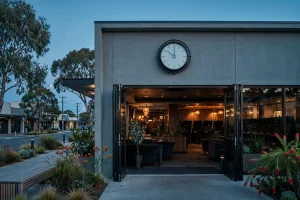
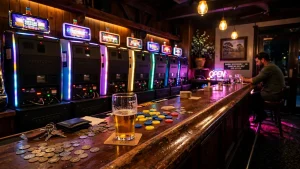
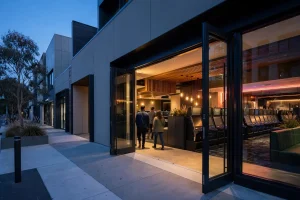
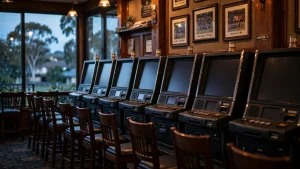
Venue opening hours and permission to play are separate; current availability must be verified for each venue.
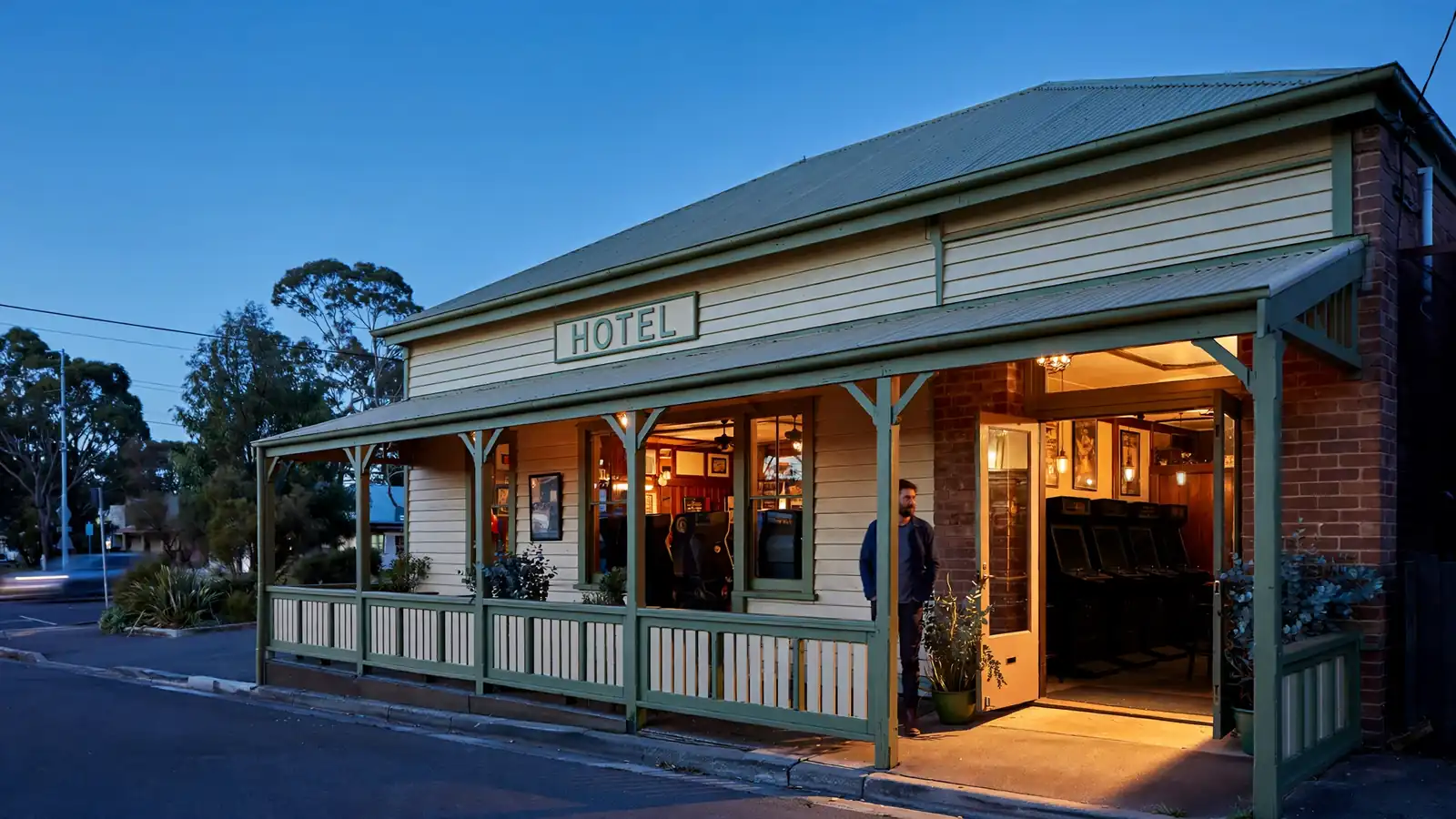
“Open now” sounds like a simple condition: the doors are open, the lights are on, and a venue is admitting people. For poker-machine gambling in New South Wales, though, opening status and permission to play are separate matters. A venue’s hours describe when it operates; they do not suspend the rules governing who may use its Electronic Gaming Machines (EGMs), or the safeguards that apply once play begins.
That distinction matters because opening times can vary by venue and can change. A general description of NSW pokies as open early, late or at a particular hour cannot establish whether a specific venue is admitting customers at this moment. Nor does the presence of a machine settle whether play is available. A live status requires current, venue-specific information; a broad statewide statement cannot stand in for it.
The rules of play are less dependent on the clock. In NSW, the legal age for gambling on poker machines is 18. Venues must check identification to ensure that people gambling meet this requirement. A machine being accessible in a public venue does not make it suitable for every person in the room. The age rule follows the activity, not the hour.
Choosing pokies for New South Wales means weighing what is known about each operator before deciding where to play. This list provides a concise reference based on the available operator details.
Playfina Casino
Playfina Casino is listed with a Curacao eGaming license held by Hollycorn N.V. since 2017. Its minimum deposit is A$20–30, depending on the offer.
Kingmaker
Kingmaker lists a A$30 minimum deposit. Its stated payout times are around 90 minutes for crypto and 1–5 days for fiat.
Ricky Casino
Ricky Casino lists a A$20 minimum deposit, or A$30 to qualify for the bonus. Stated payout times are under an hour for crypto and 1–3 business days for PayID.
LevelUp Casino
LevelUp Casino is listed with a Curacao eGaming license, OGL/2023/174/0082, held by Dama N.V. Its minimum deposit is A$15.
WinSpirit Casino
WinSpirit Casino is listed with a Curacao eGaming license, OGL/2024/923/0383, held by Antillephone N.V. Its minimum deposit is A$30.
JustCasino
JustCasino is listed with a Curacao Gaming Control Board license. No other operator details are provided here.
MrPacho
MrPacho lists a A$30 minimum deposit. Its stated payout times are 30–120 minutes for crypto and 24–72 hours for fiat.
Bizzo Casino
Bizzo Casino is listed with a Curacao Gaming Control Board license, with TechSolutions Group N.V. named as the operator. No other operator details are provided here.
7Bit Casino
7Bit Casino is listed as operating under a Curacao license, with Dama N.V. named as its operator. No other operator details are provided here.
Roby Casino
Roby Casino is listed with a Curacao eGaming license held by Roby Games Ltd. No other operator details are provided here.
There is also a state requirement that changes the meaning of “ready to play”. NSW poker-machine venues have mandatory pre-commitment systems: a player sets a loss limit before beginning. This is not an opening-hours restriction. It is a condition attached to play, intended to make a boundary explicit before the session rather than after losses have accumulated. The system does not turn a venue’s schedule into a guarantee of access, and a venue being open does not make the pre-commitment step optional.
That arrangement reflects a particular public compromise. Poker machines remain part of the state’s club and venue life, while participation is framed by rules intended to make risk visible and bounded. The boundary is not a promise that losses will be prevented. A limit is a limit, not a forecast of what a session will cost, and it should not be treated as a reason to raise stakes or try to recover money already lost. A session budget grounded in available funds gives the boundary practical meaning; chasing losses defeats it.
The language of “payout” can also blur the distinction between a venue’s availability and what a machine may return. A venue open at a given time does not establish a particular payout percentage, nor does an open sign reveal what will happen in a session. Opening information answers a narrow operational question. It cannot predict an individual outcome.
For anyone comparing opening claims, the useful separation is therefore straightforward: venue hours belong to the venue, while age and pre-commitment rules belong to NSW poker-machine gambling. A listing may help establish a schedule if it is current and specific, but it cannot replace the conditions that apply to play. Conversely, a statewide rule does not confirm that any particular room is open.
This is why a search for NSW pokies open now cannot be answered responsibly with a timeless promise. Hours can change, and a general description is not a live check. The legal frame is steadier: poker-machine gambling is for adults, identification checks matter, and the loss limit must be set before play. The clock moves. The rules remain.
A pokie can look like a small machine for telling stories: symbols line up, a bonus round opens, a jackpot climbs. Beneath that display, however, the outcome of an online spin is determined by a Random Number Generator, or RNG. The animation gives the result a visible form; it does not reveal a pattern that can be read to predict the next one.
Each spin is independent. The RNG does not keep score, and a run of losses does not make a win due. Nor does a recent win make another one less likely. This is where human memory can turn against its owner: a striking sequence is easy to recall, while the many ordinary spins around it blur together. A machine may seem to have a mood. It has no memory.
Attention: A machine has no memory; a run of losses does not make a win due, and a recent win does not make another less likely.
That distinction matters when people look for the best pokies in NSW or ask which games pay best. A title’s theme, bonus features or jackpot display can be compared, but none establishes that it will return more to a particular player or produce a win on demand. Mechanics describe how a game is designed to operate, not what the next spin will do.
Return to Player, usually shortened to RTP, is a theoretical measure of how much wagered money a pokie pays back across a very large number of spins. It is a long-run description, not a forecast for one session. The scale is statistical rather than personal: an individual can experience a result far from the theoretical return, because a single player’s spins are only a tiny part of the total imagined by the measure.
RTP is therefore useful as a way to understand a game’s stated design, but it cannot identify a guaranteed winner among NSW pokies. It does not mean that a certain share of a player’s own bets will come back, or that losses will be balanced by later spins. It also does not turn a short sequence into evidence that a pokie is “hot” or “cold”.
The phrase best paying pokies NSW can suggest a straightforward league table. The mathematics is less accommodating. Even where RTP figures are available for comparison, they describe theoretical returns over a very large number of plays; they do not promise a particular result, and they do not make a game reliably profitable. A ranking based on a single session would confuse chance with design.
Progressive jackpot pokies work differently from games with a fixed top prize. A small portion of every bet contributes to a shared pool, which grows as play continues until the jackpot is won. The rising figure is part of the game’s appeal: it turns many separate bets into one conspicuous prize.
But the pool’s growth does not make a win imminent. A large display is evidence that the jackpot has accumulated, not that the next spin is more likely to trigger it. The same independence applies. A jackpot can be compelling precisely because the prize is visible while the odds of a particular outcome remain outside the player’s view.
This is a neat arrangement of attention: many small contributions become a single enormous-looking possibility. The machine shows the possibility; it does not show a timetable.
Understanding these mechanics can make comparisons more sober. RNG explains why past spins cannot predict future ones. RTP gives a theoretical long-run measure, not a personal promise. A progressive pool explains where a growing jackpot comes from, not when it will be won. None of these features supplies a dependable method for choosing a winning spin.
The practical response is equally plain: set a session budget that fits the available bankroll, do not chase losses, and do not raise bets in an attempt to recover them. A streak is not an instruction. The machine has no memory; the player’s finances do.
The border around online pokies is legal as well as geographical. Under the Interactive Gambling Act 2001, operators based in Australia cannot provide real-money online casino games to people in Australia. That includes pokies. The restriction is on the service provider, not a declaration that an Australian player commits a crime simply by accessing an offshore site.
Legal Risk
Under the Interactive Gambling Act 2001, operators based in Australia cannot provide real-money online casino games to people in Australia.
Offshore platforms occupy a different position: they are not regulated under Australian law, and their services are not lawful Australian online casino services. A foreign gambling licence does not turn an offshore operator into an Australian-authorised provider. The distinction can get lost in advertising language, where “licensed” is made to sound like a single, portable guarantee. It is not.
That leaves a practical gap between what an offshore operator may claim about its licence and what protections apply to someone in NSW. Disputes may have limited routes for resolution, and winnings may not be protected if an operator becomes insolvent. Some operators also cap weekly withdrawals at AU$4,000, a condition that could matter to a jackpot winner. A headline offer is not the same thing as a secure route to payment.
The same care applies to claims about “no deposit” offers or high-paying games. Bonus conditions may include substantial wagering requirements, maximum cashout rules, or terms that allow winnings to be voided. A search for the best-paying pokies in NSW cannot establish a reliable ranking: return claims do not make an offshore service lawful, and a bonus does not make its terms disappear. Groceries and rent are not a sensible wager; the hope that gambling will supply them is an illusion.
An online casino or software provider can decide that a game or provider is unavailable to people in particular countries. One way to enforce that boundary is to use the player’s IP address to estimate their geographic location. An Australian IP address may therefore lead to a different lobby from one displayed elsewhere.
When a game is blocked on that basis, it may not appear in the lobby at all. This is not necessarily a fault with the device or a sign that the game has vanished from every market. It can simply be unavailable from the connection’s apparent location. The list of visible games is conditional, not universal.
A VPN can make a connection appear to come from another country, but it is not a safe or acceptable workaround. Using one to reach region-blocked pokies can breach a site’s terms of service and may lead to account suspension. A changed digital location does not change the player’s physical location or the legal status of the service.
The border is enforced through ordinary software. Quietly, but consequentially.
For someone in NSW, “online pokies near NSW” cannot mean a nearby physical venue in the way it might for a local club. Online access depends on the operator’s service rules, the games it permits in the player’s region, and the law that applies where the player is located. A game that appears in a general catalogue may not be available to an Australian connection.
The phrase “real money” does not settle the question either. Nor does “high limit”: those labels describe marketing or play conditions, not Australian authorisation. Australian-run online casinos cannot lawfully offer real-money pokies to people here, while offshore sites do not acquire local regulatory status by accepting Australian visitors.
The distinction is plain, even if the interfaces are not. A lobby can show what its operator permits; it cannot confer legal standing or Australian consumer protections.
A map can make “near” look like a simple measurement. In practice, the phrase may mean a short walk from a terminal, somewhere in a central business district, or a venue convenient to a long drive across a state boundary. Those are different errands, even when they arrive in the same search box.
No particular airport, CBD or border-area venue can be identified here, and no distances can responsibly be attached to them. A place name alone does not establish that poker machines are inside an airport, close to it, or available in a neighbouring town. Nor does a broad label such as northern NSW narrow the answer to a confirmed venue. Geography supplies the setting; it does not supply a listing.
That distinction matters most around transport hubs. An airport may be a landmark, a destination or merely the point from which someone is travelling. The same is true of “CBD”: it can describe a wide urban area rather than a building or a precise address. A venue’s association with either label should not be treated as proof of proximity or of poker-machine access.
The state line adds another small complication. “Near NSW” might refer to a place within NSW, a town just across the boundary, or a journey that crosses between states. A state label does not establish where a venue sits. For a practical location decision, the exact venue and its address matter more than a regional shorthand. No airport, CBD or cross-border machine inventory follows from the wording alone.
The rule that does travel across those locations is the age threshold. In NSW, gambling on poker machines is restricted to people aged eighteen or older. The rule concerns the activity, not whether the machines are described as pokies, Electronic Gaming Machines or part of a club. A nearby setting does not create an exception.
Venues must check identification for poker-machine gambling. That makes identification part of the threshold in practice, rather than a detail that can be settled by the location of a venue or the confidence of a claim about it. Anyone under eighteen cannot lawfully gamble on these machines. A map pin cannot change that.
There is a broader social design in this simple boundary. Public places are made legible with labels—airport, centre, north, border—while the rules follow people into each setting. The location may change; the age rule does not. This is less a guide to a particular route than a way to separate what a place name suggests from what it can establish.
For responsible play, a session budget should be set from available bankroll rather than from hoped-for winnings. Losses are not a reason to raise stakes or keep playing in an attempt to recover them. That principle applies just as much near a terminal or a city centre as anywhere else. The scenery is incidental.
In New South Wales, gambling on poker machines is restricted to people aged eighteen or older, and venues must check identification.
A large venue can look like an obvious answer to a search for a standout place to play. Size is easy to compare; the experience of a venue is not. In NSW, one scale-based distinction is clear: Club Liverpool has more operational poker machines than any other club in the state.
That makes it a useful point of reference for the landscape of NSW pokies venues, but not a verdict on which venue is best. A count says something about the number of machines operating at a club. It does not establish that those machines are more enjoyable, that the venue suits every visitor, or that a visit will produce a better result. Scale and quality are different measures.
The distinction matters because “best” can mean several things, none of which follows automatically from a machine count. Someone may mean a broader choice of games; someone else may be thinking about atmosphere, accessibility or the setting beyond the gaming floor. Club Liverpool leads on one defined measure, not on every measure that might matter.
There is a social history tucked into that distinction. Clubs are not simply containers for machines: they are institutions with identities beyond gambling, and their scale can reflect how substantial a place they occupy in local life. Yet a prominent gaming floor remains a gaming floor. The number of machines is a description of capacity, not an invitation to treat play as a contest in which a larger venue offers better odds or a more favourable outcome.
For people considering pokies venues in NSW, the more useful reading of the comparison is narrow. Club Liverpool stands out among clubs for the number of operational machines. That is a meaningful fact about its scale, and it is enough to distinguish it without turning the distinction into an endorsement. It also cannot settle questions about venues elsewhere in the state, including CBD locations, where a city-centre address would be a different kind of comparison altogether.
Machine counts can make a tidy league table. They cannot tell the whole story of a venue, still less identify a universal “best” place to play. Club Liverpool’s position is specific and measurable: it has the highest number of operational poker machines among NSW clubs. Beyond that, preference belongs to the individual, while the comparison itself should stay modest.
More machines. Not a recommendation.
A venue’s late-night reputation is not a timetable. Claims about round-the-clock pokies, or whether a particular room is open now, need to be checked against that venue’s own current opening information. A general description of NSW gambling rules cannot establish when a club or casino admits guests, whether its gaming area is operating, or whether access changes on a particular day.
That distinction matters because “open” can describe more than one thing. A building may be trading while a particular service is unavailable; a gaming area may have its own hours. Without a current, venue-specific schedule, a claim of continuous access would be guesswork dressed as local knowledge. The clock is not a licence.
There is, however, a statewide rule that shapes play regardless of the hour. NSW requires pre-commitment systems: a player sets a loss limit before starting to play poker machines. The measure puts a boundary in place ahead of the session, rather than leaving the decision entirely to the momentum of play. It does not establish a venue’s opening hours, nor does it turn a late opening into a 24-hour service.
NSW requires a mandatory pre-commitment system where a player sets a loss limit before beginning to play poker machines. This is a condition attached to play intended to make boundaries explicit, regardless of the venue's opening hours.
That distinction is easy to lose in the language of convenience. A machine may be available only within the operating schedule of its venue, while the pre-commitment requirement applies to poker-machine gambling in NSW. One concerns access; the other concerns a limit chosen before play. Neither answers the other.
The rule also reflects a particular public judgement: gambling is not treated simply as a private transaction between a person and a machine. The state requires a pause before play, a moment in which a loss boundary is set. It is a small procedural interruption in a business built around continuous play. Small, but deliberate.
Opening information can change, so an old listing or a broad claim about a venue should not be mistaken for confirmation. A direct check with the venue is the sounder way to establish its current hours and whether poker-machine areas are operating. The statewide pre-commitment requirement remains relevant once play begins, but it cannot substitute for that practical check.
A late-night search therefore has two separate answers to find: the venue’s present schedule, and the rules governing play inside it. NSW supplies the latter through mandatory pre-commitment. The former belongs to the venue. A long night is not proof of an all-night service.
Parkes belongs to the same legal map as every other NSW town when poker-machine gambling is concerned. The statewide age threshold is clear: a person must be at least 18 to gamble on an Electronic Gaming Machine (EGM). That rule does not change with a town’s size or with the kind of venue in which a machine might be found.
Age checks are part of the practical boundary around play. Venues must check identification, and anyone under 18 is not legally entitled to gamble on poker machines. The distinction matters: a place name in a listing, a sign outside a venue or a machine visible in a room does not make underage play permissible. The rule is not a local custom.
Parkes-specific interest can easily become a hunt for certainty about individual premises or particular pokies. Those are separate questions from the NSW rule itself. A statewide age requirement establishes who may gamble; it does not establish what machines a named venue has, whether a particular game is available, or what facilities a venue offers. Treating one as proof of the other turns a legal boundary into a directory, which it is not.
The same care applies when a search broadens to another NSW town, such as Port Macquarie. The shared state rule travels across those place names; venue details do not automatically travel with it. A familiar game title is not evidence that a machine is installed locally, and a general description of NSW pokies cannot stand in for a current, venue-level description.
There is a social history tucked into this division. NSW regulates poker-machine gambling through rules that apply across the state, while the experience of play is attached to particular rooms, operators and communities. The law draws the age line; it does not supply a complete portrait of each local venue. Those are different kinds of knowledge.
For anyone comparing what “best pokies” might mean in NSW, the word best can point to a game, a venue, or simply a preference. Without a specific, substantiated local detail, those meanings should not be collapsed into a claim about Parkes. A rule about eligibility is useful, but it is not a ranking and does not certify a local offering.
The dependable point is modest: poker-machine gambling in Parkes is subject to NSW’s minimum age of 18, with identification checks required at venues. The rest depends on the individual venue and the particular machine, not on the town name alone. A boundary, not a catalogue.
Crown-related searches can sound as though they point to a particular room, machine floor or payout policy. The name alone does not establish which venue or service is meant, or what is available at a Crown property in NSW. It would be a mistake to turn that ambiguity into a list of machines or a verdict on the “best” room.
The same restraint applies to questions about maximum cash payouts. A venue’s name does not establish a payout ceiling, how a win would be paid, or whether a particular machine is present. Those details require current, venue-specific information; they cannot be inferred from the Crown name or from NSW rules generally. A large jackpot is not a promise of a particular cash arrangement.
What can be said statewide is more concrete: NSW requires a pre-commitment system in which a player sets a loss limit before playing. That is a boundary on planned losses, not a prediction of how a session will go and not a guarantee against losing money. It also does not answer questions about a Crown-specific machine or payout.
The rule reflects a particular idea of public responsibility: the decision about how much loss is tolerable is meant to precede the play, rather than be improvised after a run of losses. The system puts a formal pause before the machine; it cannot make a player’s circumstances, or the consequences of a loss, identical.
Poker-machine gambling in NSW is restricted to people aged eighteen or older. Venues must check identification, and failing to meet the age requirement can carry legal consequences. Those statewide safeguards do not confirm the services of any particular Crown venue.
A session budget should come from money available for leisure, not from an expectation that gambling will meet essential costs. Chasing losses or raising bets to recover them turns a loss limit into a formality. The machine does not recognise a debt.
For Crown-specific details, the responsible distinction is between a statewide rule and a venue-level fact. The former can describe the framework. The latter needs direct, current confirmation from the venue; neither a familiar brand nor a confident-sounding listing can substitute for it. Until those details are established, claims about which pokies are available, which room is best, or the highest cash payout remain claims without a dependable basis. The limit is plain.
A club in a central business district can be part of a very local search: near a workplace, a station or the edge of an evening’s plans. But a city-centre label does not establish what Electronic Gaming Machines (EGMs) a particular club has, or whether a named pokie is available there. Those are venue-level details, not consequences of being in the CBD.
The statewide club picture offers one firm point of comparison. Club Liverpool has more operational poker machines than any other club in NSW. That places it at the top of a count across the state’s clubs; it does not make it a CBD venue, identify the machines in any city-centre club or amount to a recommendation. A count measures scale, not suitability.
The distinction matters because “best” can suggest a judgement that the available comparison cannot support. A larger machine floor does not establish better games, better conditions or a better fit for a particular person. Nor can a statewide fact be converted into a list of central Sydney clubs without separate, reliable venue information. Geography has a way of turning broad comparisons into confident local claims. The map does not do that work.
NSW also requires poker-machine players to set a loss limit before play through a mandatory pre-commitment system. This is a statewide rule, not evidence about which EGMs a CBD club operates or how its machines are configured. It places a limit-setting step within the state’s approach to gambling, while leaving venue identity and game availability as separate matters.
Self-exclusion is another distinct topic from machine counts and pre-commitment. A count of operational machines says nothing about a club’s self-exclusion arrangements. Those questions should not be collapsed into one another: a statewide rule about setting a loss limit does not, by itself, describe a particular club’s exclusion service.
The useful boundary is plain. NSW club comparisons can say something about scale; they cannot supply a CBD directory or a ranking of “best” pokies. Local claims need local evidence.
“Cashless” can sound like a simple feature, but the label alone does not show how a particular machine accepts funds, records play or applies a spending safeguard. Nor does the presence of a payment option establish that cashless gaming is available at any particular NSW venue. Those are venue-level details, not conclusions that follow from the term.
Newcastle adds a place name, not proof of a local machine or system. A venue listing may identify a location, but it should not be read as confirmation that its pokies are cashless, or that a particular game is installed there. The same restraint applies to claims about which machines are “best”: without confirmed local game details and a stated basis for comparison, the label is advertising language rather than a useful finding.
NSW does have a statewide pre-commitment requirement. Before playing, a person sets a loss limit. That rule concerns a limit on losses; it does not, by itself, establish that a machine is cashless or that a venue uses one system for payments. The distinction matters. A safeguard attached to gambling can be confused with a technical feature of the equipment, although they answer different questions.
There is a social history in the difference. Cash has long made gambling tangible: notes go in, and their departure can be seen. Digital systems can make the same movement less visible, which is why a loss limit is a separate and important boundary rather than a synonym for cashless play. No interface can turn a limit into a reason to keep going.
A session budget should be fixed in advance and remain within the player’s means. Losses are not a reason to raise stakes or continue in an attempt to recover them. Venues must check identification for poker-machine gambling; the legal age in NSW is 18, and underage gambling can carry legal consequences. These safeguards do not verify Newcastle-specific equipment or make any machine a sound choice.
NSW requires poker-machine players to be at least 18, with venues checking identification. Players must also set a loss limit before play through the state’s mandatory pre-commitment system.
Under the Interactive Gambling Act, Australian-run online casinos cannot offer online pokies to players in Australia. Australian players can technically use real-money pokies on reputable offshore-licensed sites, but those platforms are not regulated under Australian law, and games may be blocked for Australian users.
Pokies can include bonus rounds, free spins and progressive jackpots, where a small portion of each bet builds a shared prize pool. Some games also offer a paid option to enter a bonus round directly.
Examples include progressive jackpot pokies, which build a shared prize pool from a portion of bets, and buy-bonus games, which let players pay to enter a bonus round directly.