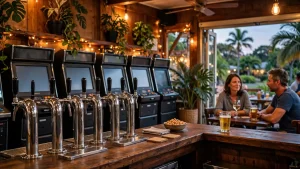
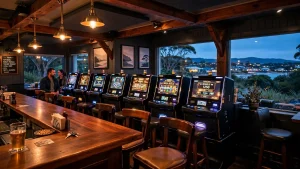
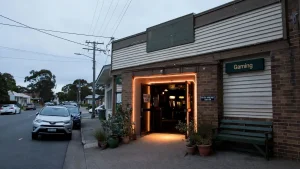
Game features and theoretical RTP can be checked, but neither predicts a session or proves that a venue pays better.
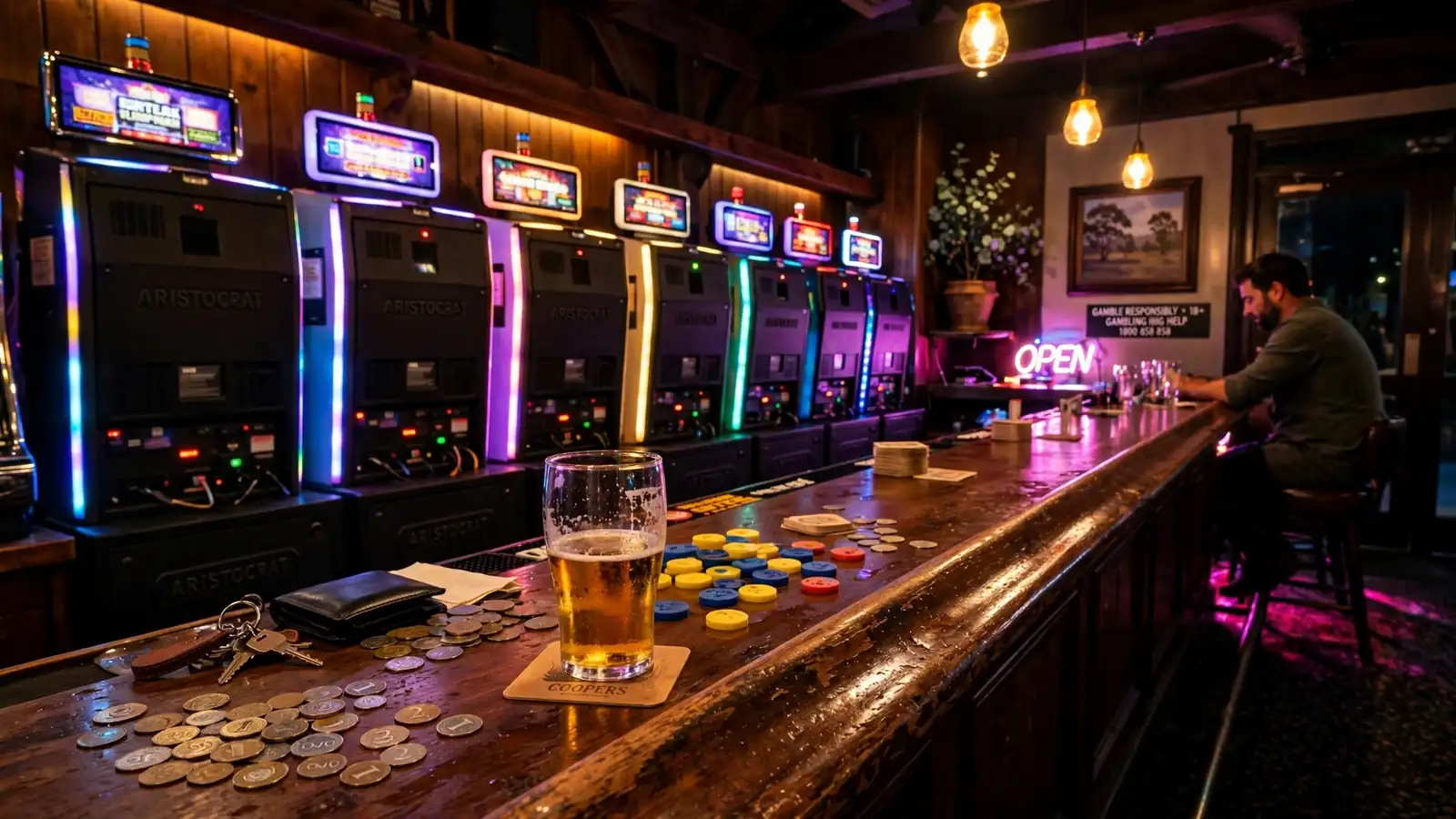
“Best” sounds like a property a pokie might possess in the way it possesses a set of symbols or a bonus round. In practice, the word can blur several different questions: how a game works, what return setting has been selected for it, and whether anyone can show that it pays better in a particular South Australian venue. Those questions do not have the same answer.
A game’s rules and features can be described. Its reels, paylines or other ways of forming a win, bonus features and stated return to player (RTP) are characteristics that can be checked against the game information. RTP is a theoretical measure of returns across extensive play, not a forecast for a particular session. It does not say what will happen to an individual’s stake, or how soon a win might arrive.
That distinction matters because pokies are built around repeated random outcomes, not a sequence that remembers what happened before. Each spin is an independent event determined by a Random Number Generator. A run of losses does not make a win due, and a recent win does not make the next one less likely. Patterns may feel persuasive when a person is watching the reels, but a sequence of results does not turn into a reliable prediction.
RTP also needs care when games are compared. A specialist review reports that some providers allow casinos to choose between multiple RTP settings for the same pokie. In that case, the title alone does not establish the return setting in use: the identical game might be configured differently at different casinos. A figure attached to a game in one context cannot simply be carried across to another.
This is a narrow but important point. It does not establish which South Australian venue uses which setting, and it does not show that one game pays better locally. A published RTP may describe a particular configuration, while the setting in a venue may need separate confirmation. Without that link, comparing figures as though every version were identical can produce a neat table and a misleading conclusion.
Nor does a higher theoretical return make a game a dependable source of winnings. RTP describes an aggregate expectation over extensive play; the independent nature of spins leaves individual outcomes uncertain. A game with a higher stated return can still produce a losing session, while a lower figure cannot tell anyone when a win might occur. The measure has a use, but it is not a forecast.
Descriptions of volatility can also sound like a shortcut to a verdict. They concern the way outcomes may be distributed, rather than whether a game will pay a particular person or outperform another game in a given place. A feature-rich game may be more entertaining to some players; another may feel simpler. Preference is not evidence of better returns.
The phrase “South Australia casino pokies” can therefore be read in two ways. It may mean games available in the state, or it may imply a locally verified comparison of their returns. The first is a question about availability. The second requires evidence tying a particular game and setting to a particular venue. A game’s name, its familiar design or an advertised feature cannot supply that evidence by itself.
The same caution applies to searches for pokies in a South Australian CBD or elsewhere in the state. Location does not alter the mathematics of a game. Nor does being installed in a local venue establish that a pokie has a better setting than the same title elsewhere. Those are separate claims, and one cannot be inferred from the other.
A responsible description can explain how a pokie is designed, what its stated RTP means, and why the same title may not always refer to the same setting. It can also distinguish a game feature from a promise of return. What it cannot do, on those grounds alone, is turn a list of familiar titles into a reliable local league table.
That is the boundary of the comparison. Mechanics can be examined; a South Australian “best-paying” label needs more than a game name or a general RTP figure. Without venue-specific evidence about the configuration in use, the word “best” remains a claim, not a result.
Attention: A published RTP is a theoretical measure and not a forecast for an individual session; it does not guarantee when a win will occur.
A venue’s opening time and the time its pokies are available are not necessarily the same thing. A club, hotel or other gaming venue may be open for food, drinks or social activities while its gaming area is closed; the reverse can also happen, with the venue’s broader facilities changing hours while machines remain in operation. A listing that says a place is “open” therefore does not, by itself, settle whether pokies can be played at that moment.
That distinction matters most for searches made in the early morning or late at night. A venue may have a door open without every part of the premises being accessible, and public-facing hours may describe the business as a whole rather than the gaming area. No general South Australian opening schedule can safely be applied to every venue. Hours are local arrangements, not a statewide timetable.
The word “open” carries more than one meaning. It can mean that a building is admitting patrons, that a bar or dining room is serving, or that the gaming floor is operating. Those are related conditions, but they are not interchangeable. For anyone trying to establish whether pokies are available now, the relevant detail is the machine operating period, not simply the venue’s headline opening hours.
A venue’s hours may be presented in a compact form on a map listing or directory. That is useful for deciding whether the address is worth checking, but it can flatten several different services into one line. “Open” may refer to the venue generally, while gaming access is governed by a separate schedule. A page can also be outdated, particularly when business details have changed since it was last reviewed.
The practical consequence is modest but important: an open venue is not proof of operating pokies. Nor does a closed dining room necessarily establish that every other facility has closed. Without a venue-specific statement about machine availability, those questions remain separate.
This is not a South Australian peculiarity so much as a feature of places that combine different kinds of hospitality. The gaming room is one part of a premises whose other parts may have different rhythms. A sign at the entrance, a venue’s own current information or a direct confirmation from staff is more useful for a question about machine access than a general label attached to the whole business. Even then, the wording should be read carefully: “open” and “gaming available” answer different questions.
The search for pokies open now is often really a search for certainty about a particular hour. That certainty cannot be supplied by a statewide claim when venues do not share one universal schedule. A result describing a venue as open early or late may be a starting point, but it should not be treated as confirmation that the machines are operating at that time. The only reliable comparison is between the stated venue hours and a specific indication of gaming hours.
General venue opening hours may describe the business as a whole, while the gaming area may operate on a separate schedule.
“Open now” is a snapshot, not a promise about the full day. It may reflect a business listing’s interpretation of published hours, and it can become wrong when a venue changes its schedule or when the listing has not been updated. It also may not distinguish the public areas from the gaming area. The more precise the question, the more precise the source needs to be.
For a late or early visit, the useful information is therefore not merely whether the venue admits people, but whether its gaming facilities are operating during the intended period. A venue’s own current notices can clarify that distinction; if they do not, a direct check is more dependable than inferring machine access from a broad opening label. There is no sound basis for turning a result for one place into a general claim about all South Australian venues.
This caution does not require treating every directory as useless. Listings can identify a place and provide a practical lead. Their limit is that the word “open” may be broader than the question being asked. A search result can answer “Is the business operating?” while leaving “Are the pokies available?” unresolved. Two small questions, one large gap.
A separate question concerns who must be present when machines are operating. A report published by regionriverina.com.au says that, from 1 July, venues with more than 20 gaming machines are required to have a dedicated responsible gambling officer (RGO) on duty during machine operating periods. The detail links the officer’s duty to the operation of the machines, rather than simply to the venue’s general opening hours.
That distinction gives the requirement a practical shape. When a venue’s machines are operating, the reported duty applies to venues above the stated machine threshold; when the machines are not operating, the report does not describe the officer requirement as a condition of ordinary venue opening. It is therefore another reason not to treat a business-hours listing as a complete account of what is happening in the gaming area.
The requirement also places a human presence inside a system often described through schedules, machines and access. The RGO is associated with responsible gambling, a reminder that operating hours are not only a matter of convenience or staffing. They mark the period in which the venue’s gaming activity is taking place and the relevant on-duty role must be in place for qualifying venues.
Nothing about that role supplies a timetable for a particular venue. It does not establish when any individual gaming room opens, how late it operates, or whether machines are available at a given moment. The requirement concerns the presence of an officer while machines operate in venues meeting the threshold; venue-specific hours still need venue-specific confirmation.
Questions about very early or late access are best handled without assuming that a familiar pattern applies everywhere. A venue that operates gaming at one time of day may not do so at another, and a schedule can be narrower than the hours of the surrounding business. Repeating an opening time from an old listing can make a confident answer out of stale information.
From 1 July, venues with more than 20 gaming machines must have a dedicated responsible gambling officer (RGO) on duty during machine operating periods.
The same care applies when the word “payout” appears alongside a question about opening. A venue’s operating time says when its machines may be available; it does not explain what a particular game returns or predict the result of a session. Time and game performance are different subjects. A sign showing that a venue is open cannot do the work of information about a machine.
The ordinary language of opening hours encourages a tidy answer: a place is either open or closed. Gaming venues complicate that neat division because the premises and the machines need not share the same operating window. For South Australia, the sensible reading is local and specific: general hours describe the venue unless they explicitly say otherwise, while machine access needs its own confirmation.
That is a less dramatic answer than a list of supposedly universal early and late hours. It is also more useful. The door may be open; the gaming room is another matter.
A request for pokies near an airport or central business district is first a question of geography. It does not establish that a gaming venue is inside the airport, close to it, or even in the district meant by the search. The same applies to broad phrases such as “near me” or “in the north”: without a clear starting point and a defined area, they describe an intention, not a reliable location.
South Australia is a large place to search across. A result labelled “central” might refer to a city centre, a suburb, or simply the centre of a map view. “North” has the same problem at a larger scale. Airport searches also need a specific airport in mind; the word alone does not identify a terminal, town or surrounding neighbourhood. These distinctions matter because a map pin can look precise while the place-name behind it remains vague.
The CBD is more definite as a general idea, but not as a guarantee of proximity. A venue described as being near the CBD could be outside the central area, and a result’s position on a screen does not explain the practical route between two points. Distance, road access and public transport are separate questions from whether a place appears in a location-based result. A search can narrow an area; it cannot, by itself, settle every detail of getting there.
Some place names create a further puzzle. A request mentioning Parkes and South Australia may reflect confusion between locations, a misspelling, or an intended destination outside the state. Likewise, a reference to Victoria may mean a border area, a trip across state lines, or simply a mistaken location setting. The phrase “South Australia” in a search does not resolve those possibilities. It is better treated as a clue to check than as proof that the result belongs to the state.
A careful location check therefore separates three things: the intended destination, the position shown for a venue, and the route required to reach it. A venue name alone may not make clear which suburb or locality is meant. A map result may be misplaced, out of date, or attached to a broad category rather than a specific address. Confirming the precise location through a dependable map or the venue’s own current details is a more useful step than inferring proximity from a label.
There is also a threshold before any of these practical questions become relevant. The legal age for gambling in Australia is 18, including for pokies. That rule applies to the search for a physical venue as much as to gambling in any other form: location does not alter the age requirement. An airport, a CBD and a regional destination are different settings, but none creates an exception.
The language of “near” can make a place seem simpler than it is. It compresses a route, a boundary and a choice of starting point into one small word. In South Australia, airport and CBD searches are best understood as requests to locate and assess access to a place—not as evidence that a particular venue exists at the landmark or is within easy reach of it. The map is a beginning, not a verdict.
A South Australian venue and an online casino are not two versions of the same arrangement. At a physical venue, pokies operate within a local setting. Real-money online casino games sit under a different legal rule: the Interactive Gambling Act 2001 prohibits companies from offering them to people in Australia without a domestic licence. No Australian-licensed online casino exists.
That distinction matters when an online service presents itself as available to Australians. A website’s appearance, payment options or claims about its games do not turn it into an Australian-licensed casino. The law places the prohibition on operators that provide the service; it does not make an individual player liable simply for playing on an offshore site that accepts them. Legal exposure and practical protection are different questions.
The practical gap appears when money is disputed. If an offshore casino refuses to pay winnings, an Australian player has no legal recourse in Australia to compel payment. A balance shown on a screen is not the same as money held under an Australian casino’s oversight. That is a less comforting distinction than a welcome banner tends to suggest.
Deposits carry their own uncertainty. A specialist gambling review has reported that banks or card issuers may treat credit or debit card deposits to gambling services as cash advances. That can mean a fee of 3–5% and interest charged immediately, depending on the issuer’s treatment of the transaction. The point is not that every card deposit will be handled this way; it is that the cost may be determined by the financial institution, not by the wording on a casino deposit page.
Offers described as “no deposit” do not remove the underlying legal or payment questions. Nor does a high betting limit make an online service more accountable. Those labels describe a promotion or a game setting, not a domestic licence, a right to withdraw, or an Australian route for resolving a dispute. A deposit button is a feature of a website, not evidence of protection.
For a player, the central difference is therefore not whether the game looks familiar or whether the balance is displayed in Australian dollars. It is where responsibility can be enforced if something goes wrong. In the online casino market, the operator may be outside Australia’s licensing framework, while the player has no Australian legal recourse if winnings are withheld. That leaves a sharp imbalance: the service can invite a deposit, but Australian law does not provide a local casino licence or a local remedy for that unpaid balance.
Legal Risk
The Interactive Gambling Act 2001 prohibits companies from offering real-money online casino games to people in Australia without a domestic licence, meaning players have no local legal recourse if winnings are withheld by offshore operators.
A transfer can be quick. Recovery may be another matter.
A list of South Australian venues with pokies can tell only part of the story. Names and locations describe where machines are found; they do not, by themselves, reveal how a venue records signs of gambling harm or what information is retained when a concerning incident occurs. Venue oversight begins with a different kind of detail: not a claim about which club is best, but an account of what happens when play appears to be affecting someone.
A report published by regionriverina.com.au says venues will be required to keep a gambling incident register. The register is intended to record occurrences, including situations in which a patron displays behaviour indicating they may be at risk of gambling harm or already affected by it. That is a meaningful shift in emphasis. The focus is not only on the machine or the game, but also on the person in the room and the signs that may otherwise pass unnoticed.
The word “register” can sound like a public ledger, open for anyone to inspect. That should not be assumed. The reported requirement concerns venues keeping a record; it does not, by itself, establish that the register is publicly available, that individual entries can be requested, or that it provides a complete account of a venue’s conduct. A record kept by an institution and a public record are not necessarily the same thing. Paperwork has its own boundaries.
For people comparing clubs or other pokies venues, this distinction matters. A list of places may help establish that a venue exists, but it cannot establish the quality of its safeguards. Nor does the existence of an incident register prove that every risk is recognised or that every entry leads to a particular response. The record is one part of a system of oversight, not a scorecard. It does not rank venues, and it does not say which one offers the “best” experience.
The register’s purpose is narrower and more human than a ranking. It centres on occurrences, and specifically includes behaviour that indicates possible gambling harm. In this sense, the venue is not treated merely as a room containing machines. It is also a setting where distress may become visible to other people. Recording such occurrences gives them a place in the venue’s account of events rather than leaving them as fleeting impressions. Whether that record is complete or how it is used cannot be inferred from the requirement alone.
That distinction also shapes what can responsibly be said about clubs. “South Australian clubs with pokies” is a broad category, not a judgement about the character of every venue within it. A club may be discussed by location, facilities or its role in local life, but those descriptions do not reveal how a particular incident would be recorded. Conversely, the requirement to keep a register does not tell a reader which clubs have machines, how many they have, or how their practices compare. The categories should not be made to do one another’s work.
Venues are required to keep a gambling incident register to record occurrences where a patron displays behaviour indicating they may be at risk of gambling harm.
A register is valuable as a form of institutional memory: an occurrence that is written down is not dependent solely on someone remembering it later. But the value of that memory depends on matters beyond the mere fact of keeping a record. The report does not establish what information an entry must contain beyond details of the occurrence, how entries are reviewed, who may see them, or what follows from an entry. Those questions should remain questions, rather than being answered with confident-sounding assumptions.
This is why venue-level information needs careful reading. A directory can show a cluster of clubs in a district; an incident register requirement speaks to a separate layer of responsibility. Neither substitutes for the other. A venue’s presence in a list is not evidence of its safety practices, while the reported register requirement is not evidence that one venue is better managed than another. It is a standard directed at recording signs of harm, not a consumer rating.
The same caution applies to the phrase “public record.” The register may contribute to venue oversight, but the available description does not say that it is a public database or that members of the public can consult individual records. Calling it public without that distinction would promise transparency the report does not establish. A record can support accountability without being an open catalogue of patrons or incidents.
For South Australian pokies venues and clubs, then, the most useful point is modest but concrete: a report says venues will be required to record occurrences that include behaviour indicating a patron may be at risk of, or affected by, gambling harm. That requirement puts attention on the circumstances around play, not on a supposed winning machine or a league table of venues. It also marks the boundary of what the register alone can show. A record is not a verdict.
The word “Crown” can make a place sound settled before its location has been established. In South Australia, however, the name alone is not confirmation of a Crown casino, a Crown pokies room or any particular machines. It should not be treated as a local venue listing.
That distinction matters because a venue name and a venue’s actual gaming facilities are different claims. Even where a name is familiar, it cannot establish what is available at a particular South Australian address. Nor can it show that a Crown-branded room operates there. A search for Crown pokies in the state therefore does not, by itself, settle either point.
The same caution applies to requests for the best pokies room. “Best” might refer to the surroundings, the range of games, the atmosphere or the terms attached to a machine. Those are not interchangeable measures, and none follows from a brand name. Without a confirmed venue and reliable details about its facilities, a comparison would be decoration rather than guidance.
Claims about a maximum cash payout require even more care. A figure would need to refer to a specific machine and its actual settings, not simply to a venue label or a broad description of a room. A general claim about Crown pokies in South Australia cannot establish what a particular machine pays, or the maximum amount it may award. Precision without a named, verifiable setting is only confidence in costume.
This is not a ranking of Crown machines or a verdict on a South Australian venue. It is a boundary between what the name suggests and what it can prove. The wording may point toward a hoped-for place; it does not supply the place, its machines or their payout terms.
Names travel easily. Details do not.
“Cashless pokies” describes how a gaming machine might handle play and payment inside a venue. PayID belongs to a different conversation: it moves money between bank accounts. The two ideas can sit beside each other in a search, but one does not establish anything about the other.
PayID is an identifier layer on Australia’s New Payments Platform. Instead of entering account details, a transfer can be directed using an email address, mobile number or Australian Business Number. The platform is supported by all major banks and protects transfers with end-to-end encryption. Those features describe the payment network, not the destination’s status or conduct.
That distinction matters when PayID appears in material about gambling deposits. A payment method cannot show that an online operator is licensed, that a game is fair, or that its return-to-player settings are transparent. Nor does a reference to electronic deposits tell anything about whether a venue’s machines accept cashless payments. Different systems; different questions.
Some payment claims also change with bank policies and operator practices. A specialist review, for instance, may describe particular deposit methods or restrictions at the time it was published. Such a report is not a permanent rule for every bank or gambling service. Payment arrangements can be specific to an institution, merchant and transaction.
The terminology can blur these boundaries. “Cashless” may refer to a machine or venue payment arrangement; PayID refers to a bank transfer mechanism. Neither term, by itself, supplies a reliable guide to the other. A payment label is not a gaming-machine feature.
Choosing pokies sites in South Australia means weighing the details that matter to you, such as licensing, deposit minimums and payout methods. Use these short verdicts as a practical starting point for reviewing the available options.
Playfina Casino
Playfina Casino is listed with a Curacao eGaming license held by Hollycorn N.V. since 2017. Its minimum deposit is A$20–30, depending on the offer.
Kingmaker
Kingmaker lists crypto payouts at about 90 minutes and fiat payouts at 1–5 days. The minimum deposit is A$30.
Ricky Casino
Ricky Casino lists crypto payouts in under an hour and PayID payouts in 1–3 business days. The minimum deposit is A$20, or A$30 to qualify for the bonus.
LevelUp Casino
LevelUp Casino is listed under Curacao eGaming license OGL/2023/174/0082, held by Dama N.V. Its minimum deposit is A$15.
WinSpirit Casino
WinSpirit Casino is listed under Curacao eGaming license OGL/2024/923/0383, held by Antillephone N.V. The minimum deposit is A$30.
JustCasino
JustCasino is listed with a Curacao Gaming Control Board license. No deposit minimum or payout details were provided.
MrPacho
MrPacho lists crypto payouts at 30–120 minutes and fiat payouts at 24–72 hours. Its minimum deposit is A$30.
Bizzo Casino
Bizzo Casino is listed with a Curacao Gaming Control Board license, with TechSolutions Group N.V. identified. No deposit minimum or payout details were provided.
7Bit Casino
7Bit Casino is listed as operating under a Curacao license, with Dama N.V. identified as its operator. No deposit minimum or payout details were provided.
Roby Casino
Roby Casino is listed with a Curacao eGaming license held by Roby Games Ltd. No deposit minimum or payout details were provided.
“Best” can mean different things: a game’s theme, pace, features or published return-to-player figure may matter to different people. None of those qualities establishes that a particular pokie will pay more to a South Australian player, or that it is a sound choice for a session.
RTP is a theoretical return calculated across a very large number of plays, not a forecast for an individual. A specialist review notes that some providers let casinos choose among different RTP settings for the same game. The title alone, then, may not identify the setting in use; comparisons require reliable information about the exact version and its stated return. Even matching figures would not predict which game will produce a win on a given occasion.
The mechanism offers no short cut. A Random Number Generator determines each spin, and the result of one spin does not make a later result more or less likely. A run of losses is not evidence that a win is due; a recent win does not make another one likelier. Patterns can feel persuasive because people are good at finding shape in a sequence, including one made by chance.
That leaves a modest meaning for “best”: the game whose rules, pace and features a person understands and finds enjoyable, without mistaking preference for an edge. A game’s presentation can be assessed; its future results cannot be read from its past ones. Nor can a general claim about a title substitute for checking the RTP setting attached to the version being played.
No dependable leaderboard follows from these limits. The responsible answer is not a list dressed up as certainty, but a distinction between what can be compared—when settings are known—and what remains unknowable spin by spin. Chance keeps its own books.