This overview distinguishes slot games from Bitcoin payments and examines Australian legal boundaries, verification checks and withdrawal disputes.
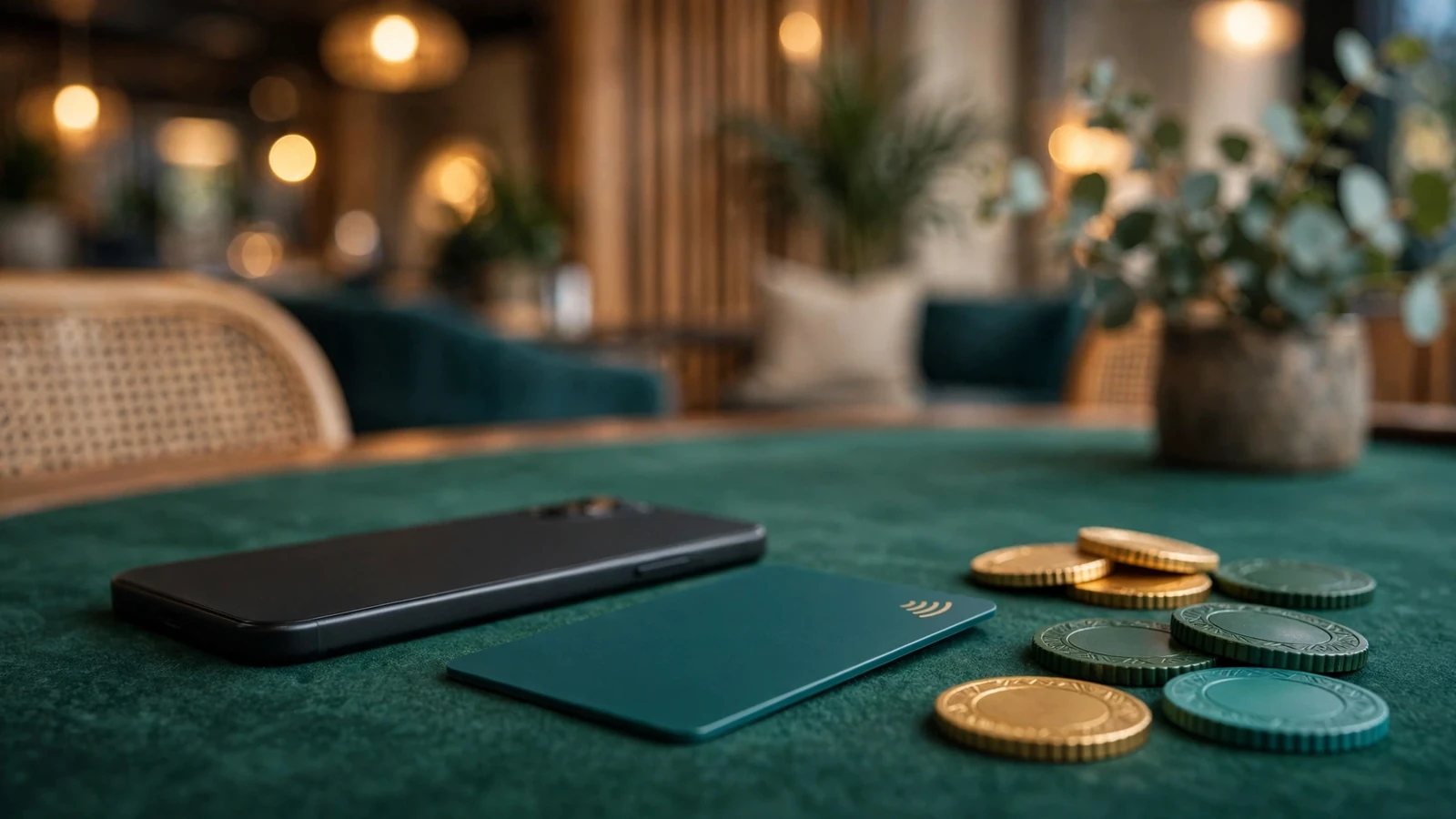
A Bitcoin pokie is a digital slot machine that accepts Bitcoin as payment. The phrase describes two separate things joined in one service: a particular kind of game and a way of paying. It does not name a whole online casino, nor does it make every game on a casino site a pokie. The distinction is small in wording and large in meaning.
The game part is recognisable from the familiar slot-machine format: symbols arranged in reels, with outcomes determined by a game’s rules. Moving that format onto a screen changes its setting, not its basic identity. When Bitcoin is accepted as the payment method, the game can be described as a Bitcoin pokie. Bitcoin is not the game; the digital slot machine is not the payment system. They meet at the point where a player’s funds are used for play.
That boundary matters because online gambling sites often place different games beside one another. A table game does not become a pokie because it appears on the same page as one. Nor does a Bitcoin payment turn poker, roulette or another casino game into a slot machine. The label is narrower than the venue in which the game appears. A wallet can fund a service; it cannot rewrite the rules of the game being offered.
Choosing an online pokies site for real cash play calls for a clear look at the information available about licensing, deposits and withdrawals. Use these verdicts as a concise reference when considering your options.
Playfina Casino
Playfina Casino is listed with a Curacao eGaming license held by Hollycorn N.V. since 2017. Its minimum deposit varies by offer, at A$20–30.
Kingmaker
Kingmaker lists crypto withdrawals at around 90 minutes and fiat withdrawals at 1–5 days. Its minimum deposit is A$30.
Ricky Casino
Ricky Casino lists crypto withdrawals in under an hour and PayID withdrawals in 1–3 business days. The minimum deposit is A$20, or A$30 to qualify for the bonus.
LevelUp Casino
LevelUp Casino is listed with Curacao eGaming license OGL/2023/174/0082, held by Dama N.V. Its minimum deposit is A$15.
WinSpirit Casino
WinSpirit Casino is listed with Curacao eGaming license OGL/2024/923/0383, held by Antillephone N.V. Its minimum deposit is A$30.
JustCasino
JustCasino is listed with a Curacao Gaming Control Board license. No deposit or payout details are provided here.
MrPacho
MrPacho lists crypto withdrawals at 30–120 minutes and fiat withdrawals at 24–72 hours. Its minimum deposit is A$30.
Bizzo Casino
Bizzo Casino is listed with a Curacao Gaming Control Board license, with TechSolutions Group N.V. named as the operator. No deposit or payout details are provided here.
7Bit Casino
7Bit Casino is listed as operating under a Curacao license, with Dama N.V. named as the operator. No deposit or payout details are provided here.
Roby Casino
Roby Casino is listed with a Curacao eGaming license associated with Roby Games Ltd. No deposit or payout details are provided here.
“Real cash” is another phrase that can blur the categories. It commonly signals that play involves value rather than a purely simulated session, but it is not a precise name for the game itself. A real-money slot remains a slot; adding Bitcoin identifies the payment form, not a new class of reels or a guarantee about what a player can receive. A phrase such as “play slots for real cash” therefore combines an activity with a description of its stakes. It does not tell the whole story of how a particular service accounts for funds.
That is why the word “cash” needs care when Bitcoin is involved. Bitcoin is a digital asset, not notes or coins handed across a counter. Calling a game real-money play distinguishes it from an entertainment-only version, but does not mean that its interface behaves like a bank account or that every displayed balance is cash in the everyday sense. The game, its credits and the payment asset remain related but distinct parts of the arrangement. Their relationship deserves its own explanation; collapsing them into one label makes the arrangement seem simpler than it is.
A digital wallet, meanwhile, is not a pocket containing a little casino. It is part of the payment side of the process. The slot game supplies the play experience; the wallet is where Bitcoin is held and from which it can be sent. A service that accepts Bitcoin links those functions, but they are not interchangeable. Confusing them can make a screen’s balance look like a direct measure of money available outside the game, when the word “balance” may refer only to what the game displays.
The same care applies to the word “app.” A phone app, a mobile-friendly website and the game itself are not synonyms. “Real-cash slot app” describes a possible way of reaching a service, not a separate game category. The device is the window; the game is the thing viewed through it. A slot shown on a phone does not become a different kind of gambling simply because the screen fits in a hand.
There is a cultural history folded into that portable screen. The old mechanical machine made gambling visible: a cabinet in a room, a lever, a row of symbols and the unmistakable pause before an outcome. A digital version removes the cabinet and puts the image into software. The machine becomes less like furniture and more like an interface, available wherever a compatible screen can display it. The format travels easily. Its name travels with it.
Yet the payment label can attract more attention than the game. Bitcoin sounds like a description of the entire experience, while “pokie” can be treated as a loose synonym for any casino entertainment. Both shortcuts obscure the useful distinction. One identifies what is being played; the other identifies a means of payment. A Bitcoin pokie is not simply “a casino using cryptocurrency,” and a cryptocurrency casino is not itself a slot machine.
That distinction is descriptive, not an endorsement. Real-money gambling is restricted to adults aged 18 or older, and a digital format does not remove the consequences attached to staking value. The machinery may be invisible, but the category of activity is not. This page is affiliate material and may include sponsored links; that disclosure does not change what a Bitcoin pokie means, or establish that any service is suitable or lawful for a particular person.
The cleanest definition is also the least grand: a digital slot machine that takes Bitcoin as payment. Everything beyond that phrase—how a service handles funds, what protections apply, or what a displayed credit represents—belongs to a different question. A wallet is not a game. A game is not a promise.
The phrase “real-money casino games” describes a way of playing, not a single kind of game. It can refer to pokies, table games or poker when money is staked and winnings may be paid out. Free play is different: it does not become real-money play simply because the same game is available in both forms. The distinction matters, but it does not decide whether a service may lawfully offer the game in Australia.
That boundary is set by the Interactive Gambling Act 2001. The law bars operators from providing online casino-style games for money to people located in Australia. The prohibition covers pokies as well as games such as roulette, blackjack and poker. It is directed at the service being supplied; an offshore address or a foreign licence does not turn the offer into a locally authorised one.
There is no Australian online casino licence that makes real-money pokies lawful to offer to Australian residents. This is an important difference from markets where a local regulator can license an operator to provide such games under domestic rules. Here, an offshore licence is a licence from elsewhere, not an Australian permission. Changing the location named on a website does not change the legal boundary.
The offshore operators discussed in this context hold licences primarily from Curacao eGaming or the Anjouan Gaming Authority. Those licences belong to their respective jurisdictions. They do not amount to local approval, nor do they place the operator under Australia’s consumer-protection framework for the service offered to Australian residents. A licence badge can look official while answering a narrower question: which authority, if any, oversees the operator where it is based?
That distinction is easy to lose in the language of online commerce. A site may present account terms, customer support and familiar payment options in a polished interface. Such details can make an offshore service feel like an ordinary domestic business. They do not alter who regulates it, what Australian law permits operators to offer, or which protections are available when a dispute arises.
For the offshore services discussed here, Australian consumer protection laws do not apply. That leaves a meaningful gap between the appearance of a regulated transaction and the protections a person might expect from a service operating under Australian rules. A foreign regulator’s licence is not a substitute for domestic consumer protections, and the two should not be treated as interchangeable.
The legal frame is not a claim that an individual player is prosecuted simply for accessing an offshore site. The restriction concerns operators providing prohibited interactive gambling services to people in Australia. The practical result is nevertheless stark: real-money online casino play is not a locally licensed service for Australian residents, and offshore operators are not its lawful domestic equivalent.
Legal Restriction
Real-money online casino play is not a locally licensed service for Australian residents, and offshore operators are not its lawful domestic equivalent.
Age is a separate threshold. Real-money gambling is for adults aged 18 or over; being old enough does not make an otherwise prohibited service locally authorised. Age eligibility and operator legality answer different questions. They should not be folded into one reassuring phrase.
This is why descriptions such as “online pokies for cash” can obscure more than they clarify. They tell little about the operator’s jurisdiction, the legal status of the offer or the protections available if something goes wrong. The words “real cash” describe the stake and possible payout; they do not certify the service. A glossy interface is not a regulator.
This section is informational, not an offer of casino play. The page is affiliate material and may include sponsored links; that commercial disclosure does not change the legal position or make an offshore service locally licensed. The boundary remains the same whether the site is reached through an advertisement, a review or a direct visit. A foreign licence stays foreign.
A payment claim can compress several different events into one reassuring phrase. An app may describe Bitcoin deposits and withdrawals as almost instant, but that wording does not establish that every request will be completed promptly. It describes a reported speed, not a promise attached to every account or transaction.
A specialist review characterises Bitcoin deposits and withdrawals as almost instantaneous, contrasting them with the waits associated with traditional banking. That is one account of how the payment route may feel; it is not a guarantee from every operator. The distinction matters because “payment” can refer to a process being requested, handled by an operator, or reaching its destination. Those are not necessarily the same moment.
The appeal of a casino app said to pay real cash is easy to understand. A screen that displays a balance gives money a tidy, immediate appearance: a number sits there, ready to be read as value. Yet a displayed balance and a completed payment are different claims. The first concerns what the account shows. The second concerns whether funds have actually moved through the payment process. Speed language tends to make those stages sound like one.
Bitcoin changes the payment method, not the meaning of a claim. A description of near-instant transfers may be relevant to the time taken by the payment route, but it cannot, by itself, establish how quickly an operator will act on a request. Nor does a general description settle what will happen in a particular case. The neatness of an app interface is not evidence that every step behind it is equally neat.
This is why statements about online casinos that pay out real cash need to be read as claims about a service, not as guarantees of an outcome. “Almost instantly” is a description reported by a specialist review. It should not be silently enlarged into “always, for everyone.” There is a great distance between a short transfer time and certainty that a request will be honoured on the same timetable.
The wording also invites an old confusion: the difference between a payment system and the company using it. Bitcoin can be the method named in an app’s payment information; it cannot, merely by being named, certify the operator’s conduct. A quick-moving payment route and a dependable service are separate propositions. One does not prove the other.
A specialist review has reported near-instant processing for Bitcoin deposits and withdrawals, but this is a description of reported speed, not a universal guarantee for every operator.
This distinction is particularly important in Australia, where real-money online casino services are prohibited for operators serving people in the country. Offshore services are not local, licensed casino alternatives, and Australian consumer protection laws do not apply to the operators discussed. Anyone considering gambling must be at least 18. These limits are not softened by an app’s polished wording or by a description of speed.
This material is affiliate content and may include sponsored links. That disclosure identifies a commercial relationship; it does not turn a payment claim into independent proof. A claim can be clearly presented and still require careful interpretation. The language of speed is persuasive because it removes the waiting room from the story. The actual process remains a process.
For real-cash casino apps, then, the useful question is not simply whether Bitcoin is described as fast. It is what the description actually supports. A specialist review has reported near-instant processing for Bitcoin deposits and withdrawals, but that statement should remain within its limits: it is not a universal timetable, nor assurance that every request will be completed promptly. Fast-sounding language is not a receipt.
“Real cash” describes what is at stake in the game, not the denomination displayed on its screen. A player may wager credits that are valued in Bitcoin rather than Australian dollars, but that does not turn the game into free play: the credits are connected to funds that can carry monetary value. The distinction matters because a balance shown in a game is not necessarily a direct, stable measure of its value in Australian currency.
A specialist review describes credits as game-specific, with their Bitcoin value depending both on the game and on the current price of Bitcoin. That is a description of a particular account of how such credits work, not a fixed rule for every service. A figure on a screen can therefore require interpretation: it belongs to the game’s own accounting and may change in value as Bitcoin’s market price moves. “Cash” is the promise implied by the label; the actual unit may be something less familiar.
The distinction between real-money games and their credits is also separate from the question of who may lawfully provide the service. Australian law bars locally licensed online casinos from offering real-money pokies to residents. Offshore operators may hold licences issued elsewhere, primarily by Curacao eGaming or the Anjouan Gaming Authority, but a foreign licence does not make an operator a locally licensed Australian service. The Interactive Gambling Act 2001 prohibits operators from providing real-money online casino games to people in Australia. The regulatory distance is not a technicality.
That distance has consequences beyond the name printed on a licence. Australian consumer protection laws do not apply to the offshore operators discussed here. A customer dealing with an operator outside the Australian system cannot assume that local consumer protections or complaint pathways will govern the relationship. The operator’s terms and its own processes may shape what happens to an account or its balance, while the familiar protections of a local service are absent. A foreign licence and Australian consumer rights are not interchangeable documents.
The state’s position is unusually clear about the service, even if offshore sites can still be encountered online: real-money casino games are prohibited for operators serving people physically located in Australia, and access to offshore services is actively blocked and enforced. The legal restriction is directed at provision of the service; it does not mean that an individual player is liable to a fine or prosecution merely for playing offshore. These distinctions should not be collapsed into a general claim that the activity is locally regulated or endorsed.
Any real-money gambling discussed here is for adults aged 18 or older. This material is affiliate content and may include sponsored links; that commercial fact does not alter the legal status of offshore gambling or supply consumer protection that Australian law does not provide. The label “real cash” can make a digital balance sound settled and ordinary. Its jurisdiction is neither.
A Bitcoin deposit begins with an address, not with a button that moves money by itself. In the process described by offshore casino services, the player copies the account address supplied by the operator and sends Bitcoin to it from a personal wallet. The address is the destination written into the transaction; the operator must then recognise the incoming payment and credit the account.
That sequence can look almost too simple. A string is copied, a transfer is confirmed, and the account balance is expected to change. But the address is not a general-purpose label for a person or a promise that every payment will be matched correctly. It is a destination for a particular transfer. Carelessness at that point can turn a digital payment into a problem with no practical remedy.
A deposit may fail to appear in the casino account for several reasons. Reusing an address can complicate identification of a payment. Sending less than the amount the operator expects can leave the transfer unrecognised. The operator may also detect the deposit late. Those situations are distinct: one concerns how payments are identified, another the amount sent, and another the operator’s processing. From the account holder’s perspective, however, they can look much the same: Bitcoin has left the wallet, while the account balance has not changed.
That gap matters in searches for a small real-cash deposit or a casino that claims to require no deposit. A phrase promising play without an upfront payment is not the same thing as a confirmed Bitcoin credit, and it does not establish that a cash balance or winnings can be withdrawn. Nor does a search for a low deposit amount establish what a particular operator will accept. The practical question is whether funds have reached the correct address and have been recognised under that operator’s process. A promotional phrase cannot answer it.
An incorrect address is a more final kind of mistake. Blockchain transactions are irreversible; cryptocurrency sent to the wrong destination is generally unrecoverable. There is no ordinary bank mechanism that can simply reverse the transfer and return it to the sender. The ledger records movement, not the intention behind it. A single misplaced character can therefore matter more than a later explanation.
This is one reason a deposit address should be treated as transaction information rather than as a detail to skim past. Copying the address supplied for the account avoids manually retyping it, but does not remove the need to verify that the copied destination is the one intended. Once the transfer is sent, a mistaken destination is not repaired by contacting the operator as though the funds were sitting in a reversible payment queue.
The wider setting is not incidental. Real-money online casino games are prohibited for operators serving people in Australia, and the offshore operators discussed here are not covered by Australian consumer protection laws. This material is affiliate content and may include sponsored links; that disclosure does not alter the legal position or supply local consumer protections. It is for adults aged 18 or over, and it does not make an offshore deposit a protected transaction.
A payment can be technically recorded and still be difficult to resolve at the account level. The address, the amount sent and the operator’s detection all matter. The blockchain keeps the receipt. It does not settle the argument.
Bitcoin is often described as secure because transactions are recorded on a blockchain rather than handled solely through a bank’s internal ledger. That record can make a transaction difficult to alter after it has been confirmed. It does not, however, make every part of an online gambling service secure. The blockchain cannot establish whether an operator will credit an account correctly, honour a withdrawal request or resolve a dispute fairly. A strong lock on one door says little about the building behind it.
Privacy is similarly relative. A Bitcoin payment can reveal less personal information to a merchant than a conventional payment method, and a specialist review characterises Bitcoin as offering a degree of anonymity compared with traditional payments. But a public blockchain records transactions, and a wallet address is not the same thing as being invisible. An operator may also request identity or wallet checks. Privacy should therefore mean a different exposure of information, not an absence of scrutiny.
The money’s value is not fixed at the moment it becomes a game credit. A specialist review notes that credits are specific to each game and that their Bitcoin value depends both on the game and on the current BTC price. A displayed credit balance may look stable inside a game while its equivalent in Bitcoin changes as the market price moves. The two measures answer different questions: one describes what the game can use; the other reflects the changing value of the payment asset.
That distinction matters wherever a service presents a balance as if it were ordinary cash. A cash casino online real money balance can sound self-explanatory, but Bitcoin-denominated credits are not necessarily a direct statement of value in Australian dollars. The game defines its own units, while the Bitcoin market supplies a moving reference point. The label does not settle the arithmetic.
Fees are another part of the asset’s character. Bitcoin transfers incur miner’s fees, which change over time; a specialist review describes them as typically very small. That is not a permanent price promise, nor does it establish that Bitcoin will cost less than every other payment route in every circumstance. The fee is attached to the network transaction, while an operator’s own processing rules are a separate matter.
For Australian readers, these properties do not alter the legal boundary around real-money online casino services. Offshore operators are not locally licensed alternatives, and Australian consumer protection laws do not apply to them. Real-money play is for adults aged eighteen or over; that threshold is not a seal of safety.
This page contains affiliate material and may include sponsored links. Bitcoin’s technical design can secure a record of movement. It cannot certify the people on either side of it.
Online pokies may offer a free-play mode alongside real-money play. The reels can look much the same, but the financial meaning is different: a result in a free session is not a cash prize. The displayed balance belongs to the game’s play mode, not a withdrawable wallet. A screen can announce a win without money having changed hands.
That distinction matters when free games are described as a way to win real cash. Playing without staking money may let someone see how a game behaves, but it does not turn its free-play credits into cash. A supposed “free slots, no deposit, cash win” offer therefore needs to be read as a claim about the operator’s terms, not as an automatic feature of free play. The word *win* is doing two jobs: one describes an outcome on screen; the other suggests money a player can actually receive.
Real-money play is a separate category, not the next stage of a free session by definition. It involves staking money, and any cash payout depends on the terms of that real-money arrangement. Free play alone does not establish a right to a real-cash payout. The distinction is plain; the advertising often is not.
There is also an Australian boundary that changes the context. The Interactive Gambling Act 2001 prohibits operators from providing real-money online casino games, including pokies, to people located in Australia. Offshore services do not become locally licensed or protected because a free mode sits beside their money games. Australian consumer protection laws do not apply to the offshore operators discussed. Real-money gambling is for adults aged eighteen and over, but age does not make a prohibited service lawful.
Free play and real-money play are choices presented by some online services, not interchangeable descriptions of the same activity. A free session may produce a game result; it should not be mistaken for cash earnings. That is the essential difference, before any claims about payout are considered.
This page is affiliate material and may include sponsored links. A disclosure does not change the legal status of an offshore gambling service.
The onboarding sequence described by offshore gambling services can look like ordinary account administration: acquire Bitcoin, register, then transfer funds. That sequence explains how access is arranged; it does not establish that the service is lawful in Australia or safe to use.
Bitcoin can be purchased with conventional currency through a cryptocurrency exchange. Registration then generally involves supplying basic details and creating a password. The apparent simplicity is part of the design: a few routine steps can make a high-risk service feel like just another online account. They are not the same thing as protection.
A transfer to the operator’s wallet may follow. That is the point at which a setup process becomes a financial commitment, not a recommendation to make one. Australian law prohibits operators from providing real-money online casino games to people in Australia. The offshore services discussed are not covered by Australian consumer protection laws, and an offshore licence does not make them locally licensed or provide equivalent recourse. Real-money gambling is for adults aged 18 or over.
A specialist review has advised checking an operator’s reviews, licence and range of games before considering a service. Those checks can offer information, but they cannot turn an offshore casino into a locally regulated one. Nor does a polished registration page settle whether a licence is genuine or what help is available if a dispute arises. Administrative neatness is not a safeguard.
Account Setup
Acquire Bitcoin
Purchase Bitcoin with conventional currency through a cryptocurrency exchange.
Register Account
Register with the service by supplying basic details and creating a password.
Transfer Funds
Transfer Bitcoin from a personal wallet to the operator's wallet address.
This page is affiliate material and may include sponsored links; that disclosure does not make offshore gambling lawful or amount to an endorsement. No online casino is being recommended here. In Australia, even the vocabulary of a “real cash” account can make the choice sound like a normal consumer transaction. The legal and practical position is less ordinary.
A Bitcoin withdrawal starts with a request inside the casino account. The player copies a wallet address and pastes it into the withdrawal form; a typo can send funds somewhere unintended. Bitcoin transfers, like Ethereum transfers, are irreversible, so money sent to the wrong address is generally unrecoverable.
A specialist review reports that most Bitcoin withdrawal transactions are completed within an hour. That describes the transfer, not necessarily the operator’s approval process. Before any funds reach the blockchain, an account may sit in an approval queue, await a business-hours batch, or be held because identity checks are incomplete. A quick network transfer cannot hurry a decision still waiting in an operator’s system.
Verification may unfold in stages: initial registration checks, identity and address documents, then confirmation of crypto-wallet ownership. Depending on the operator, the second stage may be requested at the first withdrawal or when cumulative deposits reach AUD 2,000–5,000. Crypto checks may involve signing a message from the deposit address or supplying a wallet screenshot that shows the sending transaction. Specialist guidance says completing later verification stages before requesting a first withdrawal can reduce common delays; it does not guarantee prompt payment.
Miner fees also affect the amount received. They vary over time, and a specialist review describes them as generally very small, but the figure can change between transactions. The withdrawal form and wallet record therefore matter more than a headline payout claim.
A stalled withdrawal is not a reason to send more money to unlock it. Offshore operators discussed here are not covered by Australian consumer protection laws. This article is affiliate material and may include sponsored links; that disclosure does not make offshore gambling a locally protected service. Real-money play is for adults aged eighteen or older, and the Australian legal framework prohibits operators from supplying these casino services to people in Australia.
No extra deposit.
A win can look settled on a screen while remaining conditional under the bonus attached to it. Disputes often begin with wagering contribution rules: different games may count differently towards a bonus requirement, and unclear wording can leave players and operators with opposing readings of what has been completed. A pokies session and a table-game session may therefore contribute unequally. The small print becomes the larger event.
Bonus terms may also restrict the maximum bet during play. If an operator says that limit was exceeded, it may void bonus play or challenge the resulting balance. That can turn an apparent online casino win into an argument over which rules applied, when they applied and whether the terms were clear enough to begin with. A headline promising a chance to win real cash does not resolve that dispute.
A separate warning sign is a security review after a significant win. Reviews can have a legitimate stated purpose, but some operators may use them to stall a withdrawal, particularly when an account is new or the win is the first large one. That possibility should not be confused with routine account checks: the concern here is a review introduced after the outcome, with little clarity about when it will end.
Australian law prohibits operators from providing real-money online casino games to people in Australia. Offshore operators do not fall under Australian consumer protection laws. Real-money play is for adults aged 18 or older; that does not make an offshore service locally protected.
Do not send more money to unlock a stuck withdrawal. Bitcoin and Ethereum sent to an incorrect address are generally unrecoverable. Fairgoslotshubau.com’s material is affiliate content and may include sponsored links; disclosure does not change the legal or consumer-protection position.